
Rottweiler
Last Updated:
The Rottweiler dog breed is a powerful, intelligent, and highly protective guard dog known for its strength and loyalty. Popular in India for security and companionship, Rottweilers are confident, easy to train, and deeply devoted to their families. They require proper training, regular exercise, and experienced handling, making them ideal for responsible and active dog owners.
Height
24–27 inches
Intelligence
High
Lifespan
8 – 10 years
Weight
43–61 kg
Temperament
About
The Rottweiler is a powerful, intelligent, loyal, and confident working dog known for its strength, protective nature, and strong bond with its family. Originally developed in Germany for herding and working purposes, the Rottweiler is now widely kept as a family companion, working dog, and protection dog.
Rottweilers are known for being loyal, intelligent, confident, courageous, protective, affectionate, and hardworking. With proper socialization, training, exercise, and responsible ownership, they can become calm and well-mannered family companions.
Because of their large size, strength, and protective instincts, Rottweilers require consistent training and early socialization. They are best suited to owners who can provide structured exercise, mental stimulation, companionship, and responsible handling.
Rottweiler Appearance
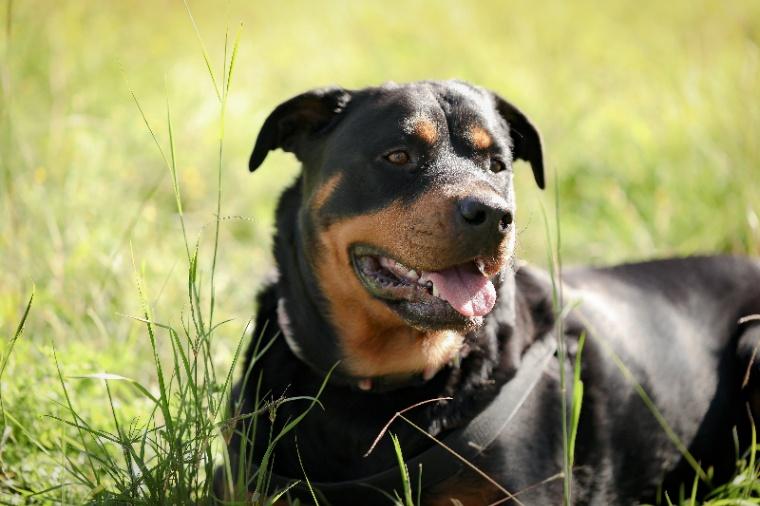
The Rottweiler has a muscular, powerful, and compact build. Its broad head, strong jaw, deep chest, and black coat with distinctive tan markings give it a highly recognizable appearance.
Common physical characteristics include:
- Large, muscular body
- Broad head
- Strong muzzle and jaws
- Medium-sized triangular ears
- Dark, expressive eyes
- Deep chest
- Strong neck and shoulders
- Powerful legs
- Short, dense double coat
- Black coat with clearly defined tan markings
Rottweilers typically have a predominantly black coat with tan markings around the muzzle, cheeks, chest, legs, and above the eyes.
Rottweiler Temperament
The Rottweiler temperament is generally confident, loyal, intelligent, calm, courageous, and protective. They often form strong bonds with their families and can be naturally watchful around unfamiliar people.
A well-socialized Rottweiler should be stable and responsive to its owner rather than unnecessarily aggressive. Early socialization and consistent positive training are particularly important because of the breed's size and strength.
Are Rottweilers Good Family Dogs?
Yes, a properly trained and socialized Rottweiler can be an excellent family companion. They are often affectionate and deeply loyal to their families.
However, their large size, strength, and protective instincts mean that responsible ownership, supervision, training, and socialization are essential.
Are Rottweilers Good with Children?
Rottweilers can live successfully with children when properly socialized and trained. They may be affectionate and protective toward family members.
Because of their size and strength, interactions with young children should always be supervised. Children should also be taught to respect the dog's space, food, toys, and resting time.
Rottweiler Intelligence and Training
Rottweilers are highly intelligent and generally respond well to structured training. They can learn obedience commands, household rules, working tasks, and advanced activities.
Training should include:
- Basic obedience
- Leash training
- Reliable recall
- Impulse control
- House training
- Early socialization
- Handling and grooming practice
- Controlled interactions with people and dogs
Positive reinforcement, consistency, clear boundaries, and regular practice are effective approaches. Harsh or confrontational training methods should be avoided.
Rottweiler Exercise Requirements
Rottweilers are active working dogs that require regular physical exercise and mental stimulation. Daily walks alone may not be enough for every individual.
Suitable activities include:
- Daily walks
- Controlled running
- Fetch
- Obedience training
- Scent games
- Interactive toys
- Hiking
- Agility and working activities
Exercise should be adjusted according to age, health, fitness, and weather. Puppies should not be pushed into excessive high-impact exercise while their bones and joints are developing.
Can Rottweilers Live in Apartments?
Rottweilers can adapt to apartment living in some situations, but their size, strength, exercise needs, and mental stimulation requirements make larger homes with access to suitable outdoor exercise more convenient.
An apartment-based Rottweiler needs consistent daily exercise, training, enrichment, and responsible management.
Rottweiler Grooming Requirements
Rottweilers have a relatively easy-to-maintain short double coat. Regular brushing helps remove loose hair and keep the coat and skin healthy.
Basic grooming should include:
- Brushing several times a week
- Bathing when necessary
- Regular nail trimming
- Routine ear checks
- Regular dental care
- Skin and coat checks
Rottweilers may shed more heavily during seasonal coat changes, so brushing frequency can be increased during these periods.
Do Rottweilers Shed a Lot?
Rottweilers shed moderately throughout the year and may shed more heavily during seasonal changes. Regular brushing can help remove loose hair and reduce the amount of hair around the home.
Are Rottweilers Hypoallergenic?
No, Rottweilers are not considered hypoallergenic. They shed and produce allergens such as dander and proteins found in saliva and other secretions.
Rottweiler Health
Rottweilers can be healthy and active dogs when responsibly bred and provided with appropriate nutrition, exercise, and preventive veterinary care.
Potential health concerns include hip dysplasia, elbow dysplasia, cruciate ligament problems, obesity, certain heart conditions, eye problems, and some cancers.
Regular veterinary examinations, maintaining a healthy weight, appropriate exercise, and responsible breeding practices can help support long-term health.
Are Rottweilers Prone to Hip Dysplasia?
Yes, hip dysplasia can occur in Rottweilers. Maintaining a healthy weight, providing appropriate exercise, and selecting puppies from health-tested parents can help support joint health.
Are Rottweilers Prone to Elbow Problems?
Rottweilers can develop elbow dysplasia and other orthopedic problems. Signs such as persistent limping, stiffness, reluctance to exercise, or difficulty rising should be evaluated by a veterinarian.
Can Rottweilers Become Overweight?
Yes, Rottweilers can gain excess weight if they consume more calories than they use. Maintaining an appropriate body condition is particularly important for protecting their joints and mobility.
Measured meals, controlled treats, regular exercise, and routine weight monitoring can help prevent obesity.
What Should You Feed a Rottweiler?
A Rottweiler should receive a complete and balanced diet appropriate for its age, size, activity level, and health.
Growing puppies require carefully managed nutrition because excessive growth and inappropriate calorie intake can place additional stress on developing bones and joints.
Fresh drinking water should always be available.
Rottweiler Socialization
Early socialization is one of the most important parts of raising a Rottweiler. Puppies should gradually and positively experience different people, dogs, environments, sounds, surfaces, and situations.
Good socialization helps a Rottweiler learn how to respond appropriately to unfamiliar situations and can reduce fear-based or reactive behavior.
Are Rottweilers Good with Other Dogs?
Rottweilers can live successfully with other dogs when properly socialized and introduced. Individual temperament varies, and some Rottweilers may be more selective with unfamiliar dogs.
Interactions should be supervised, particularly when introducing an adult Rottweiler to another dog.
Are Rottweilers Affectionate?
Yes, Rottweilers can be very affectionate with their families. Many enjoy staying close to their owners, receiving attention, and participating in family activities.
Their affectionate behavior can coexist with their natural confidence and protective instincts.
Are Rottweilers Good Guard Dogs?
Yes, Rottweilers are well known for their protective and watchful nature. They can make effective working and property-protection dogs when properly trained and responsibly handled.
A stable temperament, early socialization, obedience training, and responsible ownership are essential for any protection-oriented dog.
Do Rottweilers Bark a Lot?
Rottweilers are generally alert and may bark when they notice unfamiliar people, sounds, animals, or activity. They are not necessarily constant barkers, but insufficient training, boredom, or anxiety can contribute to excessive vocalization.
Exercise, mental stimulation, socialization, and positive training can help manage unnecessary barking.
Are Rottweilers Aggressive?
Rottweilers are not inherently aggressive, but they are powerful dogs with strong protective instincts. Poor socialization, inadequate training, fear, neglect, or irresponsible handling can contribute to behavioral problems.
Responsible breeding, early socialization, consistent training, and appropriate management are essential for developing a stable adult Rottweiler.
Are Rottweilers Good for First-Time Dog Owners?
Rottweilers can be challenging for inexperienced owners because of their size, strength, intelligence, and protective instincts.
First-time owners should be prepared to invest significant time in professional-quality training, socialization, exercise, and responsible handling.
Do Rottweilers Need a Lot of Attention?
Rottweilers are social working dogs that benefit from regular interaction with their families. They need companionship, physical exercise, training, mental stimulation, and structured activities.
Long periods of isolation without adequate enrichment may lead to boredom and unwanted behavior.
Can Rottweilers Be Left Alone?
Rottweilers can learn to spend reasonable periods alone, but they should not routinely be left isolated for most of the day. Adequate exercise and mental stimulation before alone time can help them settle.
Gradual independence training and enrichment toys can also help reduce boredom.
How Long Do Rottweilers Live?
Rottweilers commonly live around 8 to 10 years, although individual lifespan varies depending on genetics, responsible breeding, nutrition, healthy weight, preventive veterinary care, and overall health.
Rottweiler Price in India
The Rottweiler price in India varies depending on pedigree, breeder reputation, bloodline, health screening, age, location, and availability.
As a general estimate, a Rottweiler puppy in India may cost approximately ₹20,000 to ₹60,000 or more.
Puppies from responsible breeders with documented pedigrees, appropriate health screening, and proper veterinary care may cost more.
Prospective owners should consider vaccination records, parental health, temperament, living conditions, health screening, and responsible breeding practices rather than choosing a puppy based solely on price.
Rottweiler Monthly Maintenance Cost in India
The estimated Rottweiler monthly maintenance cost in India can range from approximately ₹5,000 to ₹10,000 or more, depending on food, veterinary care, parasite prevention, grooming, training, treats, toys, and lifestyle.
Regular expenses may include:
- Quality large-breed dog food
- Routine veterinary care
- Vaccinations
- Deworming
- Tick and flea prevention
- Professional training
- Dental care
- Grooming
- Toys and enrichment
Veterinary expenses can be considerably higher if the dog develops orthopedic, cardiac, or other significant health problems.
Can Rottweilers Live in India's Climate?
Rottweilers can live in India, but hot and humid weather requires careful management. Their dark, dense coat can contribute to heat absorption, making overheating a concern during extreme summer temperatures.
They should have access to fresh water, shade, good ventilation, and a cool indoor environment. Exercise should preferably take place during cooler morning or evening hours.
Strenuous exercise should be avoided during peak heat.
Do Rottweilers Need Air Conditioning in India?
Air conditioning can be helpful during India's hottest periods, especially in regions with extreme summer temperatures. A cool indoor environment can help reduce heat stress.
Fresh water, shade, ventilation, and appropriate exercise timing remain important even when air conditioning is available.
Are Rottweilers High-Maintenance?
Rottweilers have relatively manageable grooming requirements, but they are demanding in terms of exercise, training, socialization, space, and responsible handling.
Their large size and strength mean owners need to invest time in obedience training, mental stimulation, preventive healthcare, and appropriate exercise.
Are Rottweilers Good for Active Families?
Yes, Rottweilers can be excellent companions for active families that can provide regular exercise, training, mental stimulation, and structured activities.
They often enjoy walking, hiking, obedience work, scent activities, and other mentally engaging tasks.
Are Rottweilers Good for Indian Families?
Rottweilers can be suitable for Indian families that have enough space, time, experience, and commitment to provide responsible care. Families should be prepared for daily exercise, training, socialization, and careful heat management.
Because of their strength and protective instincts, responsible handling and obedience training are particularly important.
Final Thoughts
The Rottweiler is a powerful, intelligent, loyal, confident, and protective breed that can become a devoted family companion when properly raised and trained. Its strength and working background make responsible ownership especially important.
For prospective owners in India, it is important to consider both the Rottweiler price in India and the ongoing costs associated with quality nutrition, veterinary care, training, parasite prevention, exercise, and heat management.
With responsible breeding, early socialization, consistent positive training, appropriate exercise, a healthy diet, and regular preventive veterinary care, a Rottweiler can be a stable, affectionate, and rewarding companion.
Care Requirements
Compatibility
Available Colors
Health Considerations
- Joint Issues
- Bone cancer
- Heart Disease
- Mobility Issues
- Digestive sensitivity
- Skin conditions
Fun Facts
- They are named after the German town of Rottweil, where they thrived as cattle-driving dogs in the mid-18th century
- They served as search and rescue dogs during the 9/11 attacks.
Frequently Asked Questions
Common questions about the Rottweiler breed.
What is a Rottweiler?
The Rottweiler is a large, powerful working dog known for its strength, intelligence, loyalty, confidence, and protective nature. With proper training and socialization, it can be a devoted family companion.
How much does a Rottweiler cost in India?
The Rottweiler price in India varies depending on pedigree, breeder reputation, bloodline, health screening, age, location, and availability. A puppy may typically cost around ₹20,000 to ₹60,000 or more.
Are Rottweilers good family dogs?
Yes, a properly trained and socialized Rottweiler can be an excellent family dog. They are often affectionate and loyal with their families, but their size, strength, and protective instincts require responsible ownership.
Are Rottweilers good with children?
Rottweilers can be good with children when properly socialized and trained. Because they are large and powerful dogs, interactions with young children should always be supervised.
Are Rottweilers good with other dogs?
Rottweilers can get along with other dogs when properly socialized and introduced. Individual temperament varies, and some may be selective or territorial around unfamiliar dogs.
Are Rottweilers affectionate?
Yes, Rottweilers can be very affectionate with their families. Many enjoy staying close to their owners, receiving attention, and participating in family activities.
Are Rottweilers intelligent?
Yes, Rottweilers are highly intelligent, adaptable, and willing to work. Their intelligence makes them suitable for obedience, tracking, herding, working roles, and various dog sports.
Are Rottweilers easy to train?
Rottweilers are intelligent and highly trainable, but they can sometimes be stubborn. Early socialization, consistent positive training, clear boundaries, and regular practice are important.
When should Rottweiler training start?
Rottweiler training and socialization should begin during puppyhood. Early exposure to people, dogs, environments, sounds, and appropriate obedience training helps establish good behavior before the dog becomes stronger and more independent.
How much exercise does a Rottweiler need?
Rottweilers are active working dogs that need daily physical exercise and mental stimulation. Walks, controlled running, obedience training, scent games, swimming, hiking, and other structured activities can help meet their needs.
Can Rottweilers live in apartments?
Rottweilers can adapt to apartment living if their exercise and mental stimulation needs are consistently met. However, their large size and high activity requirements often make homes with convenient access to outdoor exercise easier to manage.
Do Rottweilers shed a lot?
Rottweilers shed moderately throughout the year and may shed more heavily during seasonal coat changes. Regular brushing helps remove loose hair and keep the coat healthy.
Are Rottweilers hypoallergenic?
No, Rottweilers are not considered hypoallergenic. They shed and produce allergens such as dander and proteins found in saliva and other secretions.
How often should a Rottweiler be groomed?
Rottweilers generally need weekly brushing, regular bathing when necessary, nail trimming, ear checks, and routine dental care. More frequent brushing can be useful during heavier seasonal shedding.
Are Rottweilers good guard dogs?
Yes, Rottweilers have strong protective and territorial instincts and can be effective guardian dogs. Proper obedience training, socialization, and responsible handling are essential for a stable and well-controlled guardian.
Do Rottweilers bark a lot?
Rottweilers are generally alert dogs and may bark when they notice unfamiliar people, animals, sounds, or activity. Training, exercise, socialization, and mental stimulation can help prevent unnecessary barking.
Are Rottweilers aggressive?
Rottweilers are not inherently aggressive. They are naturally confident and protective, and their behavior is strongly influenced by genetics, socialization, training, environment, and handling. Responsible ownership is especially important because of their size and strength.
Are Rottweilers good for first-time dog owners?
Rottweilers can be challenging for first-time owners because of their size, strength, intelligence, and protective instincts. An inexperienced owner should be prepared to invest significant time in training, socialization, exercise, and responsible handling.
Do Rottweilers need a lot of attention?
Rottweilers are social working dogs that benefit from regular interaction with their families. They need companionship, exercise, training, mental stimulation, and structured activities.
Can Rottweilers be left alone?
Rottweilers can learn to spend reasonable periods alone, but they generally do best with regular human interaction. Long periods of isolation without adequate exercise or enrichment can contribute to boredom and unwanted behavior.
What should I feed a Rottweiler?
A Rottweiler should receive a complete and balanced diet appropriate for its age, size, activity level, and health. Growing puppies need carefully managed nutrition to support healthy bone and joint development.
Can Rottweilers become overweight?
Yes, Rottweilers can gain excess weight if they consume too many calories or receive insufficient exercise. Maintaining a healthy body condition is important for protecting their joints and overall mobility.
What health problems do Rottweilers have?
Rottweilers can be predisposed to hip dysplasia, elbow dysplasia, heart conditions, eye disorders, cruciate ligament problems, obesity, and certain cancers. Responsible breeding and regular veterinary care are important.
Are Rottweilers prone to hip dysplasia?
Yes, hip dysplasia can occur in Rottweilers. Maintaining a healthy weight, providing appropriate exercise, and choosing puppies from health-tested parents can help support long-term joint health.
Are Rottweilers prone to elbow dysplasia?
Yes, elbow dysplasia can occur in Rottweilers and may cause lameness, stiffness, or reluctance to exercise. Dogs showing persistent mobility problems should be evaluated by a veterinarian.
Do Rottweilers need health testing?
Prospective owners should ask breeders about health screening of both parents. Recommended evaluations can include hip and elbow assessments, cardiac examination, ophthalmologist evaluation, and relevant genetic testing.
Are Rottweilers prone to heart problems?
Rottweilers can be affected by certain heart conditions. Responsible breeders may screen breeding dogs through cardiac examinations, and regular veterinary check-ups can help identify problems early.
Are Rottweilers prone to cancer?
Rottweilers have an increased susceptibility to certain cancers compared with many breeds. Regular veterinary examinations and prompt evaluation of unexplained lumps, swelling, weight loss, or other persistent changes are important.
How long do Rottweilers live?
Rottweilers commonly have a lifespan of around 9 to 10 years, although individual lifespan varies depending on genetics, responsible breeding, nutrition, healthy weight, preventive veterinary care, and overall health.
Are Rottweilers good with cats?
Rottweilers can live with cats when properly socialized and introduced. Their size and strength mean interactions should initially be gradual and supervised.
Are Rottweilers good indoor dogs?
Rottweilers can live indoors and generally benefit from being part of the family rather than being isolated outside. They still need substantial daily exercise, training, and mental stimulation.
Can Rottweilers live in India's climate?
Rottweilers can live in India, but hot and humid weather requires careful management. They should have access to fresh water, shade, ventilation, and a cool indoor environment, with strenuous exercise avoided during peak heat.
Are Rottweilers suitable for hot weather?
Rottweilers can be sensitive to extreme heat. Exercise should preferably be scheduled during cooler morning or evening hours, and signs of overheating should be taken seriously.
Do Rottweilers need air conditioning in India?
Air conditioning can be helpful during India's hottest periods, particularly in areas with extreme summer temperatures. Fresh water, shade, ventilation, and appropriate exercise timing are also essential.
Are Rottweilers high-maintenance?
Rottweilers have relatively simple grooming needs, but they can be demanding in terms of exercise, training, socialization, space, and responsible handling. Their large size and strength require a committed owner.
What colors do Rottweilers come in?
Rottweilers have a predominantly black coat with clearly defined markings in shades of rust, tan, or mahogany around areas such as the muzzle, cheeks, chest, legs, and above the eyes.
Are Rottweilers loyal?
Yes, Rottweilers are known for being loyal and devoted to their families. They often form strong bonds with their owners and enjoy staying involved in family life.
Are Rottweilers good for senior citizens?
Rottweilers are generally better suited to owners who can comfortably manage a large, strong, active dog. Seniors considering the breed should carefully assess their ability to provide daily exercise, training, and physical control.
Are Rottweilers good for Indian families?
Rottweilers can be suitable for Indian families that can provide adequate space, exercise, training, socialization, and responsible handling. Heat management is especially important during India's summer months.
What is the monthly maintenance cost of a Rottweiler in India?
The estimated Rottweiler monthly maintenance cost in India can range from approximately ₹5,000 to ₹10,000 or more, depending on food, veterinary care, parasite prevention, grooming, training, treats, toys, and lifestyle.
Are Rottweilers good for active families?
Yes, Rottweilers can be excellent companions for active families. They often enjoy walking, hiking, swimming, obedience work, tracking, and other activities that provide both physical exercise and mental stimulation.
Can Rottweiler puppies exercise a lot?
Rottweiler puppies need regular but age-appropriate exercise. Excessive running, jumping, or high-impact activity should be avoided while their bones and joints are developing.
Can Rottweilers swim?
Many Rottweilers enjoy swimming and can be capable swimmers, but every dog should be introduced to water gradually and supervised. Swimming can provide exercise with relatively low impact on the joints.
Why does my Rottweiler bark at strangers?
Rottweilers can have strong protective and territorial instincts and may bark when unfamiliar people approach. Positive socialization, obedience training, controlled introductions, and teaching appropriate alert behavior can help manage this response.
What kind of owner is best for a Rottweiler?
A Rottweiler is best suited to an owner who can provide consistent training, early socialization, daily exercise, mental stimulation, companionship, responsible handling, and appropriate veterinary care.