
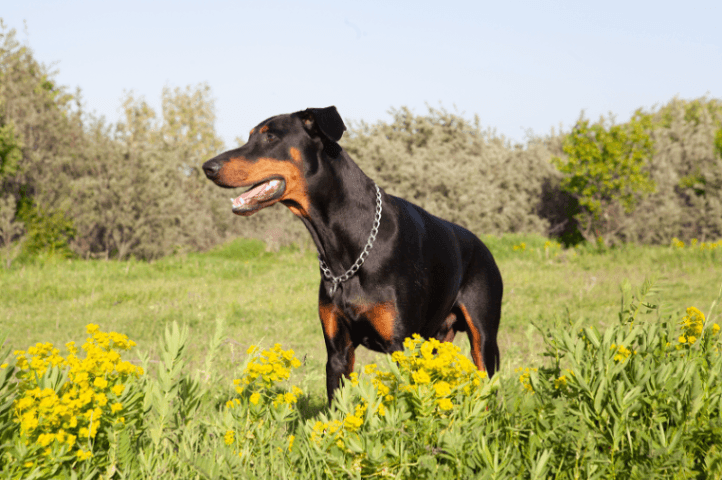
Doberman
Last Updated:
The Doberman dog breed (Doberman Pinscher) is a powerful, intelligent, and highly loyal guard dog known for its alertness and sleek muscular build. Popular in India for security and companionship, Dobermans are easy to train, protective, and affectionate with family. They require regular exercise, proper training, and consistent care, making them ideal for active and experienced dog owners.
Height
24 - 28 Inches
Intelligence
High
Lifespan
9 - 12 years
Weight
27 - 45 Kg
Temperament
About
The Doberman, also known as the Doberman Pinscher, is an athletic, intelligent, loyal, and highly alert dog breed known for its elegant appearance and strong protective instincts. Originally developed as a working and protection dog, the Doberman is now a popular family companion, guard dog, and working breed.
Dobermans are known for being intelligent, loyal, alert, energetic, affectionate, confident, and highly trainable. They form strong bonds with their families and often thrive when they have a close relationship with their owners.
Because Dobermans are active and intelligent dogs, they need regular physical exercise, mental stimulation, early socialization, and consistent positive training. Their short coat is relatively easy to maintain, but their overall care requires an owner who can provide sufficient activity, companionship, and responsible handling.
Doberman Appearance
The Doberman has a sleek, athletic, and muscular body designed for speed, endurance, and agility. Its long head, deep chest, strong legs, and elegant posture give it a distinctive appearance.
Common physical characteristics include:
- Medium-to-large athletic body
- Long, wedge-shaped head
- Powerful jaws
- Alert, almond-shaped eyes
- High-set ears
- Long, muscular neck
- Deep chest
- Strong, straight legs
- Short, smooth coat
- Long, muscular body and tail
Dobermans are commonly seen in black, red, blue, or fawn coats, generally with rust-colored markings on specific areas of the body.
Doberman Temperament
The Doberman temperament is generally loyal, intelligent, alert, confident, affectionate, and protective. A well-socialized Doberman can be loving and devoted to its family while remaining watchful around unfamiliar people.
They are highly people-oriented and often prefer staying close to their owners. Because of their intelligence and protective instincts, early socialization and consistent training are important.
Are Dobermans Good Family Dogs?
Yes, a well-socialized and properly trained Doberman can make an excellent family companion. They can be affectionate, loyal, playful, and strongly attached to their owners.
However, Dobermans are active and powerful dogs. Families should be prepared to provide daily exercise, training, mental stimulation, and responsible supervision.
Are Dobermans Good with Children?
Dobermans can be affectionate and protective toward children in their family when properly socialized and trained. Their energetic nature can make them good companions for older, active children.
Young children should always be supervised around a Doberman, and children should be taught to interact respectfully with the dog.
Doberman Intelligence and Training
Dobermans are highly intelligent and generally respond well to training. They can learn commands quickly and often enjoy having a job or structured activity.
Training should include:
- Basic obedience
- Leash training
- Recall training
- House training
- Impulse control
- Early socialization
- Handling and grooming practice
- Advanced obedience or dog sports
Positive reinforcement, consistency, clear boundaries, and engaging training sessions generally work well. Harsh handling can damage trust and may create unwanted behavioral responses.
Doberman Exercise Requirements
Dobermans are energetic and athletic dogs that require regular daily exercise. A combination of physical activity and mental stimulation is important for their wellbeing.
Suitable activities include:
- Daily walks
- Running with appropriate adult dogs
- Fetch
- Obedience training
- Agility
- Scent games
- Interactive toys
- Hiking and outdoor exploration
Exercise requirements vary with age, health, and individual energy level. Puppies should receive age-appropriate activity and should not be pushed into excessive high-impact exercise while their joints are developing.
Can Dobermans Live in Apartments?
Yes, Dobermans can adapt to apartment living if their substantial exercise and mental stimulation needs are consistently met.
An apartment Doberman should receive daily walks, structured training, interactive play, and opportunities to use its energy appropriately. A lack of activity can contribute to boredom and unwanted behavior.
Doberman Grooming Requirements
Dobermans have a short, smooth coat and relatively simple grooming requirements. Regular brushing helps remove loose hair and keep the skin and coat healthy.
Basic grooming should include:
- Weekly brushing
- Bathing when necessary
- Regular nail trimming
- Routine ear checks
- Regular dental care
- Routine skin and coat checks
Their short coat does not require extensive trimming or professional grooming.
Do Dobermans Shed a Lot?
Dobermans have short coats and generally shed moderately throughout the year. Their short hairs can still be noticeable on furniture and clothing.
Regular brushing can help remove loose hair and keep the coat looking healthy.
Are Dobermans Hypoallergenic?
No, Dobermans are not considered hypoallergenic. They shed and produce allergens such as dander and saliva.
People with dog allergies should spend time around a Doberman before deciding to bring one home.
Doberman Health
Dobermans can be healthy and active companions, but responsible breeding and preventive veterinary care are particularly important because the breed can be predisposed to certain inherited conditions.
Potential health concerns include dilated cardiomyopathy, von Willebrand disease, hip dysplasia, hypothyroidism, cervical vertebral instability, and certain cancers.
Regular veterinary examinations and appropriate health screening can help identify potential problems early.
What Should You Feed a Doberman?
A Doberman should receive a complete and balanced diet appropriate for its age, size, activity level, and health.
Growing puppies require carefully managed nutrition to support healthy development without excessive calorie intake. Adult dogs should receive measured meals based on their activity level and body condition.
Fresh drinking water should always be available.
Can Dobermans Become Overweight?
Yes, Dobermans can gain excess weight if they receive too many calories or insufficient exercise. Maintaining a lean body condition is important for supporting mobility and overall health.
Measured meals, controlled treats, regular exercise, and routine body-condition monitoring can help prevent obesity.
Doberman Socialization
Early socialization is especially important for Dobermans because of their intelligence, alertness, and protective instincts.
Puppies should gradually and positively experience different people, environments, sounds, surfaces, handling, and appropriately vaccinated dogs.
Positive social experiences can help a Doberman develop confidence and appropriate behavior around unfamiliar situations.
Are Dobermans Good with Other Pets?
Dobermans can live successfully with other dogs and compatible pets when properly socialized and introduced. Some individuals may have a stronger prey drive than others.
Introductions should be gradual and supervised, particularly around smaller animals.
Are Dobermans Affectionate?
Yes, Dobermans are often very affectionate and strongly attached to their families. They are commonly described as people-oriented dogs that enjoy spending time close to their owners.
They can be playful and loving at home while remaining alert to unfamiliar situations.
Are Dobermans Good Guard Dogs?
Yes, Dobermans can be excellent watchdogs and protection dogs. Their intelligence, athleticism, alertness, confidence, and loyalty make them naturally suited to guarding roles.
However, responsible owners should focus on obedience, socialization, and controlled behavior rather than encouraging unnecessary aggression.
Are Dobermans Aggressive?
Dobermans are not inherently aggressive, but they have strong protective instincts and can be naturally alert around unfamiliar people. Temperament is influenced by genetics, socialization, training, and environment.
Responsible breeding, early socialization, positive training, and appropriate handling are important for developing a stable adult dog.
Are Dobermans Good for First-Time Dog Owners?
Dobermans can be challenging for first-time owners because they are intelligent, energetic, powerful, and highly responsive to their environment.
They are generally better suited to owners who are prepared to provide consistent training, extensive socialization, daily exercise, and responsible handling.
Do Dobermans Need a Lot of Attention?
Yes, Dobermans are highly social and people-oriented dogs. They thrive on interaction with their owners and need regular exercise, training, mental stimulation, and companionship.
Long periods of isolation can contribute to boredom, anxiety, or unwanted behaviors.
Can Dobermans Be Left Alone?
Dobermans can learn to spend reasonable periods alone with gradual training, but they generally do best when they receive plenty of companionship and activity.
Exercise before alone time, enrichment toys, and gradual independence training can help them cope when their owners are away.
How Long Do Dobermans Live?
Dobermans generally have a lifespan of around 10 to 13 years. Individual longevity varies depending on genetics, responsible breeding, nutrition, exercise, preventive veterinary care, and overall health.
Doberman Price in India
The Doberman price in India varies depending on pedigree, breeder reputation, bloodline, health screening, age, location, coat color, and availability.
As a general estimate, a Doberman puppy in India may cost approximately ₹15,000 to ₹50,000 or more.
Puppies from responsible breeders with documented pedigrees, appropriate health screening, and proper veterinary care may cost considerably more.
Prospective owners should consider vaccination records, parental health, health screening, living conditions, and responsible breeding practices rather than choosing a puppy based solely on price.
Doberman Monthly Maintenance Cost in India
The estimated Doberman monthly maintenance cost in India can range from approximately ₹4,000 to ₹8,000 or more, depending on food, veterinary care, parasite prevention, grooming, training, treats, toys, and lifestyle.
Regular expenses may include:
- Quality dog food
- Routine veterinary care
- Vaccinations
- Deworming
- Tick and flea prevention
- Dental care
- Grooming
- Training
- Toys and enrichment
Health-related expenses can be considerably higher if the dog develops cardiac, orthopedic, bleeding, or other breed-associated conditions.
Can Dobermans Live in India's Climate?
Dobermans can adapt to India's climate, but their short coat provides limited protection from extreme cold and their active nature can increase the risk of overheating during very hot weather.
They should have access to fresh water, shade, ventilation, and a cool indoor environment. Exercise should preferably take place during cooler morning or evening hours.
During extreme heat, strenuous outdoor activity should be avoided.
Do Dobermans Need Air Conditioning in India?
In regions with very hot summers, indoor cooling can help keep a Doberman comfortable. Air conditioning can be particularly useful during extreme heat, although shade, ventilation, fresh water, and appropriate exercise timing are also important.
Are Dobermans High-Maintenance?
Dobermans have relatively simple grooming requirements, but they can be demanding overall because of their high energy, intelligence, training needs, social nature, and potential inherited health problems.
They require consistent daily activity, mental stimulation, positive training, companionship, and preventive healthcare.
Do Dobermans Do Well in Cold Weather?
Dobermans have a short coat and relatively little body insulation compared with many cold-weather breeds. They may therefore become uncomfortable in cold weather and may need additional protection during particularly cold conditions.
Are Dobermans Good for Active Families?
Yes, Dobermans can be excellent companions for active families. They often enjoy walking, running, hiking, obedience training, agility, and other activities that combine physical exercise with mental stimulation.
Are Dobermans Good for Indian Families?
Dobermans can be suitable for Indian families that can provide sufficient exercise, training, companionship, and preventive healthcare.
Families living in very hot regions should take particular care with hydration, cooling, and exercise timing. Because of their protective nature, early socialization is also essential.
Final Thoughts
The Doberman is an intelligent, loyal, athletic, affectionate, and highly trainable breed known for its elegant appearance and strong protective instincts. With the right training and socialization, a Doberman can be both a devoted family companion and an effective working or protection dog.
For prospective owners in India, it is important to consider both the Doberman price in India and the ongoing costs associated with quality nutrition, veterinary care, training, exercise, parasite prevention, and preventive healthcare.
With responsible breeding, early socialization, positive training, regular exercise, mental stimulation, appropriate nutrition, and consistent companionship, a Doberman can be a loyal and rewarding companion for many years.
Care Requirements
Compatibility
Available Colors
Health Considerations
- Dilated Cardiomyopathy
- Gastric Dilatation-Volvulus
- Von Willebrand's Disease
- Wobbler Syndrome
- Hypothyroidism
- Hip dysplasia
- Chronic Active Hepatitis
Fun Facts
- During WWII, Dobermans served in the U.S. Marine Corps. A Doberman named Kurt was the first canine casualty in the 1944 Battle of Guam and is buried in the War Dog Cemetery.
- They are ranked among the top 5 most intelligent dog breeds, specifically for obedience training.
- Known for their extreme loyalty, Dobermans are famous for being "Velcro dogs"—they love to stick as close as possible to their owners.
Frequently Asked Questions
Common questions about the Doberman breed.
What is a Doberman?
The Doberman, also known as the Doberman Pinscher, is an athletic, intelligent, loyal, alert, and highly trainable working breed originally developed in Germany. Today, it is popular as a family companion, watchdog, and working dog.
How much does a Doberman cost in India?
The Doberman price in India varies depending on pedigree, breeder reputation, bloodline, health screening, age, location, and availability. A puppy may typically cost around ₹15,000 to ₹50,000 or more.
Are Dobermans good family dogs?
Yes, a well-socialized and properly trained Doberman can be an excellent family dog. They are loyal, affectionate, intelligent, protective, and strongly attached to their families.
Are Dobermans good with children?
Dobermans can be affectionate and protective toward children when properly socialized and trained. Because they are powerful and energetic dogs, interactions with young children should always be supervised.
Are Dobermans good with other dogs?
Dobermans can live successfully with other dogs when properly socialized and introduced. Some individuals may be territorial or less tolerant of unfamiliar dogs, so early socialization is important.
Are Dobermans affectionate?
Yes, Dobermans are generally very affectionate and people-oriented. They often form strong bonds with their owners and enjoy staying close to their families.
Are Dobermans intelligent?
Yes, Dobermans are highly intelligent and quick learners. Their intelligence and eagerness to work make them suitable for obedience, tracking, agility, and other dog sports.
Are Dobermans easy to train?
Dobermans are generally highly trainable, but they require early, consistent, and positive training. Their intelligence and strength make good manners and impulse control particularly important.
How much exercise does a Doberman need?
Dobermans are energetic and athletic dogs that need substantial daily physical and mental activity. Walks, running, fetch, obedience training, agility, scent games, and interactive play can help meet their needs.
Can Dobermans live in apartments?
Yes, Dobermans can adapt to apartment living if they receive enough daily exercise, training, mental stimulation, and companionship. Without sufficient activity, they may develop boredom-related behaviors.
Do Dobermans shed a lot?
Dobermans have a short, smooth coat and generally shed moderately. Their short hairs can still be noticeable on clothing and furniture, but regular brushing helps manage loose hair.
Are Dobermans hypoallergenic?
No, Dobermans are not considered hypoallergenic. They shed and produce allergens such as dander and saliva.
How often should a Doberman be groomed?
Dobermans have relatively low-maintenance grooming needs. Regular brushing, occasional bathing, nail trimming, ear care, dental care, and routine skin checks are generally sufficient.
Are Dobermans good guard dogs?
Yes, Dobermans can be excellent watchdogs and protection dogs. Their intelligence, alertness, athleticism, confidence, and loyalty make them naturally suited to guarding roles.
Do Dobermans bark a lot?
Dobermans are generally not constant barkers, but they may bark to alert their owners to unfamiliar people, sounds, or activity. Training and adequate mental stimulation can help prevent unnecessary barking.
Are Dobermans aggressive?
Dobermans are not inherently aggressive, but they have strong protective instincts and can be wary of strangers. Responsible breeding, early socialization, positive training, and appropriate handling are important for developing a stable temperament.
Are Dobermans good for first-time dog owners?
Dobermans can be challenging for first-time owners because they are energetic, intelligent, powerful, and protective. They are generally better suited to owners who can commit to consistent training, socialization, exercise, and responsible handling.
Do Dobermans need a lot of attention?
Yes, Dobermans are highly social and people-oriented dogs. They need regular companionship, physical exercise, mental stimulation, training, and interaction with their owners.
Can Dobermans be left alone?
Dobermans can learn to spend reasonable periods alone with gradual training, but they generally prefer companionship. Long periods of isolation can contribute to boredom, anxiety, or unwanted behaviors.
What should I feed a Doberman?
A Doberman should receive a complete and balanced diet appropriate for its age, size, activity level, and health. Puppies require carefully managed nutrition to support healthy growth, while adult dogs should receive measured meals based on their body condition and activity.
Can Dobermans become overweight?
Yes, Dobermans can gain excess weight if they receive too many calories or insufficient exercise. Measured meals, controlled treats, regular activity, and monitoring body condition can help maintain a healthy weight.
What health problems do Dobermans have?
Dobermans can be predisposed to conditions including dilated cardiomyopathy, von Willebrand disease, hypothyroidism, cervical vertebral instability, hip dysplasia, and certain liver and other health conditions.
Are Dobermans prone to heart disease?
Yes, Dobermans have a notable predisposition to dilated cardiomyopathy, a serious heart condition. Veterinary cardiac screening, including echocardiography and Holter monitoring when appropriate, can help assess heart health.
What is dilated cardiomyopathy in Dobermans?
Dilated cardiomyopathy is a heart condition in which the heart muscle becomes weakened and the heart chambers can enlarge. Dobermans have a recognized predisposition to this disease, so regular veterinary monitoring is important.
Are Dobermans prone to von Willebrand disease?
Yes, Dobermans can be affected by von Willebrand disease, an inherited bleeding disorder. Responsible breeders can use appropriate genetic testing and health screening to help reduce the risk.
Are Dobermans prone to hip dysplasia?
Hip dysplasia can occur in Dobermans. Maintaining a healthy weight, providing appropriate exercise, and obtaining health information about the parents can help support long-term joint health.
What is Wobbler syndrome in Dobermans?
Cervical vertebral instability, often called Wobbler syndrome, is a condition affecting the cervical spine that can cause neck pain, weakness, or an unsteady gait. Veterinary evaluation is needed if such symptoms appear.
Do Dobermans need health testing?
Yes. Prospective owners should ask breeders about health screening of the parents, particularly cardiac evaluations, thyroid testing, von Willebrand disease testing, and other breed-relevant health assessments.
How long do Dobermans live?
Dobermans commonly live around 10 to 13 years, although individual lifespan varies. Genetics, responsible breeding, nutrition, exercise, preventive veterinary care, and overall health all influence longevity.
Are Dobermans good with cats?
Some Dobermans can live successfully with cats when properly socialized and introduced, while others may have a stronger prey drive. Introductions should be gradual and supervised.
Are Dobermans good indoor dogs?
Yes, Dobermans can be excellent indoor companions. They are highly people-oriented and generally prefer staying close to their families, provided their daily exercise and mental stimulation needs are met.
Can Dobermans live in India's climate?
Dobermans can adapt to India's climate, but hot weather requires careful management. They should have access to fresh water, shade, ventilation, and a cool indoor environment, with exercise scheduled during cooler parts of the day.
Are Dobermans suitable for hot weather?
Dobermans can tolerate warm weather with appropriate care, but strenuous exercise should be avoided during extreme heat. Fresh water, shade, cooling, and early-morning or evening exercise are important.
Do Dobermans need air conditioning in India?
Air conditioning is not required in every situation, but reliable indoor cooling can be helpful during India's hottest periods, particularly in very hot and humid regions.
Are Dobermans high-maintenance?
Dobermans have relatively low-maintenance grooming needs, but they can be demanding overall because of their exercise, training, mental stimulation, companionship, and preventive healthcare requirements.
What colors do Dobermans come in?
Dobermans are commonly recognized in black, red, blue, and fawn or Isabella, generally with rust-colored markings in characteristic locations.
Are Dobermans loyal?
Yes, loyalty is one of the breed's defining characteristics. Dobermans tend to form strong bonds with their families and can be highly devoted and protective companions.
Are Dobermans good for senior citizens?
Dobermans may be challenging for some senior owners because of their strength, energy, and exercise requirements. They are best suited to owners who are physically able to manage an active and powerful dog.
Are Dobermans good for Indian families?
Yes, Dobermans can be good family dogs for Indian households that can provide daily exercise, training, companionship, socialization, and appropriate heat management.
What is the monthly maintenance cost of a Doberman in India?
The estimated Doberman monthly maintenance cost in India can range from approximately ₹4,000 to ₹8,000 or more, depending on food, veterinary care, parasite prevention, grooming, training, treats, toys, and lifestyle.
Are Dobermans good for active families?
Yes, Dobermans are particularly well suited to active families. They often enjoy walking, running, hiking, obedience training, agility, tracking, and other activities that combine physical and mental exercise.
Can Doberman puppies exercise a lot?
Doberman puppies need regular but age-appropriate exercise. Excessive high-impact running, jumping, or repetitive activity should be avoided while their bones and joints are developing.
Why is socialization important for Dobermans?
Socialization helps Dobermans become confident and comfortable around different people, dogs, environments, sounds, and situations. Because they are naturally alert and protective, positive early experiences are especially important.
What kind of owner is best for a Doberman?
A Doberman is best suited to an owner who can provide consistent positive training, early socialization, daily physical exercise, mental stimulation, companionship, and responsible healthcare throughout the dog's life.