
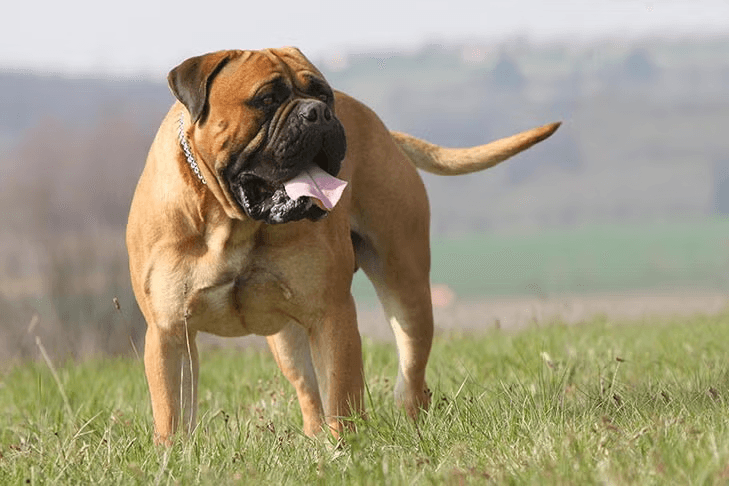
Bullmastiff
Last Updated:
The Bullmastiff dog breed is a large, powerful, and loyal guard dog known for its calm temperament and strong protective instincts. Popular among experienced pet owners in India, Bullmastiffs are affectionate with family, require moderate exercise, and need proper training and space. They are ideal for homes looking for a dependable and protective companion.
Height
24 - 27 inches
Intelligence
High
Lifespan
7 - 10 years
Weight
41 - 59 Kg
Temperament
About
The Bullmastiff is a large and powerful working breed known for its muscular build, courage, loyalty, and calm temperament. Originally developed in England to guard estates and deter poachers, the Bullmastiff is now valued as a devoted family companion and protective watchdog.
Bullmastiffs are known for being loyal, affectionate, courageous, calm, protective, intelligent, and confident. Despite their imposing appearance, a well-socialized Bullmastiff can be gentle and affectionate with its family.
Because of their size, strength, and protective instincts, Bullmastiffs benefit from early socialization, consistent positive training, controlled exercise, and responsible handling. Their short coat is relatively easy to maintain, but their large size means nutrition, weight management, joint health, and regular veterinary care are particularly important.
Bullmastiff Appearance
The Bullmastiff has a powerful, muscular body with a broad head, short muzzle, and strong neck. Its compact but substantial build gives it an imposing appearance without sacrificing agility.
Common physical characteristics include:
- Large, muscular body
- Broad chest
- Powerful neck and shoulders
- Large, square-shaped head
- Short muzzle
- Dark, medium-sized eyes
- Small, folded ears
- Short, dense coat
- Strong legs and feet
- Long tail
Bullmastiffs commonly have coats in shades of fawn, red, or brindle. A black mask on the face is characteristic of the breed.
Bullmastiff Temperament
The Bullmastiff temperament is generally calm, loyal, affectionate, courageous, confident, and protective. They often form strong bonds with their families and can be gentle and relaxed at home.
The breed was developed as a property guardian, so Bullmastiffs can be naturally alert and protective. Early socialization is important to help them become confident around unfamiliar people, animals, and environments.
Are Bullmastiffs Good Family Dogs?
Yes, a well-socialized Bullmastiff can be a loving and devoted family companion. They often enjoy spending time with their owners and can be surprisingly calm indoors.
However, their large size and strength mean that owners need to be confident handling a powerful dog and should begin training and socialization early.
Are Bullmastiffs Good with Children?
Bullmastiffs can be affectionate and protective toward children in their family when properly socialized. However, their large size means they can accidentally knock over a small child.
Young children should always be supervised around a Bullmastiff, and children should be taught to interact respectfully with the dog.
Bullmastiff Intelligence and Training
Bullmastiffs are intelligent and capable of learning obedience commands and household rules. They can also be independent and may not always respond immediately to repetitive training.
Training should include:
- Basic obedience
- Leash training
- Recall training
- House training
- Impulse control
- Early socialization
- Handling and grooming practice
Positive reinforcement, consistency, patience, and calm leadership generally work better than harsh training methods.
Bullmastiff Exercise Requirements
Bullmastiffs have moderate exercise needs. They benefit from regular walks and controlled activity but generally do not require the same level of endurance exercise as highly athletic breeds.
Suitable activities include:
- Daily walks
- Controlled outdoor play
- Obedience training
- Scent games
- Interactive toys
- Short exploration sessions
Young Bullmastiffs should not be subjected to excessive running, jumping, or other high-impact activities while their bones and joints are developing.
Can Bullmastiffs Live in Apartments?
Bullmastiffs can adapt to apartment living if their daily exercise and enrichment needs are met, but their large size can make smaller homes challenging.
A spacious home with easy access to walking areas is generally more practical. Owners should also consider elevator access and whether the dog has enough indoor space to move comfortably.
Bullmastiff Grooming Requirements
Bullmastiffs have a short, dense coat and relatively simple grooming requirements. Regular brushing helps remove loose hair and keep the coat healthy.
Basic grooming should include:
- Weekly brushing
- Bathing when necessary
- Regular nail trimming
- Routine ear checks
- Dental care
- Regular inspection and cleaning of facial areas when needed
Bullmastiffs can also drool, so owners may need to regularly clean the dog's muzzle and surrounding areas.
Do Bullmastiffs Shed a Lot?
Bullmastiffs have a short coat and generally shed moderately. Regular brushing can help remove loose hair and reduce hair accumulation around the home.
Are Bullmastiffs Hypoallergenic?
No, Bullmastiffs are not considered hypoallergenic. They shed and produce allergens such as dander and saliva.
People with allergies should spend time around the breed before deciding to bring one home.
Bullmastiff Health
Bullmastiffs can be healthy companions when responsibly bred and provided with appropriate nutrition, exercise, weight management, and preventive veterinary care. However, their large size means they can be predisposed to certain health conditions.
Potential health concerns include hip and elbow dysplasia, cranial cruciate ligament problems, gastric dilatation-volvulus (bloat), heart disease, certain cancers, and eye conditions.
Regular veterinary examinations and appropriate health screening can help identify potential problems early.
What Should You Feed a Bullmastiff?
A Bullmastiff should receive a complete and balanced diet appropriate for its age, size, activity level, and health requirements.
Growing puppies require carefully controlled nutrition because rapid growth and excess calories can place unnecessary stress on developing bones and joints.
Fresh drinking water should always be available.
Can Bullmastiffs Become Overweight?
Yes, Bullmastiffs can gain excess weight, and obesity can put significant additional stress on their joints. Measured meals, controlled treats, regular appropriate exercise, and monitoring body condition are important.
Bullmastiff Socialization
Early socialization is extremely important for Bullmastiffs because of their size, strength, and protective instincts.
Puppies should gradually and positively experience different people, environments, sounds, surfaces, handling, and appropriately vaccinated dogs. Good socialization can help them become confident and well-mannered adults.
Are Bullmastiffs Good with Other Pets?
Bullmastiffs can live with other dogs and compatible pets when properly socialized and introduced. However, their size and strength mean interactions with smaller animals should be supervised.
Introductions should be gradual, and each pet should have its own food, water, resting area, and safe space.
Are Bullmastiffs Affectionate?
Yes, Bullmastiffs are generally affectionate and strongly attached to their families. Many enjoy staying close to their owners and receiving attention from people they trust.
Despite their imposing appearance, they can be calm and loving companions when properly socialized.
Are Bullmastiffs Good Guard Dogs?
Yes, Bullmastiffs can be excellent guard dogs. They were originally developed to protect estates and deter intruders, and they retain strong protective instincts.
Their guarding instincts should be managed through responsible socialization and positive training rather than encouraging aggressive behavior.
Are Bullmastiffs Good for First-Time Dog Owners?
Bullmastiffs can be challenging for first-time owners because of their large size, strength, protective instincts, and training requirements.
They are generally better suited to owners who are confident handling large dogs and can provide consistent training, socialization, and appropriate care.
Do Bullmastiffs Need a Lot of Attention?
Bullmastiffs are strongly bonded to their families and generally enjoy companionship. They often prefer being near their owners rather than being isolated for long periods.
Daily interaction, exercise, training, and mental stimulation are important for their wellbeing.
How Long Do Bullmastiffs Live?
Bullmastiffs generally have a lifespan of around 7 to 9 years. Individual longevity can vary depending on genetics, responsible breeding, nutrition, body condition, preventive veterinary care, and overall health.
Bullmastiff Price in India
The Bullmastiff price in India can vary depending on pedigree, breeder reputation, bloodline, health screening, age, location, and availability.
As a general estimate, a Bullmastiff puppy in India may cost approximately ₹40,000 to ₹1,20,000 or more.
Dogs from responsible breeders with documented pedigrees, appropriate health screening, and proper veterinary care may cost considerably more.
Prospective owners should consider vaccination records, health history, parental health, living conditions, and responsible breeding practices rather than choosing a puppy based solely on price.
Bullmastiff Monthly Maintenance Cost in India
The estimated Bullmastiff monthly maintenance cost in India can range from approximately ₹7,000 to ₹15,000 or more, depending on food, veterinary care, parasite prevention, grooming, training, treats, toys, and lifestyle.
Regular expenses may include:
- Quality large-breed dog food
- Routine veterinary care
- Vaccinations
- Deworming
- Tick and flea prevention
- Dental care
- Grooming
- Training
- Toys and enrichment
Medical expenses can be considerably higher if the dog develops joint, cardiac, gastrointestinal, or other breed-associated health problems.
Can Bullmastiffs Live in India's Climate?
Bullmastiffs can live in India, but hot and humid weather requires careful management. Their large size and short muzzle can make them more vulnerable to overheating.
They should have access to fresh water, shade, good ventilation, and a cool indoor environment. Walks should preferably take place during cooler morning or evening hours.
Strenuous exercise should be avoided during periods of extreme heat.
Do Bullmastiffs Need Air Conditioning in India?
In regions with very hot summers, reliable indoor cooling can be highly beneficial for a Bullmastiff. During extreme heat, maintaining a cool environment and limiting outdoor activity can help reduce the risk of heat stress.
Are Bullmastiffs High-Maintenance?
Bullmastiffs have relatively simple grooming requirements but can be considered moderately high-maintenance overall because of their size, food requirements, healthcare needs, and potential joint and other breed-related health concerns.
They also require sufficient space and responsible handling because of their strength.
Do Bullmastiffs Drool?
Yes, Bullmastiffs can drool, particularly after eating, drinking, exercising, or becoming excited. Individual dogs vary in the amount of drooling they produce.
Keeping a towel nearby and regularly cleaning the muzzle can help manage drool around the home.
Do Bullmastiffs Bark a Lot?
Bullmastiffs are generally not constant barkers, but they may vocalize when they detect unfamiliar people or activity. Their protective nature can make them naturally alert to changes around the home.
Proper socialization, training, and sufficient mental stimulation can help manage unnecessary barking.
Are Bullmastiffs Good for Active Families?
Bullmastiffs can suit families that enjoy regular walks and moderate outdoor activity. They generally do not require intense endurance exercise and often enjoy relaxing with their family after their daily activity.
Are Bullmastiffs Good for Indian Families?
Bullmastiffs can be suitable for Indian families that have sufficient space, experience, time, and resources to care for a large protective breed.
Families living in hot regions should take particular care with cooling, hydration, exercise timing, and heat management.
Final Thoughts
The Bullmastiff is a powerful, loyal, affectionate, calm, and courageous breed known for its protective instincts and imposing appearance. Despite its strength and size, a well-socialized Bullmastiff can be a gentle and devoted family companion.
For prospective owners in India, it is important to consider both the Bullmastiff price in India and the ongoing costs associated with feeding, veterinary care, space, training, and preventive healthcare for a large breed.
With responsible breeding, early socialization, positive training, appropriate nutrition, healthy weight management, regular veterinary care, and careful heat management, a Bullmastiff can be a loyal and rewarding companion and guardian.
Care Requirements
Compatibility
Available Colors
Health Considerations
- Hip dysplasia
- Elbow dysplasia
- Lymphoma
- Gastric Dilatation-Volvulus
- Progressive retinal atrophy
- Dilated cardiomyopathy
- Subaortic valvular stenosis
Fun Facts
- Sylvester Stallone’s own dog which was a bullmastiff, Butkus, played Rocky’s dog in the movies Rocky and Rocky II.
- The first Bullmastiffs were brought to the USA in the 1930s by John D. Rockefeller.
Frequently Asked Questions
Common questions about the Bullmastiff breed.
What is a Bullmastiff?
The Bullmastiff is a large, powerful working breed developed in England to guard estates and catch poachers. It is known for being loyal, courageous, protective, calm, and affectionate with its family.
How much does a Bullmastiff cost in India?
The Bullmastiff price in India varies depending on pedigree, breeder reputation, bloodline, health screening, age, location, and availability. A puppy may typically cost around ₹40,000 to ₹1,20,000 or more.
Are Bullmastiffs good family dogs?
Yes, a well-socialized Bullmastiff can be a calm, affectionate, and devoted family companion. They are naturally protective and form strong bonds with their families.
Are Bullmastiffs good with children?
Bullmastiffs can be gentle and affectionate with children when properly socialized. Because they are large and powerful dogs, interactions with young children should always be supervised.
Are Bullmastiffs good with other dogs?
Bullmastiffs can live with other dogs when properly socialized, although some individuals may be reserved or less tolerant of unfamiliar dogs. Introductions should be gradual and supervised.
Are Bullmastiffs affectionate?
Yes, Bullmastiffs are generally affectionate and devoted to their families. They often enjoy staying close to their owners despite their large size.
Are Bullmastiffs intelligent?
Yes, Bullmastiffs are intelligent and can learn new commands quickly. However, they can also be independent and may become bored with repetitive training.
Are Bullmastiffs easy to train?
Bullmastiffs can learn quickly but may be strong-willed. Early training, positive reinforcement, consistency, and calm leadership are important, especially because they become very powerful adults.
How much exercise does a Bullmastiff need?
Bullmastiffs have moderate exercise needs. Daily walks, controlled play, obedience training, and mental stimulation are generally suitable. They are not ideal long-distance running companions.
Can Bullmastiffs live in apartments?
Bullmastiffs can adapt to apartment living if they receive adequate daily exercise and have enough indoor space to move comfortably. A spacious home with convenient access to outdoor areas is generally more practical.
Do Bullmastiffs shed a lot?
Bullmastiffs have a short coat and generally shed moderately, with seasonal increases possible. Regular brushing can help remove loose hair and keep the coat healthy.
Are Bullmastiffs hypoallergenic?
No, Bullmastiffs are not considered hypoallergenic. They shed and produce allergens such as dander and saliva.
How often should a Bullmastiff be groomed?
Bullmastiffs have relatively simple grooming needs. Weekly brushing, occasional bathing, regular nail trimming, ear checks, dental care, and cleaning of facial areas when necessary are generally sufficient.
Do Bullmastiffs drool?
Yes, Bullmastiffs can drool, particularly after eating, drinking, exercising, or becoming excited. Individual dogs vary in the amount of drooling they produce.
Are Bullmastiffs good guard dogs?
Yes. Bullmastiffs were developed as estate guardians and retain strong protective instincts. They are naturally alert and can be very effective deterrents because of their size, strength, and confidence.
Do Bullmastiffs bark a lot?
Bullmastiffs are generally relatively quiet dogs and are not known for excessive barking. They may bark or alert their family when they notice something unusual.
Are Bullmastiffs aggressive?
Bullmastiffs are not inherently aggressive. They are naturally protective and may be reserved around strangers, but proper socialization and positive training are important for developing a calm and dependable adult dog.
Are Bullmastiffs good for first-time dog owners?
Bullmastiffs can be challenging for first-time owners because of their size, strength, protective instincts, and sometimes stubborn nature. They are generally better suited to experienced owners.
Do Bullmastiffs need a lot of attention?
Bullmastiffs are strongly bonded to their families and enjoy companionship, but they do not usually require constant activity. They need daily interaction, exercise, training, and mental stimulation.
Can Bullmastiffs be left alone?
Bullmastiffs can learn to spend some time alone, but they should not be routinely isolated for long periods. Proper training, exercise, and enrichment can help them cope with reasonable periods of alone time.
What should I feed a Bullmastiff?
A Bullmastiff should receive a complete and balanced diet appropriate for its age, size, activity level, and health. Puppies should receive appropriately formulated large-breed growth nutrition to support controlled development.
Can Bullmastiffs become overweight?
Yes, Bullmastiffs can gain excess weight, which can put additional stress on their joints. Measured meals, controlled treats, appropriate exercise, and regular body-condition monitoring are important.
What health problems do Bullmastiffs have?
Bullmastiffs can be predisposed to conditions including hip and elbow dysplasia, cranial cruciate ligament disease, heart conditions, certain cancers, eye problems, and gastric dilatation-volvulus or bloat.
Are Bullmastiffs prone to hip dysplasia?
Yes, hip dysplasia can occur in Bullmastiffs. Responsible breeding, appropriate nutrition during growth, healthy weight management, and regular veterinary care can help support joint health.
Are Bullmastiffs prone to elbow dysplasia?
Yes, elbow dysplasia can occur in Bullmastiffs. Persistent limping, stiffness, or changes in gait should be evaluated by a veterinarian.
Are Bullmastiffs prone to bloat?
Bullmastiffs can be susceptible to gastric dilatation-volvulus, commonly called bloat. Sudden abdominal swelling, repeated unproductive retching, restlessness, weakness, or collapse requires immediate veterinary attention.
Are Bullmastiffs prone to heart problems?
Bullmastiffs can develop heart conditions, including dilated cardiomyopathy. Regular veterinary examinations are important, especially if symptoms such as coughing, breathing difficulty, weakness, exercise intolerance, or collapse occur.
Do Bullmastiffs need health testing?
Prospective owners should ask breeders about health screening and the health history of both parents. Screening for orthopedic, cardiac, eye, and other breed-relevant conditions can help reduce inherited health risks.
How long do Bullmastiffs live?
Bullmastiffs generally have a lifespan of around 7 to 10 years. Individual longevity varies depending on genetics, responsible breeding, nutrition, body condition, preventive veterinary care, and overall health.
Are Bullmastiffs good with cats?
Some Bullmastiffs can live successfully with cats and other pets when properly socialized and introduced. Because of their size and strength, interactions with smaller animals should be supervised.
Are Bullmastiffs good indoor dogs?
Yes, Bullmastiffs can be calm and well-mannered indoor dogs. They enjoy being close to their families, but their large size means the home should provide adequate space for comfortable movement.
Can Bullmastiffs live in India's climate?
Bullmastiffs can live in India, but hot and humid weather requires careful management. Their short muzzle and large body can make overheating a concern, so they need access to shade, fresh water, ventilation, and a cool indoor environment.
Are Bullmastiffs suitable for hot weather?
Bullmastiffs can struggle in extreme heat. Exercise should preferably take place during cooler morning or evening hours, and strenuous activity should be avoided during peak temperatures.
Do Bullmastiffs need air conditioning in India?
In regions with very hot summers, reliable indoor cooling can be highly beneficial for a Bullmastiff. During extreme heat, outdoor activity should be limited and the dog should have access to a cool, well-ventilated environment.
Are Bullmastiffs high-maintenance?
Bullmastiffs have relatively simple grooming requirements, but their large size, food requirements, healthcare needs, training requirements, and potential joint and heart problems can make them demanding overall.
What colors do Bullmastiffs come in?
Bullmastiffs are recognized in fawn, red, and brindle. A dark or black facial mask is characteristic of the breed.
Are Bullmastiffs loyal?
Yes, Bullmastiffs are highly loyal and devoted to their families. They can be affectionate at home while remaining naturally alert and protective around unfamiliar situations.
Are Bullmastiffs good for senior citizens?
Bullmastiffs are generally not the easiest choice for senior owners because of their size and strength. An owner should be physically capable of safely handling a large, powerful dog.
Are Bullmastiffs good for Indian families?
Bullmastiffs can be suitable for Indian families with enough space, experience, time, and resources to care for a large protective breed. Families in hot regions should take particular care with cooling and exercise timing.
What is the monthly maintenance cost of a Bullmastiff in India?
The estimated Bullmastiff monthly maintenance cost in India can range from approximately ₹7,000 to ₹15,000 or more, depending on food, veterinary care, parasite prevention, grooming, training, treats, and lifestyle.
Are Bullmastiffs good for active families?
Bullmastiffs can suit families that enjoy daily walks and moderate outdoor activity. They generally do not need high-intensity endurance exercise and are often happy to relax with their family after activity.
Can Bullmastiff puppies exercise a lot?
No. Bullmastiff puppies should have controlled exercise while they are growing. Excessive or high-impact activity during development can place unnecessary stress on their bones and joints.
What kind of owner is best for a Bullmastiff?
A Bullmastiff is best suited to a responsible owner who can safely handle a large dog and provide early socialization, consistent positive training, appropriate nutrition, regular exercise, preventive veterinary care, and plenty of family interaction.