
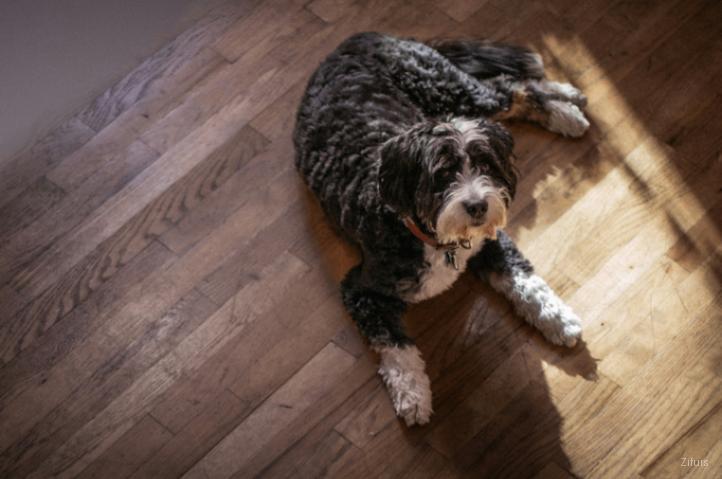
Bernedoodle
Last Updated:
The Bernedoodle is a cross between a Bernese Mountain Dog and a Poodle, known for its intelligence, affectionate nature, and low-shedding coat. It’s a popular family companion with a playful personality.
Height
18 - 29 Inches
Intelligence
Very High
Lifespan
12 - 15 years
Weight
18 - 40 Kg
Temperament
About
The Bernedoodle is a designer dog breed created by crossing a Bernese Mountain Dog with a Poodle. This popular cross combines the affectionate and gentle nature of the Bernese Mountain Dog with the intelligence and trainability of the Poodle. Bernedoodles are known for their friendly personalities, playful behavior, distinctive coats, and strong bonds with their families.
Bernedoodles can vary considerably in size, appearance, coat texture, and shedding depending on their parents and generation. They may have straight, wavy, or curly coats and can display the classic tricolor markings associated with the Bernese Mountain Dog. Their combination of intelligence and sociability makes them popular companion dogs for families and active owners.
Despite their friendly appearance, Bernedoodles require consistent care. Their grooming needs can be significant, particularly for dogs with longer or curlier coats. They also need regular exercise, mental stimulation, training, and socialization to remain happy and well-adjusted.
Bernedoodle Appearance
Bernedoodles can have a wide range of appearances because they inherit characteristics from both the Bernese Mountain Dog and Poodle. Their body structure can range from compact to large depending on the size of the Poodle parent.
Common physical characteristics of Bernedoodles include:
- Strong and well-built body
- Floppy ears
- Expressive eyes
- Long muzzle
- Wavy, curly, or straighter coat
- Medium to large paws
- Long, feathered tail
- Wide variety of coat colors and patterns
Many Bernedoodles have black, white, and tan markings similar to the Bernese Mountain Dog. However, coat colors and patterns can vary considerably between individual dogs.
Bernedoodle Temperament
The Bernedoodle temperament is generally friendly, affectionate, playful, intelligent, and social. They often form strong bonds with their families and enjoy being involved in everyday activities.
Bernedoodles can inherit the gentle nature of the Bernese Mountain Dog and the alert, intelligent personality of the Poodle. Individual temperament can vary, particularly because Bernedoodles are a crossbreed.
Early socialization and consistent training are important for helping a Bernedoodle develop into a confident and well-mannered companion.
Are Bernedoodles Good Family Dogs?
Yes, Bernedoodles can make excellent family companions. They are generally affectionate, playful, social, and enjoy spending time with their owners.
They can be suitable for families with children when properly socialized and supervised. Children should be taught to interact with dogs respectfully, particularly around feeding, sleeping, and resting areas.
Bernedoodle Training
Bernedoodles are generally intelligent and can respond well to training, particularly when positive reinforcement is used. Their Poodle heritage can contribute to their ability to learn commands and routines quickly.
Training should begin early and focus on:
- Basic obedience
- Leash training
- Recall
- Impulse control
- Socialization
- House training
- Good manners around people and other pets
Positive reinforcement using treats, praise, toys, and play can help make training engaging and effective.
Bernedoodle Exercise Requirements
Bernedoodles are generally active dogs and require regular physical activity and mental stimulation. Their exact exercise needs depend on their size, age, health, and individual energy level.
Daily activities can include:
- Daily walks
- Interactive play
- Fetch
- Obedience training
- Puzzle toys
- Scent games
- Supervised outdoor activities
Providing both physical exercise and mental enrichment can help prevent boredom and unwanted behaviors.
Can Bernedoodles Live in Apartments?
Bernedoodles can adapt to apartment living when their exercise and mental stimulation needs are properly met. Smaller Bernedoodles may be easier to accommodate in apartments, while larger dogs may require more space.
Apartment owners should provide daily walks, interactive play, training, and enrichment. Access to a safe outdoor area can also be beneficial.
Bernedoodle Grooming Requirements
Bernedoodle grooming requirements can vary considerably depending on coat type. Dogs with curly or wavy coats generally require more frequent brushing to prevent tangles and mats.
Basic grooming should include:
- Regular brushing
- Professional grooming when required
- Bathing when necessary
- Nail trimming
- Ear cleaning
- Dental care
Longer or curlier coats may need brushing several times a week. Regular grooming also provides an opportunity to check the dog's skin, ears, paws, and coat.
Do Bernedoodles Shed a Lot?
Bernedoodle shedding can vary significantly depending on the individual dog's coat and genetics. Some Bernedoodles may shed relatively little, while others can shed moderately.
Curly and wavy coats may shed less visibly because loose hair can remain trapped within the coat. This does not mean that these dogs are completely non-shedding.
Are Bernedoodles Hypoallergenic?
Bernedoodles are sometimes described as hypoallergenic because some individuals inherit a low-shedding coat from their Poodle parent. However, no dog is completely hypoallergenic.
Allergy reactions can vary from person to person and may be triggered by dander, saliva, or other allergens rather than hair alone. Anyone with allergies should spend time around the individual dog before making a decision.
Bernedoodle Health
Like all dogs, Bernedoodles can be affected by various health conditions. Regular veterinary examinations, vaccinations, parasite prevention, dental care, appropriate nutrition, and maintaining a healthy weight are important for their overall wellbeing.
Because Bernedoodles are a crossbreed, health characteristics can vary between individuals. Prospective owners should ask breeders about health screening, vaccination records, parental health history, and responsible breeding practices.
What Should You Feed a Bernedoodle?
A Bernedoodle should receive a complete and balanced diet appropriate for its age, size, activity level, and individual health requirements.
Puppies, adults, and senior dogs have different nutritional needs. Portion control is important because maintaining a healthy weight can help support healthy joints and overall mobility.
Fresh drinking water should always be available. A veterinarian can help determine an appropriate diet and feeding schedule based on the individual dog's needs.
Bernedoodle Socialization
Early socialization is important for Bernedoodles. Puppies should gradually and positively experience different people, environments, sounds, surfaces, handling, and appropriately vaccinated dogs.
Good socialization can help a Bernedoodle become more confident and comfortable in unfamiliar situations and can support positive interactions with people and other animals.
Are Bernedoodles Good with Other Pets?
Bernedoodles can often live with other dogs and cat-friendly pets when properly socialized and introduced. Their friendly and social nature can make them suitable for multi-pet households.
Introductions should be gradual and supervised. Each pet should have access to its own food, water, resting space, and other essential resources.
Are Bernedoodles Affectionate?
Yes, Bernedoodles are generally affectionate and people-oriented. Many enjoy spending time with their families, receiving attention, and participating in everyday household activities.
Because they can become strongly attached to their owners, providing companionship, training, and appropriate independence-building activities is important.
Are Bernedoodles Good for First-Time Dog Owners?
Bernedoodles can be suitable for first-time dog owners who are prepared for their grooming, exercise, training, and socialization requirements.
Their intelligence and generally friendly nature can make training rewarding, but larger Bernedoodles require owners who are comfortable managing a strong and potentially energetic dog.
What Are the Different Bernedoodle Sizes?
Bernedoodles can vary in size depending primarily on the size of the Poodle parent. They are commonly described as Standard, Miniature, or smaller varieties such as Tiny Bernedoodles.
Size can influence exercise requirements, food consumption, grooming costs, living-space requirements, and overall maintenance.
How Long Do Bernedoodles Live?
Bernedoodle lifespan can vary depending on size, genetics, nutrition, healthcare, and lifestyle. Smaller Bernedoodles may generally live longer than larger varieties, but individual lifespan can vary significantly.
Regular veterinary care, a balanced diet, appropriate exercise, healthy weight management, and responsible breeding can support overall health and wellbeing.
Bernedoodle Dog Price in India
The Bernedoodle dog price in India can vary considerably because the breed is relatively uncommon and availability may be limited. Factors such as breeder reputation, generation, size, coat type, pedigree, health screening, location, and availability can influence the price.
As a general estimate, a Bernedoodle puppy in India may cost approximately ₹60,000 to ₹2,00,000 or more.
Imported or exceptionally well-bred Bernedoodle puppies may cost considerably more because of transportation, documentation, and limited availability.
Prospective owners should consider health records, parental history, vaccination records, puppy socialization, living conditions, and responsible breeding practices rather than choosing a puppy based solely on price.
Bernedoodle Monthly Maintenance Cost in India
The estimated Bernedoodle monthly maintenance cost in India can range from approximately ₹6,000 to ₹12,000 or more, depending on the dog's size, food requirements, grooming needs, healthcare, preventive treatments, and lifestyle.
Regular expenses may include:
- Quality dog food
- Professional grooming
- Routine veterinary care
- Vaccinations
- Flea and tick prevention
- Dental care
- Toys and enrichment
- Training expenses
Can Bernedoodles Live in India's Climate?
Bernedoodles can live in India with appropriate climate management, but their coat can make hot weather challenging. Owners should provide fresh water, shade, good ventilation, and a cool indoor environment during hot weather.
Exercise should preferably be scheduled during cooler parts of the day, particularly during India's hottest months. Owners should also watch for signs of overheating.
Do Bernedoodles Need Professional Grooming?
Many Bernedoodles benefit from professional grooming, especially those with curly or wavy coats. Regular professional grooming can help maintain coat length, prevent severe matting, and keep the skin and coat healthy.
The frequency depends on coat type, length, lifestyle, and the owner's home grooming routine.
Final Thoughts
The Bernedoodle is a friendly, intelligent, and affectionate companion that combines characteristics from the Bernese Mountain Dog and Poodle. Its playful personality, social nature, and variety of coat types make it an appealing choice for many families.
However, prospective owners should be prepared for regular grooming, exercise, training, socialization, and veterinary care. Coat type and size can significantly affect the dog's maintenance requirements.
For owners in India, it is important to consider both the Bernedoodle dog price in India and ongoing costs for food, grooming, healthcare, training, and enrichment before bringing one home.
With responsible ownership, positive training, proper socialization, regular grooming, a balanced diet, and appropriate exercise, a Bernedoodle can be a loving and rewarding family companion.
Care Requirements
Compatibility
Available Colors
Health Considerations
- Hip Dysplasia
- Elbow Dysplasia
- Progressive Retinal Atrophy
- Bloat
- Skin Allergies
Fun Facts
- Bernedoodles come in different sizes standard (70-90 lbs), miniature (25-49 lbs), and tiny/micro (10-24 lbs), depending on the Poodle parent.
- The Bernedoodle breed was intentionally created in 2003 by Sherry Rupke of Swissridge Kennels, who wanted to create a healthier, longer-lived, and shedding-low alternative to the Bernese Mountain Dog while keeping its loyal temperament.
Frequently Asked Questions
Common questions about the Bernedoodle breed.
What is a Bernedoodle?
A Bernedoodle is a designer dog created by crossing a Bernese Mountain Dog with a Poodle. Bernedoodles are known for their affectionate personality, intelligence, playful nature, and distinctive coats, which can vary in color, texture, and shedding level.
How much does a Bernedoodle cost in India?
The Bernedoodle dog price in India can vary considerably depending on the puppy's size, generation, coat type, lineage, breeder reputation, health screening, location, and availability. As a general estimate, a Bernedoodle puppy may cost around ₹60,000 to ₹2,00,000 or more.
Are Bernedoodles good family dogs?
Yes, Bernedoodles can make excellent family dogs. They are generally affectionate, playful, social, and enjoy spending time with their families. Proper training and early socialization are important for developing good behavior.
Are Bernedoodles good with children?
Bernedoodles can be good with children when properly socialized and supervised. Their playful and affectionate nature can make them enjoyable family companions, although children should always be taught to interact with dogs respectfully.
Are Bernedoodles good with other dogs?
Bernedoodles can generally live well with other dogs when properly socialized and introduced. Their individual temperament can vary, so gradual introductions and supervision are recommended.
Are Bernedoodles easy to train?
Bernedoodles are generally intelligent and can learn commands, tricks, leash manners, and household routines well. They can sometimes inherit a stubborn streak, so positive reinforcement, patience, and consistency are important.
How much exercise does a Bernedoodle need?
Bernedoodles need regular physical activity and mental stimulation. Exercise requirements vary by size, age, health, and individual temperament. Walks, interactive play, training, scent games, and other suitable activities can help keep them healthy and mentally engaged.
Do Bernedoodles shed a lot?
Bernedoodle shedding varies depending on the individual dog's genetics and coat type. Some may shed very little, while others may shed more if they inherit characteristics of the Bernese Mountain Dog coat. Regular grooming helps manage loose hair.
Are Bernedoodles hypoallergenic?
Bernedoodles are sometimes considered suitable for people looking for a lower-shedding dog because some inherit a Poodle-like coat. However, no dog is completely hypoallergenic, and allergy responses vary between individuals.
How often should a Bernedoodle be groomed?
Bernedoodles require regular grooming, particularly those with curly or wavy coats. Frequent brushing helps prevent tangles and mats, while professional grooming may be required regularly depending on coat type and length.
Do Bernedoodles need professional grooming?
Many Bernedoodles benefit from professional grooming because their coats can become tangled and matted. Curly and longer coats generally require more maintenance, and regular professional grooming can help keep the coat manageable.
Can Bernedoodles live in apartments?
Bernedoodles can adapt to apartment living when their exercise, training, companionship, and mental stimulation needs are met. Smaller Bernedoodles may be easier to accommodate in apartments, while Standard Bernedoodles generally benefit from more space and activity.
Are Bernedoodles good for first-time dog owners?
Bernedoodles can be suitable for first-time dog owners who are prepared to provide consistent training, regular exercise, socialization, and grooming. Their intelligence can make training rewarding, but their coat maintenance and size should be considered.
What should I feed a Bernedoodle?
A Bernedoodle should receive a complete and balanced diet appropriate for its age, size, activity level, and health requirements. Standard Bernedoodle puppies may have different nutritional needs from smaller varieties, so feeding should be discussed with a veterinarian.
What is the monthly maintenance cost of a Bernedoodle in India?
The estimated Bernedoodle monthly maintenance cost in India can range from around ₹6,000 to ₹12,000 or more depending on size, food requirements, grooming, healthcare, preventive treatments, training, and lifestyle.
How long do Bernedoodles live?
Bernedoodle lifespan varies according to size, genetics, health, nutrition, and overall care. Published breed-care sources commonly report lifespans around 12 to 18 years, with smaller Bernedoodles often living longer than Standard varieties.
Are Bernedoodles affectionate?
Yes, Bernedoodles are generally affectionate and people-oriented. Many enjoy spending time with their families, playing with them, or relaxing nearby. Because they can become strongly attached to their owners, companionship and appropriate independence training are important.
Do Bernedoodles have separation anxiety?
Some Bernedoodles may be prone to separation-related stress because they often form strong bonds with their families. Gradual alone-time training, enrichment toys, predictable routines, and appropriate crate training can help some dogs become more comfortable when left alone.
What are the different sizes of Bernedoodles?
Bernedoodles are commonly described as Standard, Miniature, and Toy varieties. Their adult size depends largely on the size of the Poodle parent and their individual genetics. Size can affect exercise, food, grooming, and space requirements.
Can Bernedoodles live in India's hot climate?
Bernedoodles can live in India with appropriate climate management, but dogs with thick coats may struggle in hot weather. Fresh water, shade, ventilation, a cool indoor environment, and exercise during cooler parts of the day are important.
Are Bernedoodles active dogs?
Bernedoodles generally enjoy physical activity and mental stimulation, although their energy level can vary significantly. Some are energetic and enjoy hiking or outdoor activities, while others may have a calmer temperament.
Are Bernedoodles good with cats?
Bernedoodles can live successfully with cats when properly socialized and introduced. Their Poodle heritage can contribute to a desire to chase or retrieve, so interactions with cats and other small animals should initially be supervised.
Do Bernedoodles bark a lot?
Bernedoodles are not necessarily excessive barkers, but individual dogs can vary. Barking may occur in response to excitement, unfamiliar sounds, attention-seeking, or anxiety. Exercise, training, socialization, and mental stimulation can help manage unnecessary barking.
Are Bernedoodles high maintenance dogs?
Bernedoodles can be relatively high maintenance, particularly when they inherit a thick, wavy, or curly coat. Regular brushing, professional grooming, exercise, training, socialization, and veterinary care should be part of their routine.
Are Bernedoodles good for active families?
Yes, Bernedoodles can be excellent companions for active families. They can enjoy walks, hiking, swimming, interactive games, training, and other suitable activities. Their exercise requirements should be adjusted according to their size, age, and individual energy level.