
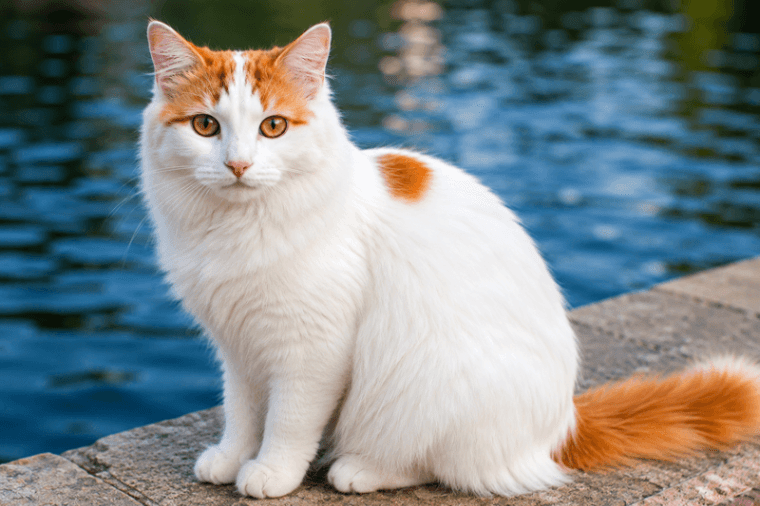
Turkish Van
Last Updated:
The Turkish Van is a rare, intelligent, and energetic cat breed known for its distinctive color pattern and unusual love of water. Often called the “Swimming Cat,” Turkish Vans are affectionate, playful, and highly active companions that form strong bonds with their families.
Height
10 - 14 Inches
Intelligence
High
Lifespan
12 - 17 Years
Weight
4.5 - 9 Kg
Temperament
About
The Turkish Van is a distinctive semi-longhaired cat breed known for its energetic personality, athletic build, striking coat pattern, and strong affinity for water. Originally associated with the Lake Van region of Turkey, the breed is sometimes called the "swimming cat" because many Turkish Vans enjoy playing in or around water.
Turkish Vans are known for being intelligent, active, playful, affectionate, curious, and independent. They tend to form strong bonds with their families while retaining an adventurous and confident personality.
Because Turkish Vans are highly active cats, they benefit from regular play, climbing opportunities, interactive toys, mental stimulation, and plenty of space to explore. Their semi-long coat is relatively easy to maintain but still requires regular brushing.
Turkish Van Appearance
Turkish Vans have a large, muscular, and athletic body with a broad chest, long legs, and a long, bushy tail. They develop slowly and may take several years to reach full physical maturity.
Common physical characteristics include:
- Medium-to-large muscular body
- Broad chest
- Long legs
- Large paws
- Wedge-shaped head
- Large, expressive eyes
- Medium-to-large ears
- Long, bushy tail
- Semi-long, water-resistant coat
The breed is best known for its distinctive Van pattern, where the body is predominantly white while color is concentrated around the head and tail. Common markings include red, cream, black, blue, and tortoiseshell patterns.
Eye colors can include amber, blue, or odd eyes, where each eye is a different color.
Turkish Van Temperament
The Turkish Van temperament is generally intelligent, energetic, playful, curious, confident, and affectionate. They are often highly interactive cats that enjoy exploring their surroundings.
Turkish Vans can be affectionate without necessarily being lap cats. Many prefer staying close to their owners, following them around, or participating in household activities.
Are Turkish Vans Good Family Cats?
Yes, Turkish Vans can make excellent family companions for households that can provide plenty of interaction and activity. Their playful and social personality can make them entertaining pets.
Because they are energetic and sometimes independent, they are best suited to families that are comfortable with an active cat.
Are Turkish Vans Good with Children?
Turkish Vans can get along well with children when properly socialized and treated respectfully. Their playful nature can make them enjoyable companions for older children.
Children should be taught to handle cats gently and respect their space, especially when the cat is eating, sleeping, or trying to move away.
Turkish Van Intelligence and Training
Turkish Vans are intelligent cats that can learn routines, household rules, tricks, and interactive games. Some can also learn to respond to their names or walk on a harness with gradual positive training.
Training should use:
- Positive reinforcement
- Treat rewards
- Interactive toys
- Clicker training
- Short, engaging sessions
- Consistent routines
Harsh punishment should be avoided because it can create fear and stress.
Turkish Van Exercise Requirements
Turkish Vans are active cats that need regular physical activity and mental stimulation. They enjoy climbing, jumping, chasing toys, exploring, and interactive games.
Suitable activities include:
- Interactive wand toys
- Climbing trees
- Cat tunnels
- Puzzle feeders
- Fetch-style games
- Chasing toys
- Interactive play sessions
Providing vertical space and safe areas to climb can be particularly useful for this athletic breed.
Can Turkish Vans Live in Apartments?
Yes, Turkish Vans can live in apartments if their physical and mental stimulation needs are met. Because they are energetic and curious, an indoor Turkish Van should have climbing structures, scratching posts, toys, and regular interactive play.
A secure window or balcony setup is also important because cats should not have unrestricted access to unsafe outdoor areas.
Turkish Van Grooming Requirements
Turkish Vans have a semi-long, relatively low-matting coat that is easier to maintain than the coats of some other longhaired breeds.
Basic grooming should include:
- Brushing once or twice a week
- More frequent brushing during shedding periods
- Regular nail trimming
- Routine ear checks
- Dental care
- Occasional bathing when necessary
The coat is naturally water-resistant, which can make bathing less frequent than it is for some other longhaired cats.
Do Turkish Vans Shed a Lot?
Turkish Vans shed moderately and may shed more heavily during seasonal coat changes. Regular brushing helps remove loose hair and reduce hair around the home.
Are Turkish Vans Hypoallergenic?
No, Turkish Vans are not considered hypoallergenic. Like other cats, they produce allergens such as Fel d 1, and their coat can spread allergens throughout the home.
Turkish Van Health
Turkish Vans are generally considered a healthy and robust breed. However, like all cats, they can develop health problems depending on genetics, age, environment, nutrition, and lifestyle.
Potential concerns include hypertrophic cardiomyopathy, obesity, dental disease, urinary problems, and age-related health conditions.
Regular veterinary examinations, vaccination, parasite prevention, dental care, appropriate nutrition, and maintaining a healthy weight can help support long-term health.
Are Turkish Vans Prone to Heart Problems?
Hypertrophic cardiomyopathy, or HCM, can occur in cats, including Turkish Vans. The condition causes thickening of the heart muscle and may not always produce obvious symptoms in its early stages.
Regular veterinary examinations can help identify heart abnormalities, particularly when there is a known family history of heart disease.
Are Turkish Vans Prone to Obesity?
Turkish Vans are active cats, but they can still gain excess weight if calorie intake consistently exceeds energy expenditure. Maintaining a healthy body condition is important for protecting their joints and overall health.
Measured meals, controlled treats, regular play, and routine weight monitoring can help prevent obesity.
Are Turkish Vans Prone to Dental Problems?
Like many cats, Turkish Vans can develop plaque, tartar, gingivitis, and periodontal disease. Regular tooth brushing and veterinary dental examinations can help maintain good oral health.
What Should You Feed a Turkish Van?
A Turkish Van should receive a complete and balanced diet appropriate for its age, activity level, and health.
High-quality wet food, dry food, or a veterinarian-approved combination can provide appropriate nutrition. Portion sizes should be adjusted to maintain a healthy body condition.
Fresh drinking water should always be available.
Do Turkish Vans Need a Lot of Water?
Fresh water should always be available. Some Turkish Vans may enjoy playing with water or drinking from running-water fountains.
Providing multiple clean water sources or a cat water fountain can encourage adequate hydration, particularly for cats that consume mostly dry food.
Do Turkish Vans Like Water?
Many Turkish Vans are unusually interested in water and may enjoy playing with dripping taps, fountains, or shallow water. However, not every Turkish Van enjoys swimming or being immersed in water.
Cats should never be forced into water, and interactions around pools or other bodies of water should always be supervised.
Are Turkish Vans Good with Other Cats?
Turkish Vans can live successfully with other cats when properly introduced. Their energetic and confident nature can sometimes be overwhelming for quieter cats, so introductions should be gradual and carefully managed.
Are Turkish Vans Good with Dogs?
Turkish Vans can live with cat-friendly dogs when properly socialized and introduced. The dog should be calm around cats, and the cat should always have access to elevated spaces or safe areas where it can retreat.
Are Turkish Vans Affectionate?
Yes, Turkish Vans can be affectionate and strongly bonded to their families. However, many prefer interactive companionship and staying near their owners rather than being carried or held for long periods.
Are Turkish Vans Good Lap Cats?
Turkish Vans vary in how much they enjoy being held or sitting on laps. Many are affectionate but prefer to remain active and close to their owners rather than spending long periods sitting still.
Do Turkish Vans Meow a Lot?
Turkish Vans can be vocal and communicative, although vocalization varies between individuals. They may use meows and other sounds to request attention, food, play, or interaction.
Are Turkish Vans Aggressive?
Turkish Vans are generally confident and social rather than inherently aggressive. Individual behavior depends on genetics, socialization, environment, handling, and experiences.
Early socialization and respectful handling can help develop a confident and well-adjusted cat.
Are Turkish Vans Good for First-Time Cat Owners?
Turkish Vans can be suitable for first-time cat owners who understand that they are an active and intelligent breed. They require regular play, enrichment, climbing opportunities, grooming, and companionship.
They may not be the best choice for someone looking for a very quiet or low-energy cat.
Do Turkish Vans Need a Lot of Attention?
Turkish Vans generally benefit from regular interaction and mental stimulation. They enjoy play, exploration, training, and participating in household activities.
Providing interactive toys, climbing structures, and puzzle feeders can help prevent boredom.
Can Turkish Vans Be Left Alone?
Turkish Vans can learn to spend reasonable periods alone, but they should have access to safe enrichment, toys, scratching surfaces, climbing areas, food, and fresh water.
Long periods of isolation without stimulation may contribute to boredom or unwanted behavior.
How Long Do Turkish Vans Live?
Turkish Vans commonly live around 12 to 17 years, although individual lifespan varies depending on genetics, nutrition, preventive veterinary care, lifestyle, and overall health.
Turkish Van Price in India
The Turkish Van price in India can vary considerably depending on pedigree, breeder reputation, bloodline, age, location, health screening, and availability.
As a general estimate, a Turkish Van kitten in India may cost approximately ₹30,000 to ₹80,000 or more.
Because Turkish Vans are relatively uncommon in India, availability can be limited and prices may vary significantly.
Prospective owners should consider vaccination records, health history, parental health, living conditions, responsible breeding practices, and the kitten's overall health rather than choosing a kitten based solely on price.
Turkish Van Monthly Maintenance Cost in India
The estimated Turkish Van monthly maintenance cost in India can range from approximately ₹3,000 to ₹7,000 or more, depending on food, veterinary care, grooming, parasite prevention, dental care, litter, toys, and lifestyle.
Regular expenses may include:
- Quality cat food
- Cat litter
- Routine veterinary care
- Vaccinations
- Deworming
- Parasite prevention
- Dental care
- Grooming supplies
- Toys and enrichment
Veterinary expenses can be higher if the cat develops cardiac, dental, urinary, or other health problems.
Can Turkish Vans Live in India's Climate?
Turkish Vans can live in India, but hot and humid weather requires careful management. Their semi-long coat provides insulation but can make extreme heat uncomfortable.
They should have access to a cool indoor environment, fresh water, shade, ventilation, and places where they can choose cooler surfaces to rest.
Do Turkish Vans Need Air Conditioning in India?
Air conditioning can be helpful for Turkish Vans during India's hottest summer periods, particularly in areas with extreme temperatures and humidity. Good ventilation, fresh water, shade, and cool resting areas are also important.
Are Turkish Vans High-Maintenance?
Turkish Vans have moderate grooming requirements, but their high activity level means they need regular play and mental stimulation. Their semi-long coat is relatively easy to maintain compared with some longhaired breeds.
Are Turkish Vans Good for Active Families?
Yes, Turkish Vans can be excellent companions for active families. Their playful and curious personality means they often enjoy interactive games, climbing, exploration, and learning new activities.
Are Turkish Vans Good for Indian Families?
Turkish Vans can be suitable for Indian families that can provide an enriching indoor environment, regular play, grooming, preventive veterinary care, and protection from extreme heat.
Final Thoughts
The Turkish Van is an intelligent, energetic, curious, affectionate, and athletic cat known for its distinctive Van-patterned coat and unusual interest in water. Its active personality makes it a rewarding companion for families that can provide plenty of play and enrichment.
For prospective owners in India, it is important to consider both the Turkish Van price in India and the ongoing costs associated with quality nutrition, litter, veterinary care, grooming, parasite prevention, dental care, and enrichment.
With responsible breeding, appropriate nutrition, regular veterinary care, a stimulating environment, routine grooming, and careful protection from extreme heat, a Turkish Van can be a healthy and engaging family companion for many years.
Care Requirements
Compatibility
Available Colors
Health Considerations
- Hypertrophic Cardiomyopathy (HCM)
- Obesity
- Dental Disease
Fun Facts
- According to Turkish legend, the colored marking often seen between a Turkish Van’s shoulders is known as the “Thumbprint of Allah.” It is said to be a divine blessing, left when Allah gently touched the cat as a reward for its courage and loyalty.
- Turkish Vans have a charming built-in “mood indicator” — their pink nose often becomes a deeper rosy red when they’re excited, annoyed, or emotionally worked up, making it surprisingly easy to read their feelings.
Frequently Asked Questions
Common questions about the Turkish Van breed.
What is a Turkish Van?
The Turkish Van is a large, athletic, semi-longhaired cat breed originating from the Lake Van region of Turkey. It is known for its distinctive Van pattern, intelligence, energetic personality, and unusual interest in water.
How much does a Turkish Van cost in India?
The Turkish Van price in India can vary depending on pedigree, breeder reputation, health screening, age, location, and availability. Because Turkish Vans are relatively uncommon, prices can vary significantly.
Are Turkish Vans good family cats?
Yes, Turkish Vans can make excellent family companions for households that can provide regular interaction, play, and mental stimulation. They are active, intelligent, and social cats.
Are Turkish Vans good with children?
Turkish Vans can get along with children when properly socialized and treated respectfully. They generally do best with children who understand that cats should not be carried, restrained, or handled roughly.
Are Turkish Vans good with other cats?
Yes, Turkish Vans can live successfully with other cats when introduced gradually and properly. Their confident and energetic personality should be considered when pairing them with quieter cats.
Are Turkish Vans good with dogs?
Turkish Vans can get along well with dogs when properly introduced and socialized. A calm, cat-friendly dog and gradual introductions can help create a successful multi-pet household.
Are Turkish Vans affectionate?
Yes, Turkish Vans are generally affectionate and form strong bonds with their families. They often prefer staying close to their owners rather than being held or carried for long periods.
Are Turkish Vans lap cats?
Turkish Vans are not typically known as traditional lap cats. They often enjoy physical closeness and may sit beside their owners, but many prefer remaining active and independent rather than being held.
Are Turkish Vans intelligent?
Yes, Turkish Vans are highly intelligent cats and are known for problem-solving ability, curiosity, and their willingness to learn interactive games and tricks.
Are Turkish Vans easy to train?
Turkish Vans can be trained using positive reinforcement. Their intelligence makes it possible to teach tricks, retrieve toys, respond to cues, and even become comfortable with harness training.
How much exercise does a Turkish Van need?
Turkish Vans are active and energetic cats that need regular physical activity and mental stimulation. Interactive play, climbing structures, puzzle toys, chasing games, and retrieving activities are good options.
Can Turkish Vans live in apartments?
Yes, Turkish Vans can live in apartments if they receive enough exercise and enrichment. Cat trees, scratching posts, wall shelves, interactive toys, and daily play sessions can help meet their activity needs.
Do Turkish Vans like water?
Yes, many Turkish Vans have an unusual interest in water and may enjoy playing with dripping taps, fountains, water bowls, or shallow water. Some may even voluntarily swim, although individual preferences vary.
Can Turkish Vans swim?
Many Turkish Vans are capable swimmers and the breed is famously associated with water. However, individual cats may not enjoy swimming, and they should never be forced into water or left unsupervised near pools or other bodies of water.
Do Turkish Vans shed a lot?
Turkish Vans generally have moderate shedding and may shed more heavily when changing between seasonal coats. Regular combing can help manage loose hair.
How often should a Turkish Van be groomed?
Turkish Vans generally need about weekly combing, with more frequent grooming when their winter coat becomes heavier. Their coat has no undercoat, which helps reduce matting.
Do Turkish Vans need professional grooming?
Turkish Vans usually do not require frequent professional grooming. Regular combing, nail trimming, ear care, and dental care can generally be managed at home.
Are Turkish Vans hypoallergenic?
No, Turkish Vans are not considered hypoallergenic. Like other cats, they produce allergens such as Fel d 1.
Are Turkish Vans healthy cats?
Turkish Vans are generally considered a healthy natural breed, and no specific genetic problems are known to be characteristic of the breed. Routine veterinary care, vaccinations, parasite prevention, dental care, and healthy weight management are still important.
Are Turkish Vans prone to heart problems?
There are no specific heart conditions known to be characteristic of Turkish Vans, but any cat can develop heart disease. Regular veterinary examinations can help identify abnormalities early.
Are Turkish Vans prone to obesity?
Turkish Vans are active cats, but they can become overweight if they consume more calories than they use. Regular interactive play, appropriate portions, and monitoring body condition can help maintain a healthy weight.
Are Turkish Vans prone to dental problems?
Like other cats, Turkish Vans can develop plaque, tartar, gingivitis, and periodontal disease. Regular tooth brushing and veterinary dental examinations can help maintain good oral health.
What should I feed a Turkish Van?
A Turkish Van should receive a complete and balanced cat diet appropriate for its age, activity level, and health. Both quality wet and dry foods can be suitable when properly formulated and portioned.
Do Turkish Vans need a lot of water?
Fresh, clean water should always be available. Some Turkish Vans enjoy drinking from fountains or playing with running water, which can also provide enrichment.
Are Turkish Vans vocal?
Turkish Vans can be communicative and vocal, although individual cats vary. They may use different sounds to seek attention, food, play, or interaction with their owners.
Are Turkish Vans aggressive?
Turkish Vans are generally confident, active, and social rather than inherently aggressive. Their behavior depends on genetics, socialization, handling, environment, and individual personality.
Are Turkish Vans good for first-time cat owners?
Turkish Vans can be suitable for first-time cat owners who are prepared for an active and intelligent breed. They need regular play, mental stimulation, climbing opportunities, companionship, and routine care.
Do Turkish Vans need a lot of attention?
Yes, Turkish Vans generally enjoy regular interaction with their families and benefit from plenty of play and mental stimulation. They may become bored if left without enrichment for long periods.
Can Turkish Vans be left alone?
Turkish Vans can spend reasonable periods alone when provided with a safe and enriched environment, but they are social cats that generally prefer regular interaction. Long periods of isolation without stimulation should be avoided.
How long do Turkish Vans live?
Turkish Vans can commonly live into their early to mid-teens, with some individuals reaching around 17 years or more. Lifespan depends on genetics, nutrition, preventive veterinary care, lifestyle, and overall health.
How big do Turkish Vans get?
Turkish Vans are large, muscular cats. Mature males can weigh around 9 to 20 pounds, while females are generally smaller. The breed matures slowly and may take around three to five years to reach full development.
What colors do Turkish Vans come in?
Turkish Vans have a predominantly white coat with colored markings concentrated around the head and tail. Recognized colors and patterns include red, cream, black, blue, tabby, and tortoiseshell variations.
What is the Turkish Van coat like?
The Turkish Van has a semi-long, cashmere-like coat with no undercoat. Its coat changes seasonally, becoming shorter in warmer months and fuller during winter.
Can Turkish Vans live in India's climate?
Turkish Vans can live in India with appropriate care. During hot and humid weather, they should have access to a cool indoor environment, fresh water, ventilation, and shaded resting areas.
Do Turkish Vans need air conditioning in India?
Air conditioning can be helpful during India's hottest summer periods, especially in areas with extreme heat and humidity. Fresh water, ventilation, shade, and cool resting areas are also important.
Are Turkish Vans high-maintenance?
Turkish Vans have relatively low grooming requirements for a semi-longhaired breed because their coat lacks an undercoat and is less prone to matting. However, their high activity level means they need regular exercise and mental stimulation.
Are Turkish Vans good for active families?
Yes, Turkish Vans can be excellent companions for active families. They enjoy interactive play, climbing, exploration, retrieving toys, and activities that challenge them mentally and physically.
Are Turkish Vans good for Indian families?
Turkish Vans can be suitable for Indian families that can provide an enriched indoor environment, regular interactive play, appropriate nutrition, preventive veterinary care, and protection from extreme heat.
What is the monthly maintenance cost of a Turkish Van in India?
The estimated Turkish Van monthly maintenance cost in India can vary depending on food, litter, veterinary care, parasite prevention, grooming, dental care, toys, and lifestyle. A reasonable starting estimate is around ₹3,000 to ₹7,000 or more per month.
What kind of owner is best for a Turkish Van?
A Turkish Van is best suited to an owner or family that wants an active, intelligent, interactive cat and can provide regular play, climbing opportunities, mental stimulation, companionship, quality nutrition, grooming, and preventive veterinary care.