
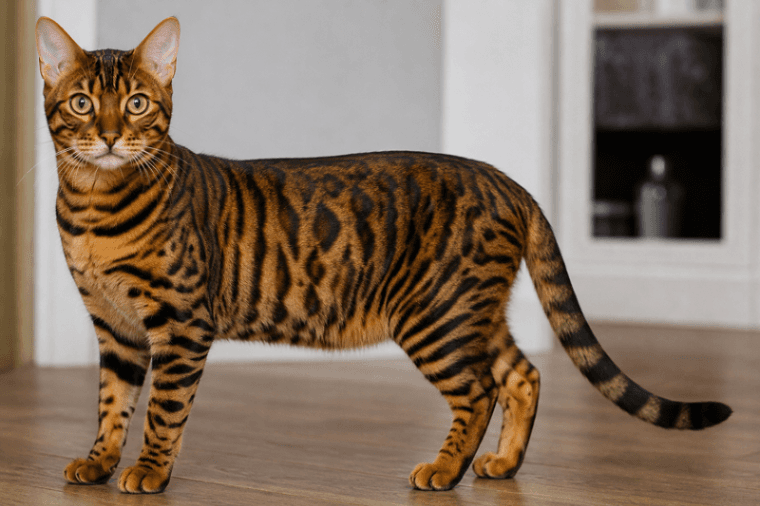
Toyger
Last Updated:
The Toyger is a rare, intelligent, and affectionate cat breed developed to resemble a miniature tiger. Known for its bold striped coat, muscular build, and friendly personality, the Toyger combines the look of a wild cat with the gentle temperament of a loving family companion.
Height
9 - 12 Inches
Intelligence
High
Lifespan
12 - 15 years
Weight
4 - 7 Kg
Temperament
About
The Toyger is a medium-sized domestic cat breed developed to resemble the striking appearance of a wild tiger while retaining the temperament of a companion cat. Known for its bold striped coat, muscular build, and confident personality, the Toyger is an intelligent and playful breed that can make an engaging family companion.
Toygers are known for being friendly, intelligent, playful, active, curious, affectionate, and social. They generally enjoy interacting with their owners and can thrive in homes that provide plenty of play, enrichment, and opportunities to explore.
Despite their wild-looking appearance, Toygers are domestic cats and do not require special wild-animal care. Their short coat is relatively easy to maintain, but their active nature means they need regular exercise and mental stimulation.
Toyger Appearance
The Toyger is designed to have a distinctive tiger-like appearance. It has a muscular, athletic body, a broad head, rounded ears, and a short coat featuring dark vertical stripes.
Common physical characteristics include:
- Medium-sized muscular body
- Athletic build
- Broad, rounded head
- Small, rounded ears
- Expressive eyes
- Strong muzzle
- Short, dense coat
- Distinctive dark tiger-like stripes
- Long tail
The Toyger's coat typically has a bright orange to golden background with dark markings. Its distinctive coat pattern is one of the breed's most recognizable features.
Toyger Temperament
The Toyger temperament is generally friendly, confident, intelligent, playful, and social. Toygers often enjoy interacting with people and can form strong bonds with their families.
They are active cats that enjoy exploring their surroundings, playing with toys, and learning new activities. Their social personality means they generally benefit from regular interaction rather than being left without stimulation for long periods.
Are Toygers Good Family Cats?
Yes, Toygers can make excellent family companions when provided with appropriate socialization, exercise, and enrichment. Their playful and interactive nature can make them particularly enjoyable for families that like engaging with their pets.
They should have access to safe spaces where they can retreat when they want privacy.
Are Toygers Good with Children?
Toygers can get along well with children when properly socialized and treated respectfully. Their playful personality can make them entertaining companions.
Children should be taught to handle cats gently and respect their boundaries, especially when the cat is eating, sleeping, or trying to move away.
Toyger Intelligence and Training
Toygers are intelligent cats that can learn routines, basic commands, tricks, and interactive games. Positive reinforcement can make training engaging and rewarding.
Training can include:
- Clicker training
- Responding to their name
- Simple tricks
- Harness training
- Interactive games
- Puzzle feeders
Short and consistent training sessions are generally more effective than long sessions. Harsh punishment should be avoided.
Toyger Exercise Requirements
Toygers are active cats that need regular physical activity and mental stimulation. Daily interactive play is important for helping them stay fit and preventing boredom.
Suitable activities include:
- Interactive wand toys
- Chasing games
- Climbing trees
- Cat tunnels
- Puzzle feeders
- Fetch-style games
- Clicker training
Providing vertical spaces such as cat trees and shelves can give Toygers additional opportunities to climb, jump, and explore.
Can Toygers Live in Apartments?
Yes, Toygers can adapt to apartment living if their physical and mental stimulation needs are met. Because they are active and intelligent, an indoor Toyger should have access to climbing structures, scratching posts, interactive toys, and regular play sessions.
Windows and balconies should be securely screened to prevent accidental falls or escapes.
Toyger Grooming Requirements
Toygers have a short, dense coat that is relatively easy to maintain. Regular brushing helps remove loose hair and keeps the coat looking healthy.
Basic grooming should include:
- Weekly brushing
- More frequent brushing during shedding periods
- Regular nail trimming
- Routine ear checks
- Regular dental care
- Bathing only when necessary
Because Toygers have short coats, they generally do not require extensive grooming or frequent professional grooming.
Do Toygers Shed a Lot?
Toygers generally have moderate shedding. Regular brushing can help remove loose hair and reduce the amount of fur around the home.
Are Toygers Hypoallergenic?
No, Toygers are not considered hypoallergenic. Like other cats, they produce allergens such as Fel d 1, which can be present in saliva, skin, and dander.
Toyger Health
Toygers are generally considered healthy cats, although individual health can vary depending on genetics, breeding, nutrition, environment, and preventive care.
Potential health concerns can include heart disease, dental disease, obesity, and common feline health conditions.
Regular veterinary examinations, vaccinations, parasite prevention, dental care, appropriate nutrition, and healthy weight management are important for maintaining good health.
Are Toygers Prone to Heart Problems?
Heart disease such as hypertrophic cardiomyopathy can occur in cats, including Toygers. Regular veterinary examinations can help identify potential heart abnormalities.
Signs such as breathing difficulty, weakness, reduced activity, or fainting require prompt veterinary evaluation.
Are Toygers Prone to Obesity?
Toygers are active cats, but they can still gain excess weight if they consume more calories than they use. Maintaining an appropriate body condition is important for their joints and overall health.
Measured meals, controlled treats, and regular interactive play can help prevent obesity.
Are Toygers Prone to Dental Problems?
Like other cats, Toygers can develop plaque, tartar, gingivitis, and periodontal disease. Regular tooth brushing and veterinary dental examinations can help maintain good oral health.
What Should You Feed a Toyger?
A Toyger should receive a complete and balanced diet appropriate for its age, activity level, and health.
High-quality wet food, dry food, or a veterinarian-approved combination can provide appropriate nutrition when properly formulated and portioned.
Fresh drinking water should always be available.
Are Toygers Good with Other Cats?
Toygers can live successfully with other cats when properly socialized and introduced. Their active personality can make them good companions for other playful cats.
Introductions should be gradual and each cat should have access to separate food, water, litter, and resting areas.
Are Toygers Good with Dogs?
Toygers can live with cat-friendly dogs when properly socialized and introduced. A calm dog and gradual introduction can help create a positive relationship.
The cat should always have access to elevated spaces and safe areas where it can retreat from the dog.
Are Toygers Affectionate?
Yes, Toygers can be affectionate and form strong bonds with their families. Many enjoy staying close to their owners and participating in household activities.
The amount of physical affection varies between individual cats.
Are Toygers Lap Cats?
Toygers can enjoy sitting near their owners, but their active personality means they may not always want to remain on a lap for long periods. Individual temperament varies.
Are Toygers Vocal?
Toygers can be communicative cats, although their level of vocalization varies between individuals. They may vocalize to seek attention, food, play, or interaction.
Are Toygers Aggressive?
Toygers are generally confident and social rather than inherently aggressive. Their behavior depends on genetics, socialization, handling, environment, and individual personality.
Early socialization and positive handling can help develop a confident and well-adjusted cat.
Are Toygers Good for First-Time Cat Owners?
Toygers can be suitable for first-time cat owners who are prepared for an active and intelligent breed. They need regular play, enrichment, climbing opportunities, companionship, and routine care.
They may not be the best choice for someone looking for a very quiet or low-energy cat.
Do Toygers Need a Lot of Attention?
Toygers generally benefit from regular interaction and mental stimulation. Interactive toys, climbing structures, puzzle feeders, and training activities can help keep them engaged.
Can Toygers Be Left Alone?
Toygers can spend reasonable periods alone if they have a safe and enriched environment. However, long periods without interaction or stimulation can lead to boredom and unwanted behavior.
How Long Do Toygers Live?
Toygers can commonly live around 12 to 15 years or more with appropriate care. Lifespan varies depending on genetics, nutrition, preventive veterinary care, lifestyle, and overall health.
What Colors Do Toygers Come In?
Toygers are best known for their warm orange-to-gold coat with bold dark stripes that create a tiger-like appearance. Their markings are one of the defining characteristics of the breed.
Toyger Price in India
The Toyger price in India can vary depending on pedigree, breeder reputation, bloodline, health screening, age, location, and availability.
Because Toygers are relatively uncommon in India, availability can be limited and prices may vary considerably.
Prospective owners should consider vaccination records, health history, parental health, living conditions, responsible breeding practices, and the kitten's overall health rather than choosing a kitten based solely on price.
Toyger Monthly Maintenance Cost in India
The estimated Toyger monthly maintenance cost in India can vary depending on food, litter, veterinary care, parasite prevention, dental care, toys, grooming, and lifestyle.
Regular expenses may include:
- Quality cat food
- Cat litter
- Routine veterinary care
- Vaccinations
- Deworming
- Parasite prevention
- Dental care
- Toys and enrichment
Can Toygers Live in India's Climate?
Toygers can live in India's climate when provided with appropriate care. During hot and humid weather, they should have access to a cool indoor environment, fresh water, ventilation, shade, and comfortable resting areas.
Do Toygers Need Air Conditioning in India?
Air conditioning can be helpful during India's hottest summer periods, particularly in regions with extreme heat and humidity. Fresh water, ventilation, shade, and cool resting areas are also important.
Are Toygers High-Maintenance?
Toygers have relatively low grooming requirements because of their short coat. However, their active and intelligent nature means they need regular exercise, interactive play, mental stimulation, and companionship.
Are Toygers Good for Active Families?
Yes, Toygers can be excellent companions for active families. They often enjoy interactive play, climbing, exploration, training, and activities that challenge them physically and mentally.
Are Toygers Good for Indian Families?
Toygers can be suitable for Indian families that can provide an enriched indoor environment, regular interactive play, appropriate nutrition, preventive veterinary care, and protection from extreme heat.
Final Thoughts
The Toyger is an intelligent, playful, active, social, and distinctive cat breed known for its tiger-like striped appearance. Despite its wild-inspired look, it is a domestic companion cat that can form strong bonds with its family.
For prospective owners in India, it is important to consider the Toyger price in India as well as ongoing expenses for quality nutrition, litter, veterinary care, parasite prevention, dental care, toys, and enrichment.
With responsible breeding, appropriate nutrition, regular veterinary care, daily enrichment, positive training, and a stimulating indoor environment, a Toyger can be an engaging and rewarding companion for many years.
Care Requirements
Compatibility
Available Colors
Health Considerations
- Hypertrophic Cardiomyopathy (HCM)
- Dental Disease
- General Age-Related Conditions
Fun Facts
- The creator of the Toyger, Judy Sugden, is the daughter of the renowned breeder who created the Bengal cat!
Frequently Asked Questions
Common questions about the Toyger breed.
What is a Toyger cat?
The Toyger is a domestic cat breed developed to resemble a miniature tiger. It is known for its bold striped coat, muscular build, rounded ears, and affectionate, playful personality.
How much does a Toyger cat cost in India?
The Toyger price in India varies depending on pedigree, breeder reputation, bloodline, health screening, age, location, and availability. Since Toygers are relatively uncommon, prices can vary considerably.
Are Toyger cats good family pets?
Yes, Toygers can make excellent family pets. They are generally affectionate, intelligent, playful, social, and adaptable.
Are Toyger cats good with children?
Yes, Toygers can get along well with children when properly socialized and treated respectfully. Their playful nature can make them engaging family companions.
Are Toyger cats good with other cats?
Yes, Toygers can generally live well with other cats when properly introduced. Their social and playful personality can make them suitable companions for compatible cats.
Are Toyger cats good with dogs?
Toygers can live successfully with cat-friendly dogs when properly introduced and socialized. Each pet should have its own safe space and resources.
Are Toyger cats affectionate?
Yes, Toygers are generally affectionate and enjoy spending time with their owners. Many like being involved in family activities while remaining playful and curious.
Are Toyger cats lap cats?
Some Toygers enjoy sitting on laps and cuddling, while others prefer staying close to their owners while playing or exploring. Individual personality varies.
Are Toyger cats intelligent?
Yes, Toygers are intelligent and curious cats. They can learn routines, interactive games, simple tricks, and other activities through positive reinforcement.
Are Toyger cats easy to train?
Toygers generally respond well to positive reinforcement. Short training sessions using treats, praise, and play can help teach tricks, recall, and harness walking.
How much exercise does a Toyger cat need?
Toygers have moderate to high activity needs and benefit from daily interactive play, climbing, chasing games, puzzle toys, and other activities that provide physical and mental stimulation.
Can Toyger cats live in apartments?
Yes, Toygers can adapt to apartment living when provided with enough exercise and enrichment. Cat trees, scratching posts, interactive toys, and secure windows can help create a suitable indoor environment.
Do Toyger cats need outdoor access?
No, Toygers can live happily indoors when their exercise and enrichment needs are met. If outdoor activity is provided, supervised harness walks or a secure enclosure are safer options.
Do Toyger cats shed a lot?
Toygers generally have a short coat with moderate shedding. Regular brushing can help remove loose hair and keep the coat healthy.
How often should a Toyger cat be groomed?
Weekly brushing is generally sufficient for a Toyger. More frequent brushing can be useful during periods of increased shedding.
Do Toyger cats need professional grooming?
Toygers generally do not require regular professional grooming. Routine brushing, nail trimming, ear checks, and dental care can usually be managed at home.
Are Toyger cats hypoallergenic?
No, Toygers are not considered hypoallergenic. Like other cats, they produce allergens and can cause allergic reactions in sensitive individuals.
Are Toyger cats healthy?
Toygers are generally considered a healthy breed, but they can still develop inherited or common feline health conditions. Regular veterinary examinations and preventive care are important.
Are Toyger cats prone to heart problems?
Heart conditions such as hypertrophic cardiomyopathy can occur in cats, including Toygers. Regular veterinary examinations can help monitor overall heart health.
Are Toyger cats prone to obesity?
Toygers can gain excess weight if calorie intake consistently exceeds their energy needs. Portion control, regular exercise, and monitoring body condition can help maintain a healthy weight.
Are Toyger cats prone to dental problems?
Like other cats, Toygers can develop plaque, tartar, gingivitis, and periodontal disease. Regular tooth brushing and veterinary dental examinations can help maintain good oral health.
What should I feed a Toyger cat?
A Toyger should receive a complete and balanced diet appropriate for its age, activity level, size, and health. Food should be portioned appropriately to maintain a healthy body condition.
Do Toyger cats need a lot of water?
Fresh, clean water should always be available. Multiple water sources or a cat water fountain can encourage good hydration.
Are Toyger cats vocal?
Toygers can be communicative but are generally not known for excessive vocalization. Individual cats may vary in how frequently they meow or use other sounds.
Are Toyger cats aggressive?
Toygers are generally friendly, confident, and social rather than inherently aggressive. Individual behavior depends on genetics, socialization, handling, environment, and experiences.
Are Toyger cats good for first-time cat owners?
Toygers can be suitable for first-time owners who are prepared to provide daily play, mental stimulation, companionship, grooming, appropriate nutrition, and preventive veterinary care.
Do Toyger cats need a lot of attention?
Toygers enjoy human companionship and interactive play. They generally benefit from regular attention and mental stimulation to prevent boredom.
Can Toyger cats be left alone?
Toygers can spend reasonable periods alone when provided with a safe and enriched environment. However, they benefit from regular interaction and should not be left isolated for excessively long periods.
How long do Toyger cats live?
Toyger cats can commonly live around 12 to 15 years or more with appropriate care. Individual lifespan varies depending on genetics, nutrition, veterinary care, lifestyle, and overall health.
How big do Toyger cats get?
Toygers are medium-sized cats with a muscular and athletic build. Adult males are generally larger than females, although individual size varies.
What colors do Toyger cats come in?
Toygers are primarily known for a warm orange to gold background coat with dark, bold stripes. Their distinctive coat pattern is designed to resemble that of a tiger.
What color eyes do Toyger cats have?
Toygers generally have yellow, gold, or greenish eyes, although eye color can vary between individuals.
What is the Toyger coat like?
The Toyger has a short, soft coat with a distinctive striped pattern. The coat is relatively easy to maintain with regular brushing.
Why does the Toyger look like a tiger?
The Toyger was selectively developed to emphasize tiger-like features, including bold vertical striping, a warm background color, a muscular body, and distinctive facial markings.
Can Toyger cats learn tricks?
Yes, Toygers are intelligent and can learn tricks, fetch, puzzle games, and other interactive activities using positive reinforcement.
Can Toyger cats walk on a leash?
Yes, some Toygers can learn to walk on a harness and leash. Training should be gradual and positive, starting indoors before introducing the cat to outdoor environments.
Can Toyger cats live in India's climate?
Toyger cats can live in India's climate with appropriate care. During hot weather, they should have access to a cool indoor environment, fresh water, shade, ventilation, and comfortable resting areas.
Do Toyger cats need air conditioning in India?
Air conditioning can be helpful during India's hottest summer periods, particularly in areas with extreme heat and humidity. Fresh water, shade, ventilation, and cool resting spaces are also important.
Are Toyger cats high-maintenance?
Toygers have relatively low grooming requirements because of their short coat. However, they need regular exercise, mental stimulation, companionship, and preventive veterinary care.
Are Toyger cats good for active families?
Yes, Toygers can be excellent companions for active families. They enjoy interactive play, climbing, exploration, and activities that challenge them mentally.
Are Toyger cats good for Indian families?
Toygers can be suitable for Indian families that can provide companionship, daily play, appropriate nutrition, preventive veterinary care, indoor enrichment, and protection from extreme heat.
What is the monthly maintenance cost of a Toyger in India?
The monthly maintenance cost of a Toyger in India varies depending on food, litter, veterinary care, parasite prevention, dental care, grooming, toys, and lifestyle. Vaccinations and unexpected veterinary expenses should also be budgeted separately.
What kind of owner is best for a Toyger?
A Toyger is best suited to an owner or family looking for an intelligent, affectionate, playful, social, and active cat and who can provide regular interaction, enrichment, quality nutrition, exercise, and preventive veterinary care.