
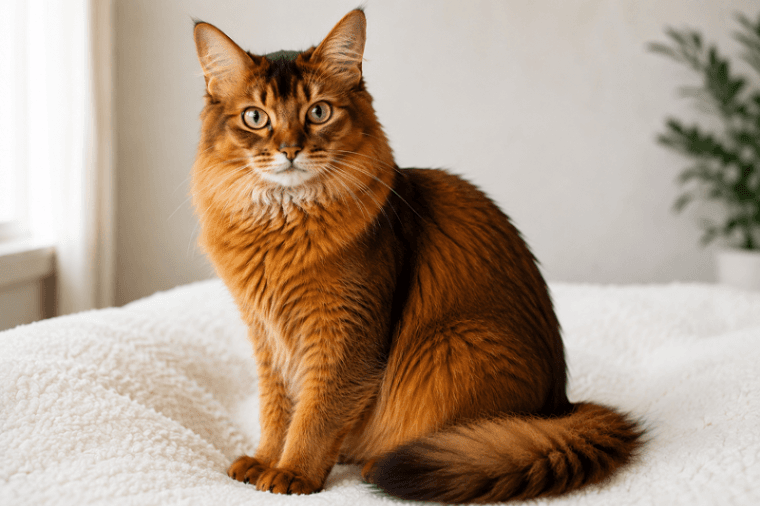
Somali
Last Updated:
The Somali is an elegant, intelligent, and energetic cat breed known for its luxurious fox-like tail, vibrant coat, and playful personality. Often described as the long-haired version of the Abyssinian, Somali cats are affectionate companions that love interaction, exploration, and adventure.
Height
8 - 12 Inches
Intelligence
High
Lifespan
12 - 16 Years
Weight
3 - 6 Kg
Temperament
About
The Somali cat is a beautiful, athletic, and highly intelligent cat breed admired for its stunning ticked coat, bushy tail, and lively personality. Often described as the long-haired counterpart of the Abyssinian, the Somali combines an elegant appearance with a playful, curious, and affectionate temperament. Their fox-like appearance, expressive eyes, large ears, and luxurious semi-long coat make them one of the most distinctive cat breeds.
Somali cats are known for forming strong bonds with their families and enjoying plenty of interaction and mental stimulation. They are active cats that love climbing, jumping, exploring, and playing, making them a great choice for pet parents who want an engaging and energetic companion.
History and Origin of the Somali Cat
The Somali cat developed from long-haired Abyssinian bloodlines. While Abyssinian cats typically have short coats, some kittens naturally carried genes responsible for longer hair. These long-haired cats eventually became recognized as a separate breed known as the Somali.
Despite the breed's name, Somali cats are not specifically from Somalia. Their development is closely associated with Abyssinian breeding programs and the recognition of long-haired varieties. Today, the Somali is appreciated for both its distinctive appearance and its intelligent, playful personality.
Somali Cat Appearance
Somali cats are medium-sized with a muscular and athletic build. They have long legs, large ears, almond-shaped eyes, and a graceful body structure. Their most distinctive feature is their full, plume-like tail, which gives them a fox-like appearance.
The Somali has a semi-long coat with a unique ticked pattern. Individual hairs contain alternating bands of light and dark color, creating a warm, shimmering appearance that is especially noticeable in natural sunlight. Common coat colors include ruddy, red, blue, and fawn.
Somali Cat Personality and Temperament
Somali cats are known for being intelligent, curious, playful, affectionate, and energetic. They are naturally interested in their surroundings and often enjoy following family members around the house. Unlike cats that prefer to spend most of their time sleeping, Somalis usually want to stay active and involved.
They enjoy interactive play and can become bored if they do not receive enough attention or mental stimulation. Their playful behavior often continues well into adulthood, making them an entertaining companion for families and individuals.
Are Somali Cats Good Family Pets?
Yes, Somali cats can make excellent family pets when their need for activity and companionship is understood. They generally enjoy interacting with people and can develop strong relationships with their owners.
Somalis can also be suitable for families with children when children are taught to handle cats gently and respectfully. Because they are active and curious, they benefit from a home environment where they have plenty of opportunities to play, climb, explore, and interact with their family.
Somali Cats and Other Pets
Somali cats can generally live well with other cats and cat-friendly dogs, particularly when introductions are handled slowly and positively. Their social and playful nature may make them enjoy having another compatible pet around.
However, every cat has its own personality, so compatibility should always be assessed individually. When introducing a new pet, provide separate food, water, litter, resting, and hiding areas to help each animal adjust comfortably.
Somali Cat Exercise and Activity Needs
Somali cats are high-energy and athletic cats that require regular physical exercise and mental stimulation. They enjoy climbing, jumping, chasing toys, and exploring their surroundings.
Providing a cat tree, scratching posts, climbing shelves, puzzle toys, feather toys, and interactive wand toys can help keep them active and mentally engaged. Because of their natural climbing ability, vertical spaces can be particularly beneficial for Somali cats.
Daily interactive play sessions can also help prevent boredom and provide an appropriate outlet for their energy. Rotating toys regularly can keep their environment interesting and encourage them to remain active.
Somali Cat Grooming
Despite having a semi-long coat, Somali cats generally have manageable grooming requirements. Brushing around two to three times a week can help remove loose hair, prevent tangles, and keep the coat looking healthy and shiny.
During periods of increased shedding, more frequent brushing may be helpful. Owners should also regularly check their cat's ears and eyes, trim their nails when necessary, and maintain good dental hygiene. Bathing is generally only required when necessary or when recommended for a specific grooming or medical reason.
Somali Cat Diet and Nutrition
A balanced and nutritionally complete diet is essential for maintaining a Somali cat's health, energy, muscles, and beautiful coat. Their diet should provide appropriate levels of animal protein, healthy fats, vitamins, minerals, and other essential nutrients.
The amount of food a Somali cat needs depends on factors such as age, weight, activity level, health, and the type of food being provided. Fresh drinking water should always be available. If you need to change your cat's food, make the transition gradually to reduce the risk of digestive problems.
Portion sizes should also be monitored because excessive calorie intake can lead to weight gain. If you are unsure about the appropriate diet or feeding quantity for your Somali cat, consult a veterinarian.
Somali Cat Health
Somali cats can be healthy and active with proper nutrition, preventive healthcare, exercise, and regular veterinary checkups. However, like other purebred cats, they may have a predisposition to certain inherited or breed-associated health conditions.
Potential health concerns can include dental disease, eye problems, kidney-related conditions, and certain inherited disorders. This does not mean every Somali cat will develop these conditions. Responsible breeding, appropriate health screening, proper nutrition, preventive care, and regular veterinary examinations can help support their long-term health.
Pet parents should pay attention to changes in appetite, weight, activity, behavior, breathing, or litter-box habits. Any persistent or concerning changes should be discussed with a veterinarian.
Somali Cat Vaccination and Preventive Care
Vaccination and preventive healthcare are important throughout a Somali cat's life. Your veterinarian can recommend an appropriate vaccination schedule based on your cat's age, lifestyle, previous vaccination history, and local disease risks.
Preventive care may include routine vaccinations, rabies vaccination where appropriate, deworming, flea and tick prevention, dental examinations, and regular health checkups. Even indoor cats can benefit from appropriate preventive healthcare because certain infections and parasites can still pose risks.
Somali Cat Lifespan
With proper care, Somali cats can commonly live for around 12 to 16 years, although individual lifespans can vary. Providing a balanced diet, maintaining a healthy weight, keeping vaccinations and parasite prevention up to date, and scheduling regular veterinary checkups can help support a longer and healthier life.
Regular exercise is also important because Somali cats are naturally active. Keeping them mentally stimulated and physically engaged can contribute to their overall wellbeing.
Somali Cat Price in India
The Somali cat price in India can vary significantly depending on factors such as breeder reputation, pedigree, lineage, location, coat quality, age, and availability. A Somali kitten may typically cost around ₹85,000 to ₹3,00,000.
Prices can vary considerably, so prospective pet parents should look beyond the initial purchase price. Responsible pet ownership also includes ongoing expenses such as food, litter, grooming, vaccinations, parasite prevention, routine veterinary visits, toys, and unexpected medical care.
Somali Cat Monthly Maintenance Cost in India
The estimated monthly maintenance cost of a Somali cat in India can range from approximately ₹3,000 to ₹8,000, depending on factors such as diet, litter, grooming, healthcare, and lifestyle.
Regular expenses may include nutritious cat food, cat litter, grooming supplies, toys, preventive healthcare, and routine veterinary visits. Emergency treatment, specialized veterinary care, or unexpected health problems can increase the overall cost considerably.
Is a Somali Cat Right for You?
A Somali cat can be an excellent choice for people looking for an intelligent, playful, affectionate, and active companion. They are particularly suited to individuals and families who can provide regular interaction, exercise, enrichment, and attention.
However, they may not be ideal for someone looking for a very quiet, low-energy cat that requires minimal engagement. Their intelligence and curiosity mean they thrive when given opportunities to play, climb, explore, and interact with their environment.
Tips for Taking Care of a Somali Cat
To keep your Somali cat happy and healthy, provide a balanced and age-appropriate diet along with fresh drinking water at all times. Brush their coat regularly, maintain good dental hygiene, trim their nails when required, and provide scratching and climbing areas.
Interactive toys and puzzle feeders can provide valuable mental stimulation, while daily play sessions can help meet their exercise needs. Keep vaccinations and parasite prevention up to date and schedule routine veterinary checkups to monitor their health.
Final Thoughts
The Somali cat is a striking breed that combines beauty with intelligence, athleticism, and affection. Their distinctive ticked coat, bushy tail, expressive eyes, and playful personality make them particularly captivating companions.
However, their active nature means they need more than basic care. Regular exercise, mental stimulation, grooming, nutritious food, preventive healthcare, and plenty of social interaction are important for their wellbeing.
With the right environment and responsible care, a Somali cat can become a loving and entertaining member of the family for many years. If you are planning to bring one home, make sure you understand both the initial cost and the long-term commitment involved in caring for this active and intelligent breed.
Care Requirements
Compatibility
Available Colors
Health Considerations
- Progressive Retinal Atrophy (PRA)
- Periodontal Disease
- Pyruvate Kinase Deficiency (PK Deficiency)
- Amyloidosis
- Patellar Luxation
Fun Facts
- Somali cats are often called “Fox Cats” because of their bushy tail and alert appearance.
Frequently Asked Questions
Common questions about the Somali breed.
What is a Somali cat?
The Somali cat is a medium-sized, athletic breed known for its semi-long ticked coat, bushy tail, large ears, and playful personality. It developed from long-haired Abyssinian bloodlines.
How much does a Somali cat cost in India?
The Somali cat price in India typically ranges from ₹85,000 to ₹3,00,000. The price can vary depending on pedigree, lineage, breeder reputation, location, coat quality, and availability.
What is the lifespan of a Somali cat?
A Somali cat can typically live for around 12 to 16 years with proper nutrition, preventive healthcare, regular veterinary checkups, exercise, and a healthy lifestyle.
Are Somali cats good pets?
Yes, Somali cats can make excellent pets for families and individuals who can provide plenty of attention, playtime, mental stimulation, and companionship. They are affectionate, curious, intelligent, and highly active.
Are Somali cats friendly with children?
Somali cats can generally get along well with children when they are properly socialized and children are taught to handle them gently and respectfully.
Do Somali cats get along with other pets?
Somali cats are generally social and can get along with other cats and cat-friendly dogs. Slow introductions and appropriate supervision can help pets develop a positive relationship.
Are Somali cats high maintenance?
Somali cats have moderate grooming needs but high activity and mental stimulation requirements. Regular brushing, interactive play, climbing opportunities, and companionship are important for their wellbeing.
How often should a Somali cat be groomed?
A Somali cat should generally be brushed two to three times a week to remove loose hair, prevent tangles, and maintain a healthy-looking coat. More frequent brushing may be useful during shedding periods.
What do Somali cats eat?
Somali cats should receive a complete and balanced diet appropriate for their age, size, activity level, and health. A diet rich in high-quality animal protein is generally important, along with adequate hydration.
Are Somali cats very active?
Yes, Somali cats are energetic and athletic. They enjoy climbing, jumping, chasing toys, exploring, and interactive games, so they benefit from daily physical activity and mental stimulation.
Do Somali cats need a lot of exercise?
Somali cats need regular exercise and interactive play to stay physically fit and mentally stimulated. Cat trees, scratching posts, puzzle toys, and interactive games can help meet their activity needs.
Are Somali cats indoor cats?
Somali cats can adapt well to indoor living when provided with sufficient exercise, climbing spaces, toys, and mental stimulation. Keeping them indoors can also reduce exposure to traffic, predators, infections, and other outdoor hazards.
What health problems can Somali cats have?
Somali cats may be predisposed to certain inherited or breed-associated conditions, including dental disease, eye problems, kidney-related conditions, and other genetic disorders. Regular veterinary checkups can help identify health problems early.
Do Somali cats shed a lot?
Somali cats have a semi-long coat and shed regularly, with shedding potentially increasing during seasonal changes. Regular brushing can help remove loose hair and reduce hair around the home.
Are Somali cats affectionate?
Yes, Somali cats are generally affectionate and social. They often form strong bonds with their families and enjoy staying close to their owners while also maintaining their independent and playful nature.
Can Somali cats be left alone?
Somali cats can spend some time alone, but they are social and active animals that benefit from regular companionship and interaction. Long periods of isolation may lead to boredom, so provide toys and enrichment when you are away.
How can I keep my Somali cat mentally stimulated?
Interactive toys, puzzle feeders, scratching posts, cat trees, climbing platforms, and regular play sessions can help keep a Somali cat mentally stimulated. Rotating toys can also make their environment more interesting.
Are Somali cats easy to train?
Somali cats are highly intelligent and can learn routines, commands, and simple behaviors using positive reinforcement. Short, reward-based training sessions are usually more effective than punishment.
How much does it cost to maintain a Somali cat in India?
The estimated monthly maintenance cost of a Somali cat in India can range from around ₹3,000 to ₹8,000, depending on food, litter, grooming, preventive healthcare, toys, and other needs. Veterinary emergencies can cost extra.
Is a Somali cat suitable for first-time cat owners?
Somali cats can be suitable for first-time cat owners who are prepared to meet their exercise, grooming, socialization, and mental stimulation needs. Their active and curious nature requires more engagement than some lower-energy cat breeds.