
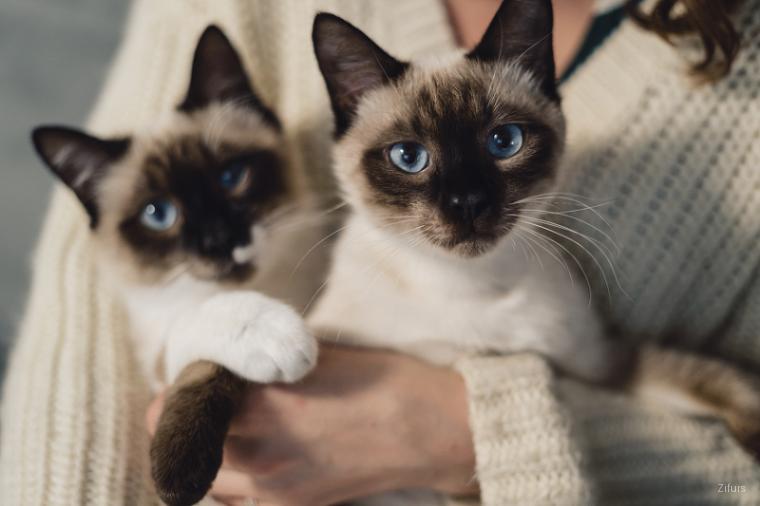
Siamese
Last Updated:
The Siamese cat breed is an intelligent, vocal, and affectionate companion known for its striking blue eyes and color-point coat. Popular among cat lovers in India, Siamese cats are highly social, interactive, and ideal for indoor living. They require attention, mental stimulation, and proper care, making them perfect for families and active pet owners.
Height
8 - 12 Inches
Intelligence
High
Lifespan
12 - 20 years
Weight
3 - 7 Kg
Temperament
About
The Siamese Cat is one of the world's most recognizable cat breeds, known for its striking blue eyes, elegant body, pointed coat pattern, and highly social personality. Originally associated with Thailand, formerly known as Siam, the Siamese is admired for its intelligence, affectionate nature, playful personality, and distinctive vocal communication.
Siamese Cats are known for being intelligent, affectionate, social, vocal, playful, curious, active, and people-oriented. They often form strong bonds with their families and enjoy being involved in everyday activities. Their high intelligence and energetic nature mean they need regular interaction, exercise, and mental stimulation.
The Siamese has a short, fine coat that is relatively easy to maintain. However, its social nature means companionship is particularly important. Siamese Cats can become bored or lonely if they are routinely left alone for long periods without sufficient interaction and enrichment.
Siamese Cat Appearance
The Siamese has a distinctive, elegant appearance with a long, lean, athletic body and characteristic color-point markings. Their ears, face, legs, and tail are darker than the main body, while their eyes are typically vivid blue.
Common physical characteristics include:
- Medium-sized body
- Long, slender, athletic build
- Long legs
- Large ears
- Wedge-shaped head
- Almond-shaped blue eyes
- Long, tapering tail
- Short, fine coat
- Distinctive color-point markings
Traditional Siamese colors include seal, blue, chocolate, and lilac points. Other recognized point colors and patterns may vary depending on the breed registry.
Siamese Cat Temperament
The Siamese Cat temperament is typically affectionate, outgoing, intelligent, energetic, and highly social. Siamese Cats often want to be involved in household activities and may follow their owners from room to room.
They are also known for their strong personalities. Their combination of intelligence and curiosity makes them engaging companions, but they need sufficient attention and stimulation to remain happy.
Are Siamese Cats Good Family Pets?
Yes, Siamese Cats can make excellent family pets, particularly for households that enjoy an interactive and social companion. They often develop strong relationships with their owners and enjoy participating in family activities.
Because they are energetic and social, they are best suited to families that can provide regular play, attention, and companionship.
Are Siamese Cats Good with Children?
Siamese Cats can get along well with children when properly socialized and treated respectfully. Their playful and interactive personality can make them entertaining companions for older children.
Children should be taught to handle cats gently and respect their boundaries. Younger children should be supervised during interactions.
Siamese Cat Intelligence and Training
Siamese Cats are highly intelligent and can learn a variety of behaviors through positive reinforcement. They can learn their names, tricks, fetch, household routines, and even harness walking.
Mental stimulation can include:
- Puzzle feeders
- Interactive toys
- Clicker training
- Fetch
- Food-based games
- Trick training
- Harness training
Short, positive, and engaging training sessions can help prevent boredom and channel their intelligence.
Siamese Cat Exercise Requirements
Siamese Cats are active and athletic and benefit from regular daily exercise. They enjoy climbing, jumping, chasing, running, and interactive games.
Suitable activities include:
- Interactive wand toys
- Cat trees
- Climbing shelves
- Chasing games
- Puzzle toys
- Interactive feeders
- Fetch
- Supervised harness walks
Providing vertical spaces is especially useful because Siamese Cats often enjoy climbing and observing their surroundings from elevated positions.
Can Siamese Cats Live in Apartments?
Yes, Siamese Cats can live comfortably in apartments when their physical and mental needs are met. Their relatively small size makes them suitable for indoor homes, but they require plenty of enrichment.
Apartment owners should provide scratching posts, cat trees, interactive toys, puzzle feeders, and regular play sessions to prevent boredom.
Siamese Cat Grooming Requirements
The Siamese has a short, fine coat that is relatively easy to maintain. Extensive grooming is generally not required.
Basic grooming should include:
- Weekly brushing
- Regular nail trimming
- Routine ear checks
- Dental care
- Regular veterinary examinations
Brushing can help remove loose hair and provides an opportunity to check the skin and coat for abnormalities.
Do Siamese Cats Shed a Lot?
Siamese Cats generally have low to moderate shedding because of their short coat. Regular brushing can help remove loose hair and keep shedding manageable.
Their short coat also makes grooming easier compared with long-haired breeds.
Are Siamese Cats Hypoallergenic?
No, Siamese Cats are not considered hypoallergenic. Although their short coat may make loose hair easier to manage, they still produce allergens through dander, saliva, and skin secretions.
People with cat allergies should spend time around a Siamese before deciding to adopt one.
Siamese Cat Health
Siamese Cats can be healthy companions when provided with appropriate nutrition, preventive veterinary care, vaccinations, parasite prevention, dental care, and regular health examinations.
Some health concerns reported in the breed include progressive retinal atrophy, respiratory conditions, dental disease, amyloidosis, and certain inherited disorders. Responsible breeders should use appropriate health screening and genetic testing where available.
Regular veterinary check-ups can help identify potential health problems early.
What Should You Feed a Siamese Cat?
A Siamese Cat should receive a complete and balanced diet appropriate for its age, size, activity level, and individual health needs.
Because Siamese Cats are active and athletic, appropriate nutrition is important for maintaining muscle and energy levels. Portion control should still be maintained to prevent excessive weight gain.
Fresh drinking water should always be available.
Siamese Cat Socialization
Early socialization can help Siamese kittens become comfortable around different people, household sounds, handling, grooming, and appropriately introduced pets.
Positive experiences during kittenhood can help them develop into confident, friendly, and adaptable adult cats.
Are Siamese Cats Good with Other Pets?
Siamese Cats can generally live well with other cats and cat-friendly dogs when properly socialized and introduced gradually. Their social personality can make them suitable for households with compatible pets.
Introductions should be gradual and supervised, with each pet having access to separate food, water, litter, and resting areas.
Are Siamese Cats Affectionate?
Yes, Siamese Cats are known for being highly affectionate and people-oriented. They often enjoy following their owners around the home, sitting nearby, playing together, and seeking attention.
They generally prefer interactive companionship and can form particularly strong bonds with their families.
Are Siamese Cats Vocal?
Yes, Siamese Cats are famous for being vocal and communicative. They may use a wide range of meows, chirps, trills, and other sounds to communicate with their owners.
Some Siamese Cats can be quite persistent when they want attention, food, play, or companionship.
Are Siamese Cats Good for First-Time Cat Owners?
Siamese Cats can be suitable for first-time cat owners who are prepared for an active, intelligent, social, and vocal companion.
They may be more demanding than calm and independent breeds because they require regular interaction, exercise, mental stimulation, and companionship.
Do Siamese Cats Need a Lot of Attention?
Yes, Siamese Cats generally need significant human interaction. They are highly social and intelligent and can become bored or lonely if left alone for long periods without adequate enrichment.
Daily play, training, affection, and interactive activities can help meet their social and mental needs.
How Long Do Siamese Cats Live?
Siamese Cats can commonly live around 12 to 20 years with appropriate nutrition, preventive veterinary care, responsible breeding, and a healthy indoor lifestyle. Individual lifespan varies depending on genetics, healthcare, diet, and overall wellbeing.
Siamese Cat Price in India
The Siamese Cat price in India can vary depending on pedigree, breeder reputation, lineage, coat quality, eye color, health screening, location, age, and availability.
As a general estimate, a Siamese kitten in India may cost approximately ₹15,000 to ₹50,000 or more.
Pedigreed kittens from established breeders with documented lineage and health screening may cost considerably more.
Prospective owners should consider vaccination records, health history, parental health, kitten socialization, living conditions, and responsible breeding practices rather than choosing a kitten based solely on price.
Siamese Cat Monthly Maintenance Cost in India
The estimated Siamese Cat monthly maintenance cost in India can range from approximately ₹3,000 to ₹7,000 or more, depending on food, litter, healthcare, preventive treatments, toys, enrichment, and lifestyle.
Regular expenses may include:
- Quality cat food
- Cat litter
- Routine veterinary care
- Vaccinations
- Parasite prevention
- Dental care
- Grooming supplies
- Toys and enrichment
Can Siamese Cats Live in India's Climate?
Siamese Cats can adapt well to India's climate when provided with a comfortable indoor environment. Their short coat makes grooming manageable, but they still need protection from extreme heat.
During hot weather, provide fresh water, shade, good ventilation, and a cool resting area. During periods of extreme heat, an air-conditioned or effectively cooled indoor environment can provide additional comfort.
Are Siamese Cats High-Maintenance?
Siamese Cats have relatively low grooming requirements because of their short coat, but they can be considered higher-maintenance in terms of social interaction and mental stimulation.
They need regular play, companionship, training, enrichment, and attention to remain happy and well adjusted.
Do Siamese Cats Like to Climb?
Yes, Siamese Cats are athletic and often enjoy climbing and exploring elevated areas. Providing sturdy cat trees, shelves, and secure window perches can help satisfy their natural desire to climb and observe their surroundings.
Can Siamese Cats Be Left Alone?
Siamese Cats generally do not do well when routinely left alone for long periods. Their social and intelligent nature means they benefit from regular human interaction and mental stimulation.
If they must spend time alone, interactive toys, puzzle feeders, climbing structures, and other enrichment can help reduce boredom.
Do Siamese Cats Like Water?
Some Siamese Cats are curious about water and may enjoy playing with running taps or investigating water sources, although individual preferences vary. Fresh drinking water should always be available.
Final Thoughts
The Siamese Cat is an intelligent, affectionate, energetic, and highly social breed known for its striking blue eyes, elegant body, pointed coat pattern, and distinctive vocal personality.
For prospective owners in India, it is important to consider both the Siamese Cat price in India and ongoing costs for food, litter, healthcare, toys, enrichment, and preventive care before bringing one home.
With a balanced diet, regular veterinary care, daily exercise, mental stimulation, interactive play, and plenty of companionship, the Siamese can be a loving and highly engaging companion for many years.
Care Requirements
Compatibility
Available Colors
Health Considerations
- Gingivitis
- Tartar buildup
- Respiratory Issues & Asthma
- Amyloidosis
- Progressive Retinal Atrophy
- Glaucoma
- Strabismus
- Cancer
- Megaesophagus
Fun Facts
- The first Siamese cat in the U.S., named Siam, was a gift to First Lady Lucy Hayes in 1878.
- In the 1960s, two Siamese cats at the Dutch Embassy in Moscow alerted officials to an espionage plot by scratching at a wall that hid 30 secret microphones.
Frequently Asked Questions
Common questions about the Siamese breed.
What is a Siamese Cat?
The Siamese is a distinctive short-haired cat breed known for its slender body, wedge-shaped head, vivid blue almond-shaped eyes, dark color points, intelligence, and highly social personality.
How much does a Siamese Cat cost in India?
The Siamese Cat price in India can vary depending on pedigree, breeder reputation, lineage, health screening, color, location, age, and availability. A Siamese kitten may typically cost around ₹15,000 to ₹50,000 or more.
Are Siamese Cats good family pets?
Yes, Siamese Cats can make excellent family pets. They are affectionate, intelligent, playful, social, and enjoy being actively involved with their families.
Are Siamese Cats good with children?
Siamese Cats can be good with children when properly socialized and treated gently. Their playful and interactive nature can make them engaging companions, although younger children should be supervised.
Are Siamese Cats good with other pets?
Yes, Siamese Cats can generally live well with other cats and cat-friendly dogs. Gradual introductions and appropriate socialization can help them develop positive relationships with other pets.
Are Siamese Cats affectionate?
Yes, Siamese Cats are known for being highly affectionate and people-oriented. They often enjoy staying close to their owners, following them around the home, and participating in daily activities.
Are Siamese Cats lap cats?
Many Siamese Cats enjoy sitting on laps and staying close to their owners. They generally seek warmth, affection, and companionship, although individual preferences can vary.
Are Siamese Cats intelligent?
Yes, Siamese Cats are highly intelligent and curious. They can learn household routines, tricks, fetch, interactive games, and even harness walking through positive reinforcement.
Are Siamese Cats easy to train?
Siamese Cats are generally very trainable because of their intelligence and curiosity. Positive reinforcement, clicker training, treats, and short interactive sessions can be effective.
How much exercise does a Siamese Cat need?
Siamese Cats are active and athletic and benefit from daily interactive exercise. Wand toys, chasing games, climbing structures, puzzle feeders, and fetch can help meet their physical and mental stimulation needs.
Can Siamese Cats live in apartments?
Yes, Siamese Cats can adapt well to apartment living as long as they receive sufficient exercise, companionship, and mental stimulation. Cat trees, scratching posts, toys, and interactive play are useful for indoor Siamese Cats.
Do Siamese Cats like to climb?
Yes, Siamese Cats are agile climbers and often enjoy elevated places. Providing secure cat trees, shelves, and window perches can help satisfy their natural desire to climb and explore.
Do Siamese Cats shed a lot?
Siamese Cats have a short, fine coat and generally have manageable shedding. Regular brushing can help remove loose hair and keep the coat healthy.
How often should a Siamese Cat be groomed?
Siamese Cats have relatively low grooming requirements. Weekly brushing is generally sufficient, along with regular nail trimming, ear checks, dental care, and routine veterinary examinations.
Are Siamese Cats hypoallergenic?
No, Siamese Cats are not considered hypoallergenic. Like other cats, they produce allergens through substances such as dander, saliva, and skin secretions. People with allergies should spend time around a Siamese before adoption.
Are Siamese Cats vocal?
Yes, Siamese Cats are particularly well known for their vocal and communicative personalities. They can use a wide range of meows, chirps, and other vocalizations to communicate with their owners.
What should I feed a Siamese Cat?
A Siamese Cat should receive a complete and balanced diet appropriate for its age, activity level, size, and health requirements. Portion control is important to maintain a healthy body condition, and fresh water should always be available.
What is the monthly maintenance cost of a Siamese Cat in India?
The estimated Siamese Cat monthly maintenance cost in India can range from approximately ₹3,000 to ₹7,000 or more, depending on food, litter, veterinary care, vaccinations, parasite prevention, dental care, toys, and enrichment.
How long do Siamese Cats live?
Siamese Cats can commonly live well into their teens, and some may live 20 years or longer with appropriate nutrition, preventive veterinary care, responsible breeding, and a healthy lifestyle.
Are Siamese Cats suitable for first-time cat owners?
Siamese Cats can be suitable for first-time owners who are prepared for an active, vocal, intelligent, and highly social companion. They require more interaction and attention than many independent cat breeds.
Do Siamese Cats need a lot of attention?
Yes, Siamese Cats generally need significant human interaction. They are highly social and can become bored or unhappy if routinely left alone for long periods without companionship and enrichment.
Can Siamese Cats be left alone?
Siamese Cats generally do not do well when routinely left alone for extended periods. If they need to spend some time alone, interactive toys, puzzle feeders, climbing areas, and appropriate enrichment can help keep them occupied.
Are Siamese Cats good indoor cats?
Yes, Siamese Cats can thrive indoors when their physical, social, and mental needs are met. Indoor environments should provide climbing areas, scratching posts, toys, hiding spaces, and regular interactive play.
What colors do Siamese Cats come in?
Traditional Siamese colors include seal point, chocolate point, blue point, and lilac point. Depending on the cat registry, additional pointed colors and patterns may also be recognized.
Do Siamese Cats always have blue eyes?
Yes, blue eyes are a defining characteristic of the Siamese breed. The breed standard describes vivid blue, almond-shaped eyes.
Why do Siamese Cats have dark points?
Siamese Cats have a temperature-sensitive color-point pattern. The cooler areas of the body, such as the face, ears, legs, and tail, develop darker pigmentation while the warmer central body remains lighter.
Do Siamese Cats get darker with age?
Yes, Siamese Cats can develop darker body shading as they age. The contrast between the lighter body and darker points may become less pronounced in older cats.
Do Siamese Cats like water?
Some Siamese Cats are curious about water and may enjoy playing with running taps or investigating water sources. However, individual preferences vary and cats should never be forced into water.
Can Siamese Cats be trained to walk on a leash?
Yes, some Siamese Cats can learn to walk on a harness and leash through gradual positive reinforcement. Training should begin indoors and progress slowly according to the cat's comfort level.
Do Siamese Cats have health problems?
Siamese Cats are generally healthy, but certain inherited or breed-associated conditions can occur. These include progressive retinal atrophy, amyloidosis, respiratory problems, dental issues, and some inherited disorders. Regular veterinary care is important.
What is progressive retinal atrophy in Siamese Cats?
Progressive retinal atrophy, or PRA, is an inherited eye disorder that can cause progressive vision loss. Genetic testing is available for some forms and can be useful in responsible breeding programs.
What is amyloidosis in Siamese Cats?
Amyloidosis is a condition in which abnormal amyloid proteins accumulate in organs and can impair their function. Systemic amyloidosis has been reported in Siamese Cats, so owners should discuss any relevant family health history with a veterinarian or responsible breeder.
Are Siamese Cats high-maintenance?
Siamese Cats have relatively low grooming requirements because of their short coat, but they can be considered higher-maintenance in terms of companionship, attention, exercise, and mental stimulation.
Are Siamese Cats active?
Yes, Siamese Cats are active, agile, and athletic. They enjoy climbing, jumping, chasing, exploring, and interactive games and benefit from regular daily activity.
Are Siamese Cats good for busy owners?
Siamese Cats may not be the best choice for owners who are routinely away from home for long periods. Their strong need for companionship and interaction means they generally do best with people who can spend substantial time with them.
Are Siamese Cats good for senior citizens?
Siamese Cats can be wonderful companions for people who enjoy an interactive and affectionate pet. However, their vocal, active, and attention-seeking nature should be considered before adoption.
Do Siamese Cats get along with dogs?
Many Siamese Cats can get along well with cat-friendly dogs, particularly when introduced gradually and socialized properly. Their confident and social personality can help them adapt to compatible canine companions.
Do Siamese Cats need another cat for companionship?
Not necessarily, but Siamese Cats generally benefit from companionship because they are highly social. A compatible cat, another Siamese, or another friendly pet can provide company when their owners are away.
Can Siamese Cats live in India's climate?
Yes, Siamese Cats can adapt to India's climate when kept in a comfortable indoor environment. During hot weather, they should have access to fresh water, shade, good ventilation, and a cool resting area.
Are Siamese Cats good for families with other pets?
Yes, Siamese Cats can be suitable for multi-pet families when the other animals are compatible and introductions are handled gradually. Their social personality can help them form strong relationships with other pets.