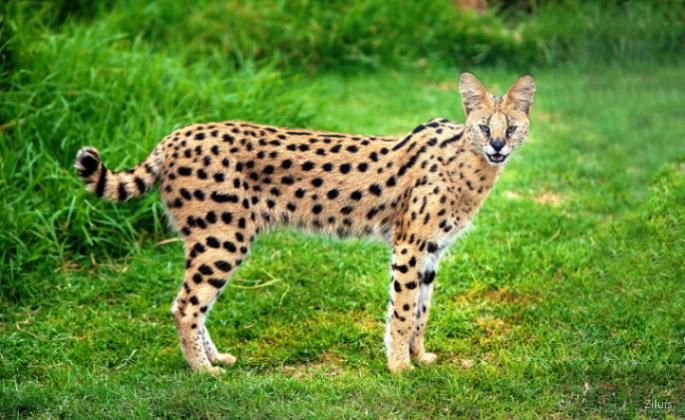
Savannah Cat
Last Updated:
The Savannah cat is an exotic, highly energetic, and intelligent hybrid breed known for its wild appearance and spotted coat. A mix between a domestic cat and a serval, it is one of the most active and unique cat breeds, best suited for experienced owners.
Height
12 - 17 inches
Intelligence
High
Lifespan
12 - 20 years
Weight
5 - 12 kg
Temperament
About
The Savannah Cat is a distinctive and athletic hybrid cat known for its tall body, long legs, large ears, spotted coat, and wild appearance. Developed from domestic cats and the African Serval, Savannah Cats combine striking physical characteristics with the intelligence, curiosity, and companionship of a domestic cat.
Savannah Cats are known for being intelligent, energetic, curious, playful, confident, and highly interactive. They often form strong bonds with their owners and enjoy being involved in household activities. Their personality can vary considerably depending on their generation, genetics, socialization, and individual temperament.
Because of their high energy levels and intelligence, Savannah Cats need plenty of physical activity, mental stimulation, climbing opportunities, and interactive play. They are generally better suited to experienced cat owners who can provide a stimulating environment and dedicate sufficient time to their care and companionship.
Savannah Cat Appearance
The Savannah Cat has a distinctive wild-looking appearance that sets it apart from most domestic cat breeds. Its tall body, long legs, large ears, long neck, and spotted coat are among its most recognizable features.
Common physical characteristics of a Savannah Cat include:
- Tall and athletic body
- Long legs
- Large upright ears
- Long neck
- Lean and muscular build
- Short, fine coat
- Distinctive spots and markings
- Long tail
The exact size and appearance can vary significantly depending on the cat's generation and individual genetics.
Savannah Cat Temperament
The Savannah Cat temperament is generally energetic, intelligent, curious, playful, and alert. These cats enjoy exploring their surroundings and often seek opportunities to interact with their owners.
Some Savannah Cats are highly affectionate and people-oriented, while others can be more independent. Their personality can be influenced by genetics, early socialization, generation, and their home environment.
Early positive socialization can help Savannah Cats become confident and comfortable around people, household activities, and appropriately introduced pets.
Are Savannah Cats Good Family Pets?
Savannah Cats can make rewarding companions for families that understand and can meet their unique needs. Their intelligence and playful personality can make them engaging pets for owners who enjoy interactive cats.
However, they can be more demanding than many conventional domestic cats. Owners should be prepared to provide daily exercise, mental stimulation, training, enrichment, and companionship.
Are Savannah Cats Good with Children?
Savannah Cats may live successfully with older children who understand how to interact with cats respectfully. Because of their athleticism, energy, and sometimes intense play style, interactions with young children should always be supervised.
Children should be taught not to chase, grab, or disturb the cat while it is eating, sleeping, or seeking quiet time.
Savannah Cat Training
Savannah Cats are highly intelligent and can learn a variety of behaviors through positive reinforcement. Some can learn basic commands, tricks, retrieving games, and harness walking.
Training and mental enrichment can include:
- Clicker training
- Puzzle feeders
- Interactive toys
- Fetch
- Basic commands
- Harness training
- Food-based games
Short, engaging training sessions using treats, praise, and play can help maintain their interest and provide valuable mental stimulation.
Savannah Cat Exercise Requirements
Savannah Cats are highly active and athletic. They need regular opportunities to climb, jump, run, explore, and play. Physical exercise should be combined with mental stimulation to keep them engaged.
Suitable activities can include:
- Interactive wand toys
- Climbing trees
- Scratching posts
- Chasing games
- Fetch
- Puzzle toys
- Supervised exploration
Providing vertical space is particularly important because Savannah Cats often enjoy climbing and observing their surroundings from elevated locations.
Can Savannah Cats Live in Apartments?
Savannah Cats can potentially live in apartments if their physical and mental stimulation needs are properly met. The home should provide enough opportunities for climbing, jumping, playing, scratching, and exploring.
Owners should consider sturdy cat trees, wall-mounted climbing areas, scratching posts, interactive toys, puzzle feeders, and regular play sessions when creating an indoor environment for a Savannah Cat.
Savannah Cat Grooming Requirements
Savannah Cats have short coats and generally require relatively little grooming compared with long-haired cat breeds.
Basic grooming should include:
- Regular brushing
- Nail trimming
- Ear cleaning
- Dental care
- Occasional bathing when necessary
- Routine veterinary check-ups
Regular brushing helps remove loose hair and keeps the coat clean and healthy.
Do Savannah Cats Shed a Lot?
Savannah Cats generally have short coats and are not considered heavy shedders. However, individual cats can vary in how much they shed. Regular brushing can help remove loose hair and keep shedding manageable.
Are Savannah Cats Hypoallergenic?
Savannah Cats are not completely hypoallergenic. Although their short coat can be relatively easy to maintain, people with cat allergies can still react to allergens found in dander, saliva, and other sources.
Anyone with known cat allergies should spend time around a Savannah Cat before deciding to bring one into their home.
Savannah Cat Health
Savannah Cats require regular veterinary examinations, vaccinations, parasite prevention, dental care, balanced nutrition, and appropriate weight management.
Because Savannah Cats can have different generations and genetic backgrounds, individual healthcare requirements may vary. Owners should work with a veterinarian familiar with the cat's background to establish an appropriate preventive healthcare routine.
What Should You Feed a Savannah Cat?
A Savannah Cat should receive a complete and balanced diet appropriate for its age, size, activity level, and individual health requirements.
Dietary needs can vary between individual cats and generations. Owners should avoid making major dietary changes without veterinary guidance and should always provide access to fresh drinking water.
Savannah Cat Socialization
Early socialization is important for Savannah Cats. Positive exposure to different people, household sounds, handling, environments, and appropriately introduced pets can help build confidence.
Socialization should be gradual and positive, with the cat always having access to a quiet and secure place where it can retreat when needed.
Are Savannah Cats Good with Other Pets?
Savannah Cats can live with other cats and suitable dogs when introduced gradually and properly socialized. However, individual temperament and prey drive can vary.
Interactions with smaller animals should be carefully supervised, particularly during the initial introduction period.
Are Savannah Cats Affectionate?
Many Savannah Cats form strong bonds with their owners and can be affectionate and interactive. However, individual cats differ in how they prefer to show affection.
Some may enjoy physical contact, while others may show affection by following their owners, playing with them, greeting them, or simply staying nearby.
Are Savannah Cats Vocal?
Savannah Cats can be very communicative and may use a variety of vocalizations to interact with their owners. Some may chirp, meow, or make other distinctive sounds.
Vocalization varies from one cat to another and can be influenced by personality, environment, and social interaction.
Are Savannah Cats Good for First-Time Cat Owners?
Savannah Cats are generally better suited to experienced cat owners because of their high energy, intelligence, activity level, and enrichment requirements.
Owners should be prepared to dedicate time every day to exercise, interactive play, training, socialization, and environmental enrichment.
What Are the Different Savannah Cat Generations?
Savannah Cats are commonly classified into generations such as F1, F2, F3, and later generations. These classifications indicate how many generations separate the cat from its Serval ancestor.
Earlier-generation Savannah Cats generally have a greater proportion of Serval ancestry and may display more pronounced wild-type physical and behavioral characteristics. Later generations generally have more domestic-cat ancestry.
Can Savannah Cats Be Leash Trained?
Many Savannah Cats can learn to walk on a harness and leash through gradual positive training. Training should begin indoors, allowing the cat to become comfortable wearing the harness before introducing the leash.
A properly fitted cat harness should be used instead of attaching a leash directly to a collar.
Do Savannah Cats Like Water?
Some Savannah Cats show an interest in water and may enjoy playing with running water or supervised water activities. However, individual preferences vary and cats should never be forced into water.
Savannah Cat Price in India
The Savannah Cat price in India can vary considerably because the breed is relatively uncommon and availability may be limited. Factors such as generation, pedigree, breeder reputation, lineage, coat pattern, health screening, location, and availability can influence the price.
Earlier-generation Savannah Cats are generally rarer and may command substantially higher prices than later-generation cats.
Before purchasing a Savannah Cat, prospective owners should consider health records, vaccination history, generation documentation, responsible breeding practices, and applicable ownership requirements rather than choosing a cat based solely on price.
Savannah Cat Monthly Maintenance Cost in India
The estimated Savannah Cat monthly maintenance cost in India can vary depending on food, litter, healthcare, enrichment, grooming, toys, and lifestyle.
Regular expenses may include:
- Quality cat food
- Cat litter
- Routine veterinary care
- Vaccinations
- Parasite prevention
- Grooming supplies
- Dental care
- Interactive toys
- Climbing and enrichment equipment
Savannah Cats can benefit from more extensive environmental enrichment than many conventional domestic cats, so owners should also budget for sturdy climbing structures, scratching equipment, puzzle toys, and interactive activities.
Can Savannah Cats Live in India's Climate?
Savannah Cats can generally adapt to warm climates when kept in a comfortable indoor environment. During India's hot weather, owners should provide fresh water, shade, good ventilation, and a cool resting area.
Exercise and outdoor activities should preferably be scheduled during cooler parts of the day, particularly during periods of extreme heat.
Are Savannah Cats High-Maintenance Pets?
Savannah Cats have relatively simple coat-care requirements, but they can be demanding when it comes to exercise, mental stimulation, training, attention, and environmental enrichment.
They are best suited to owners who can provide an active, secure, and stimulating environment and dedicate sufficient time to daily interaction.
Are Savannah Cats Legal to Keep as Pets in India?
The legal requirements for keeping a Savannah Cat in India can depend on its generation, ancestry, import status, and applicable regulations. Prospective owners should verify the current requirements with the relevant authorities before purchasing or importing one.
Documentation relating to the cat's origin, generation, ownership, and veterinary history should be maintained where applicable.
Final Thoughts
The Savannah Cat is an intelligent, athletic, curious, and distinctive hybrid cat known for its wild appearance and highly active personality. Its tall body, long legs, large ears, and spotted coat make it visually unique, while its intelligence and energy make it an engaging companion.
For prospective owners in India, it is important to consider the Savannah Cat price in India, ongoing maintenance costs, generation-specific characteristics, veterinary care, enrichment requirements, and applicable ownership regulations before bringing one home.
With appropriate socialization, balanced nutrition, regular veterinary care, daily exercise, mental stimulation, and a safe and enriching environment, a Savannah Cat can be a rewarding companion for an experienced and committed owner.
Care Requirements
Compatibility
Available Colors
Health Considerations
- Hypertrophic cardiomyopathy
- Digestive Sensitivity
- Joint Stress
Fun Facts
- They can jump up to 8–10 feet high, one of the highest among cat breeds.
- A Savannah named "Scarlett's Magic" was formerly recognized by the Guinness World Records as both the tallest and longest domestic cat.
Frequently Asked Questions
Common questions about the Savannah Cat breed.
What is a Savannah Cat?
The Savannah Cat is a distinctive hybrid domestic cat developed from a domestic cat and an African Serval. It is known for its tall, lean body, long legs, large ears, spotted coat, intelligence, curiosity, and active personality.
How much does a Savannah Cat cost in India?
The Savannah Cat price in India can vary significantly depending on generation, pedigree, breeder reputation, health screening, coat pattern, location, and availability. Earlier-generation Savannah Cats are generally rarer and can be considerably more expensive.
Are Savannah Cats good family pets?
Savannah Cats can be rewarding family companions for owners who understand their high activity and enrichment requirements. They are intelligent, curious, loyal, and interactive, but generally require more engagement than many conventional domestic cats.
Are Savannah Cats affectionate?
Savannah Cats can form strong bonds with their owners and show affection in different ways. They may follow family members around the house, greet them at the door, play with them, or stay close to them. Many are affectionate without being traditional lap cats.
Are Savannah Cats good with children?
Savannah Cats may live with older, respectful children when properly socialized and supervised. Their energetic and athletic nature means interactions with young children should be closely monitored.
Are Savannah Cats good with other pets?
Savannah Cats can live with other cats and suitable dogs when properly socialized and introduced gradually. However, individual temperament and prey drive can vary, so interactions with smaller pets should be supervised.
Are Savannah Cats easy to train?
Savannah Cats are highly intelligent and can learn commands, tricks, harness walking, and games such as fetch. Positive reinforcement and consistent training can provide both useful skills and mental stimulation.
How much exercise does a Savannah Cat need?
Savannah Cats are highly active and require substantial daily physical and mental stimulation. Interactive play, climbing structures, puzzle feeders, chasing games, training, and supervised exploration can help meet their exercise needs.
Can Savannah Cats live in apartments?
Savannah Cats can live in apartments if their physical and mental stimulation needs are consistently met. Owners should provide sturdy cat trees, vertical climbing areas, scratching posts, interactive toys, and regular play sessions.
Do Savannah Cats shed a lot?
Savannah Cats have short coats and generally shed moderately. Regular brushing can help remove loose hair and maintain a healthy coat.
How often should a Savannah Cat be groomed?
Savannah Cats have relatively simple grooming requirements because of their short coat. Regular brushing, nail trimming, ear cleaning, dental care, and occasional bathing when necessary can help maintain their hygiene.
Are Savannah Cats hypoallergenic?
No, Savannah Cats are not completely hypoallergenic. People with cat allergies can still react to allergens such as dander and saliva, even though Savannah Cats have short coats.
Are Savannah Cats vocal?
Savannah Cats can be highly communicative and may use different vocalizations, including meows and chirping sounds. Vocalization varies between individual cats.
What should I feed a Savannah Cat?
A Savannah Cat should receive a complete and balanced diet appropriate for its age, size, activity level, and individual health requirements. Dietary needs can vary between individual cats and generations, so feeding decisions should be discussed with a veterinarian.
What is the monthly maintenance cost of a Savannah Cat in India?
The monthly maintenance cost of a Savannah Cat in India varies depending on food, litter, veterinary care, parasite prevention, enrichment, grooming, and lifestyle. Owners should budget for quality nutrition, routine veterinary care, litter, toys, and environmental enrichment.
How long do Savannah Cats live?
Savannah Cats can live for many years with appropriate nutrition, preventive veterinary care, a safe environment, and a healthy lifestyle. Individual lifespan can vary depending on genetics, generation, healthcare, diet, and overall wellbeing.
Are Savannah Cats suitable for first-time cat owners?
Savannah Cats are generally better suited to experienced cat owners because of their high energy, intelligence, activity level, and need for regular interaction and enrichment. Higher-generation Savannahs may be easier for some households to manage.
Do Savannah Cats need a lot of attention?
Yes, Savannah Cats generally need substantial daily interaction and mental stimulation. Regular play, training, climbing, exploration, and companionship can help prevent boredom and unwanted behaviors.
Why do Savannah Cats look like wild cats?
Savannah Cats inherited their distinctive appearance from their Serval ancestry. Their tall legs, long neck, large ears, lean body, and spotted coat give them a wild-looking appearance while they are recognized as a domestic breed.
What are the different Savannah Cat generations?
Savannah Cats are commonly identified by filial generations such as F1, F2, F3, and later generations. An F1 has a Serval parent, an F2 has a Serval grandparent, and subsequent generations are progressively farther removed from the Serval ancestor.
Can Savannah Cats be leash trained?
Yes, many Savannah Cats can be trained to walk on a harness and leash. Training should be gradual and positive, beginning indoors before introducing the cat to outdoor environments.
Do Savannah Cats like water?
Many Savannah Cats show an interest in water and may enjoy playing with running water or supervised water activities. However, individual preferences vary and cats should never be forced into water.
Are Savannah Cats high-maintenance pets?
Savannah Cats have relatively simple coat-care needs but can be demanding in terms of exercise, mental stimulation, training, attention, and environmental enrichment. They are best suited to owners who can provide an active and stimulating home.
Can Savannah Cats be kept indoors?
Yes, Savannah Cats can be kept indoors when provided with sufficient vertical space, climbing opportunities, interactive toys, scratching areas, and daily exercise. Secure outdoor access, such as a catio or supervised harness activity, can provide additional enrichment.
Are Savannah Cats active cats?
Yes, Savannah Cats are highly active and athletic. They enjoy climbing, jumping, running, exploring, chasing toys, and interactive games, making regular physical and mental stimulation essential.
Are Savannah Cats good for active owners?
Savannah Cats are particularly well suited to active owners who can dedicate time to daily play, training, enrichment, and companionship. Their intelligence and energy make them engaging pets for owners who enjoy interactive animals.