
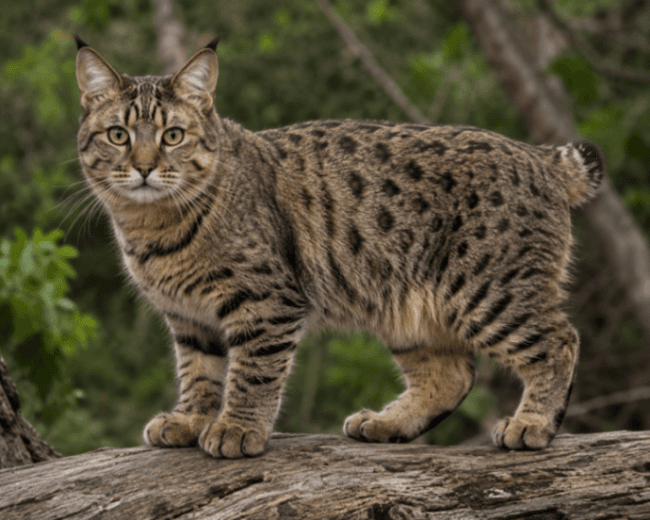
Pixiebob
Last Updated:
The Pixiebob is a loyal, intelligent, and affectionate cat breed known for its wild bobcat-like appearance and gentle personality. With its short tail, muscular build, and dog-like devotion, the Pixiebob is a unique companion that combines rugged looks with a loving heart.
Height
9 - 13 Inches
Intelligence
High
Lifespan
13 - 16 Years
Weight
4 - 8 Kg
Temperament
About
The Pixiebob is a distinctive domestic cat breed known for its wild-looking appearance, muscular build, short tail, and friendly personality. Despite its bobcat-like appearance, the Pixiebob is a fully domestic cat and is known for being affectionate, intelligent, playful, and strongly bonded with its family.
Pixiebobs are generally social, loyal, intelligent, playful, affectionate, curious, and adaptable. They often enjoy following their owners around the home and participating in family activities. Their dog-like personality can make them particularly interactive companions.
The breed can have either a short or long coat, with the classic appearance featuring a spotted or ticked pattern, a broad face, tufted ears, and a naturally short tail.
Pixiebob Appearance
Pixiebobs have a muscular, substantial body and a distinctive wild appearance. Their most recognizable feature is their naturally short tail, which can vary in length between individual cats.
Common physical characteristics include:
- Medium-to-large muscular body
- Broad chest
- Heavy bone structure
- Broad, pear-shaped head
- Deep-set eyes
- Tufted ears
- Large paws
- Short or long coat
- Spotted or ticked coat pattern
- Naturally short tail
Pixiebobs can have a brown spotted tabby appearance, which contributes to their resemblance to a wild bobcat. Their coat is usually soft and dense, while longhaired individuals have a fuller coat.
Pixiebob Temperament
The Pixiebob temperament is generally affectionate, intelligent, social, calm, playful, and devoted to its family. They often develop strong bonds with their owners and may follow them from room to room.
Pixiebobs are sometimes described as having a dog-like personality because many enjoy interactive games, learning routines, and spending considerable time with their families.
Are Pixiebobs Good Family Cats?
Yes, Pixiebobs can make excellent family companions. Their affectionate and adaptable personality allows them to fit into many different household environments.
They generally do best in homes where they receive regular interaction, play, companionship, and mental stimulation.
Are Pixiebobs Good with Children?
Pixiebobs can get along well with children when properly socialized and treated respectfully. Their playful and patient nature can make them enjoyable family companions.
Children should be taught to handle cats gently and respect their boundaries, particularly when the cat is eating, sleeping, or seeking a quiet space.
Pixiebob Intelligence and Training
Pixiebobs are intelligent cats that can learn household routines, tricks, interactive games, and simple commands. Their people-oriented nature can make positive reinforcement training particularly effective.
Training can include:
- Responding to their name
- Clicker training
- Simple tricks
- Harness training
- Fetch-style games
- Puzzle feeders
Short, positive training sessions using treats, praise, and play are generally more effective than punishment.
Pixiebob Exercise Requirements
Pixiebobs are moderately active cats that enjoy both physical activity and mental stimulation. Regular interactive play helps keep them fit and engaged.
Suitable activities include:
- Interactive wand toys
- Chasing games
- Cat trees
- Scratching posts
- Puzzle feeders
- Fetch-style games
- Interactive toys
Providing vertical spaces and climbing structures can give Pixiebobs opportunities to exercise and explore.
Can Pixiebobs Live in Apartments?
Yes, Pixiebobs can adapt well to apartment living when their physical and mental stimulation needs are met. They should have access to scratching posts, climbing structures, interactive toys, and comfortable resting areas.
Windows and balconies should be securely screened to prevent accidental falls or escapes.
Pixiebob Grooming Requirements
Pixiebobs can have either short or long coats. Shorthaired Pixiebobs generally require minimal grooming, while longhaired individuals need more frequent brushing to prevent tangles.
Basic grooming should include:
- Weekly brushing
- More frequent grooming for longhaired cats
- Regular nail trimming
- Routine ear checks
- Regular dental care
- Bathing only when necessary
Regular brushing helps remove loose hair and keeps the coat and skin healthy.
Do Pixiebobs Shed a Lot?
Pixiebobs have moderate shedding, although the amount can vary between individuals and coat types. Longhaired Pixiebobs generally require more frequent grooming to manage loose hair.
Are Pixiebobs Hypoallergenic?
No, Pixiebobs are not considered hypoallergenic. Like other cats, they produce allergens such as Fel d 1, which can be present in saliva, skin, and dander.
Pixiebob Health
Pixiebobs are generally considered a healthy and robust breed. However, like all cats, they can develop health conditions depending on genetics, nutrition, lifestyle, environment, and age.
Potential concerns include obesity, dental disease, heart disease, urinary problems, and other common feline health conditions.
Regular veterinary examinations, vaccinations, parasite prevention, dental care, appropriate nutrition, and healthy weight management are important for maintaining good health.
Are Pixiebobs Prone to Heart Problems?
Heart disease can occur in cats, including Pixiebobs. Hypertrophic cardiomyopathy is one condition that can affect cats, although it is not considered unique to the breed.
Breathing difficulty, weakness, reduced activity, or fainting should be evaluated promptly by a veterinarian.
Are Pixiebobs Prone to Obesity?
Pixiebobs can gain excess weight if calorie intake consistently exceeds their energy needs. Portion control, regular exercise, and monitoring body condition can help maintain a healthy weight.
Are Pixiebobs Prone to Dental Problems?
Like other cats, Pixiebobs can develop plaque, tartar, gingivitis, and periodontal disease. Regular tooth brushing and veterinary dental examinations can help maintain good oral health.
What Should You Feed a Pixiebob?
A Pixiebob should receive a complete and balanced diet appropriate for its age, activity level, size, and health.
High-quality wet food, dry food, or an appropriate combination can provide suitable nutrition when properly formulated and portioned.
Fresh, clean drinking water should always be available.
Are Pixiebobs Good with Other Cats?
Pixiebobs can live successfully with other cats when properly socialized and introduced. Their social personality can make them good companions for other friendly cats.
Introductions should be gradual, with separate food, water, litter, and resting areas for each cat.
Are Pixiebobs Good with Dogs?
Pixiebobs can get along with cat-friendly dogs when properly introduced and socialized. Their confident and interactive personality can help them adapt to multi-pet households.
The cat should always have access to elevated spaces and safe areas where it can retreat.
Are Pixiebobs Affectionate?
Yes, Pixiebobs are generally affectionate and strongly bonded to their families. They often enjoy staying close to their owners and participating in household activities.
Are Pixiebobs Lap Cats?
Many Pixiebobs enjoy physical affection and may sit beside their owners or on their laps. However, individual preferences vary, and some may prefer following their owners around rather than sitting still.
Are Pixiebobs Vocal?
Pixiebobs can be communicative but are not necessarily highly vocal cats. Some are known for chirping, chattering, or making softer vocal sounds rather than frequent loud meowing.
Are Pixiebobs Aggressive?
Pixiebobs are generally friendly, confident, and social rather than inherently aggressive. Individual behavior depends on genetics, socialization, handling, environment, and experiences.
Early socialization and positive handling can help develop a confident and well-adjusted cat.
Are Pixiebobs Good for First-Time Cat Owners?
Pixiebobs can be suitable for first-time cat owners who want an affectionate, intelligent, and interactive companion. Owners should be prepared to provide regular play, companionship, mental stimulation, grooming, and preventive veterinary care.
Do Pixiebobs Need a Lot of Attention?
Pixiebobs generally enjoy human companionship and benefit from regular interaction, play, and mental stimulation. They often like being involved in household activities.
Interactive toys, puzzle feeders, climbing structures, and daily play can help keep them engaged.
Can Pixiebobs Be Left Alone?
Pixiebobs can spend reasonable periods alone when provided with a safe and enriched environment. However, they are social cats that generally benefit from regular human interaction.
Long periods of isolation without stimulation should be avoided.
How Long Do Pixiebobs Live?
Pixiebobs can commonly live around 13 to 15 years or more with appropriate care. Individual lifespan varies depending on genetics, nutrition, preventive veterinary care, lifestyle, and overall health.
How Big Do Pixiebobs Get?
Pixiebobs are medium-to-large cats with a substantial, muscular build. Adult males are generally larger than females, and individual size can vary considerably.
What Colors Do Pixiebobs Come In?
Pixiebobs are primarily recognized for their brown spotted tabby appearance. Their markings can vary in shade and pattern while maintaining the breed's characteristic wild-looking appearance.
What Is the Pixiebob Coat Like?
Pixiebobs can have either short or long coats. The coat is soft and dense, with a spotted or ticked tabby pattern that contributes to their distinctive appearance.
Why Does the Pixiebob Have a Short Tail?
The Pixiebob's naturally short tail is a defining breed characteristic. Tail length can vary significantly between individual cats, and some may have very short tails while others have somewhat longer tails.
Can Pixiebobs Live in India's Climate?
Pixiebobs can live in India's climate with appropriate care. During hot and humid weather, they should have access to a cool indoor environment, fresh water, shade, good ventilation, and comfortable resting areas.
Longhaired individuals may require additional grooming during hot weather to prevent tangles.
Do Pixiebobs Need Air Conditioning in India?
Air conditioning can be helpful during India's hottest summer periods, particularly in regions with extreme heat and humidity. Fresh water, ventilation, shade, and cool resting spaces are also important.
Are Pixiebobs High-Maintenance?
Pixiebobs generally have moderate maintenance requirements. Shorthaired cats need relatively little grooming, while longhaired individuals require more frequent brushing. All Pixiebobs benefit from regular exercise, enrichment, dental care, and preventive veterinary care.
Are Pixiebobs Good for Active Families?
Yes, Pixiebobs can be excellent companions for families that enjoy interacting with their pets. They often enjoy playing, exploring, learning tricks, and participating in family activities.
Are Pixiebobs Good for Indian Families?
Pixiebobs can be suitable for Indian families that can provide companionship, regular play, appropriate nutrition, preventive veterinary care, indoor enrichment, and protection from extreme heat.
Pixiebob Price in India
The Pixiebob price in India can vary depending on pedigree, breeder reputation, bloodline, health screening, age, location, coat type, and availability.
Because Pixiebobs are relatively uncommon in India, availability can be limited and prices may vary considerably.
Prospective owners should consider vaccination records, health history, parental health, living conditions, responsible breeding practices, and the kitten's overall health rather than choosing a kitten based solely on price.
Pixiebob Monthly Maintenance Cost in India
The estimated Pixiebob monthly maintenance cost in India can vary depending on food, litter, grooming, veterinary care, parasite prevention, dental care, toys, and lifestyle.
Regular expenses may include:
- Quality cat food
- Cat litter
- Routine veterinary care
- Vaccinations
- Deworming
- Parasite prevention
- Grooming supplies
- Dental care
- Toys and enrichment
Final Thoughts
The Pixiebob is an affectionate, intelligent, social, and distinctive domestic cat known for its wild-looking appearance and naturally short tail. Despite its bobcat-like features, it is a domestic companion breed with a generally friendly and family-oriented temperament.
For prospective owners in India, it is important to consider the Pixiebob price in India as well as ongoing expenses for quality nutrition, litter, grooming, veterinary care, parasite prevention, dental care, and enrichment.
With responsible breeding, appropriate nutrition, regular veterinary care, positive socialization, daily enrichment, and protection from extreme heat, a Pixiebob can be a loyal and engaging family companion for many years.
Care Requirements
Compatibility
Available Colors
Health Considerations
- Hypertrophic Cardiomyopathy (HCM)
- Hip Dysplasia
- Urinary Tract Issues
Fun Facts
- Unlike most cats with 18 toes, some Pixiebobs can have up to seven toes per paw, giving them distinctive, snowshoe-like feet.
- Pixie-Bobs are known for their unique vocalizations, often communicating through chirps, trills, and soft chatters rather than frequent meows.
Frequently Asked Questions
Common questions about the Pixiebob breed.
What is a Pixiebob cat?
The Pixiebob is a domestic cat breed developed in the United States to resemble the North American bobcat. It is known for its muscular build, short tail, spotted coat, and affectionate, dog-like personality.
Do Pixiebobs have bobcat DNA?
No. Pixiebobs are fully domestic cats and do not require wildcat ancestry. Their bobcat-like appearance comes from selective breeding for traits such as a short tail, spotted coat, and lynx-like features.
How much does a Pixiebob cost in India?
The Pixiebob price in India can vary depending on pedigree, breeder reputation, health screening, age, location, and availability. Because Pixiebobs are relatively rare, prices can vary considerably.
Are Pixiebobs good family cats?
Yes, Pixiebobs can make excellent family companions. They are generally affectionate, social, intelligent, playful, and relaxed, and often enjoy being involved in family activities.
Are Pixiebobs good with children?
Yes, Pixiebobs can be good with children when properly socialized and treated respectfully. Their loyal and playful nature can make them enjoyable family companions.
Are Pixiebobs good with other cats?
Yes, Pixiebobs can generally live well with other cats when introduced gradually and properly. Their social nature can make them comfortable in multi-cat households.
Are Pixiebobs good with dogs?
Yes, Pixiebobs can get along well with cat-friendly dogs when properly socialized and introduced. Gradual introductions and safe spaces for the cat are recommended.
Are Pixiebobs affectionate?
Yes, Pixiebobs are generally affectionate and strongly bonded to their families. They often enjoy following their owners around the home and participating in household activities.
Are Pixiebobs lap cats?
Many Pixiebobs enjoy cuddling and staying close to their owners, although individual preferences vary. Some may prefer following their family members around rather than sitting on a lap.
Are Pixiebobs intelligent?
Yes, Pixiebobs are intelligent and curious cats. They can learn household routines, interactive games, fetch, and other activities through positive reinforcement.
Are Pixiebobs easy to train?
Pixiebobs are often eager learners and can respond well to positive reinforcement. Many can learn fetch, respond to their names, and become comfortable with harness and leash training.
How much exercise does a Pixiebob need?
Pixiebobs have moderate-to-high activity needs and benefit from daily physical and mental stimulation. Interactive play, climbing structures, puzzle feeders, fetch, and exploration are good activities.
Can Pixiebobs live in apartments?
Yes, Pixiebobs can adapt to apartment living when provided with enough exercise and enrichment. Cat trees, scratching posts, interactive toys, and daily play sessions can help meet their needs.
Do Pixiebobs need outdoor access?
No, Pixiebobs can live happily indoors when provided with sufficient enrichment. If outdoor activity is desired, supervised harness walks or a secure catio are safer options.
Do Pixiebobs shed a lot?
Pixiebobs are moderate shedders. Shorthaired Pixiebobs generally need weekly brushing, while longhaired Pixiebobs benefit from brushing several times a week.
How often should a Pixiebob be groomed?
Shorthaired Pixiebobs generally need weekly brushing, while longhaired Pixiebobs should usually be brushed two to three times a week to remove loose hair and prevent tangles.
Do Pixiebobs need professional grooming?
Pixiebobs generally do not require regular professional grooming. Routine brushing, nail trimming, ear care, and dental care can usually be managed at home.
Are Pixiebobs hypoallergenic?
No, Pixiebobs are not considered hypoallergenic. Like other cats, they produce allergens such as Fel d 1, and people with cat allergies may still react to them.
Are Pixiebobs healthy cats?
Pixiebobs are generally considered a healthy breed. However, like all cats, they can develop common feline health problems, so regular veterinary examinations and preventive care are important.
Are Pixiebobs prone to obesity?
Pixiebobs can gain excess weight if they consume more calories than they use. Portion control, regular play, and monitoring body condition can help maintain a healthy weight.
Are Pixiebobs prone to dental problems?
Like other cats, Pixiebobs can develop plaque, tartar, gingivitis, and periodontal disease. Regular tooth brushing and veterinary dental examinations can help maintain good oral health.
Are Pixiebobs prone to heart problems?
Pixiebobs can develop heart disease like other cats, although there is no established heart condition unique to the breed. Any breathing difficulty, weakness, fainting, or sudden reduction in activity should be evaluated by a veterinarian.
What should I feed a Pixiebob?
A Pixiebob should receive a complete and balanced diet appropriate for its age, activity level, size, and health. Portions should be managed carefully to maintain a healthy body condition.
Do Pixiebobs need a lot of water?
Fresh, clean water should always be available. Multiple water sources or a cat water fountain can encourage good hydration, particularly for cats that eat mostly dry food.
Are Pixiebobs vocal?
Pixiebobs are generally not known for frequent loud meowing. They may communicate using chirps, chatters, trills, and other softer vocalizations.
Are Pixiebobs aggressive?
Pixiebobs are generally gentle, friendly, and confident rather than inherently aggressive. Individual behavior depends on genetics, socialization, handling, environment, and life experiences.
Are Pixiebobs good for first-time cat owners?
Pixiebobs can be suitable for first-time cat owners who want an affectionate, intelligent, and interactive companion. Owners should be prepared to provide regular play, enrichment, companionship, grooming, and preventive veterinary care.
Do Pixiebobs need a lot of attention?
Pixiebobs are social cats that generally enjoy spending time with their families. They benefit from regular interaction, play, mental stimulation, and opportunities to participate in household activities.
Can Pixiebobs be left alone?
Pixiebobs can spend reasonable periods alone when provided with a safe and enriched environment. However, they are social cats and generally prefer regular human or animal companionship.
How long do Pixiebobs live?
Pixiebobs commonly have a lifespan of around 13 to 15 years, although individual lifespan varies depending on genetics, nutrition, preventive veterinary care, lifestyle, and overall health.
How big do Pixiebobs get?
Pixiebobs are medium-to-large cats. Adult males commonly weigh around 12 to 17 pounds, while females are generally smaller at around 8 to 12 pounds.
What colors do Pixiebobs come in?
Pixiebobs are primarily recognized in brown spotted tabby, with shades ranging from tawny to reddish brown. Heavy ticking gives the coat its distinctive muted spotted appearance.
What is the Pixiebob coat like?
Pixiebobs have a thick double coat with a woolly texture. They come in both shorthair and longhair varieties, with longhaired Pixiebobs having a softer, longer coat.
Why does the Pixiebob have a short tail?
The naturally short tail is one of the defining characteristics of the Pixiebob breed. Tail length varies between individuals, and some Pixiebobs may have a slightly longer tail.
Can Pixiebobs have extra toes?
Yes. Polydactyly, or having extra toes, is an accepted characteristic of the Pixiebob breed. TICA's breed standard allows Pixiebobs to have up to seven toes.
Can Pixiebobs walk on a leash?
Yes, many Pixiebobs can learn to walk on a harness and leash using gradual positive training. Their intelligent and adventurous personality can make harness training enjoyable.
Do Pixiebobs like water?
Some Pixiebobs show an interest in water and may enjoy playing with fountains, taps, or other water sources. Individual preferences vary, and cats should never be forced into water.
Can Pixiebobs live in India's climate?
Pixiebobs can live in India with appropriate care. During hot and humid weather, they should have access to a cool indoor environment, fresh water, shade, ventilation, and comfortable resting areas.
Do Pixiebobs need air conditioning in India?
Air conditioning can be helpful during India's hottest summer periods, particularly in areas with extreme heat and humidity. Fresh water, ventilation, shade, and cool resting spaces are also important.
Are Pixiebobs high-maintenance?
Pixiebobs have moderate maintenance needs. Shorthaired cats generally require weekly brushing, while longhaired cats need more frequent grooming. They also need daily exercise, enrichment, and routine veterinary care.
Are Pixiebobs good for active families?
Yes, Pixiebobs can be excellent companions for active families. They enjoy interactive play, exploration, fetch, climbing, training, and spending time with their owners.
Are Pixiebobs good for Indian families?
Pixiebobs can be suitable for Indian families that can provide companionship, regular play, appropriate nutrition, preventive veterinary care, indoor enrichment, and protection from extreme heat.
What is the monthly maintenance cost of a Pixiebob in India?
The monthly maintenance cost of a Pixiebob in India varies depending on food, litter, grooming, veterinary care, parasite prevention, dental care, toys, and lifestyle. Owners should also budget separately for vaccinations and unexpected veterinary expenses.
What kind of owner is best for a Pixiebob?
A Pixiebob is best suited to an owner or family looking for an affectionate, intelligent, social, and interactive cat and who can provide daily enrichment, companionship, quality nutrition, grooming, and preventive veterinary care.