
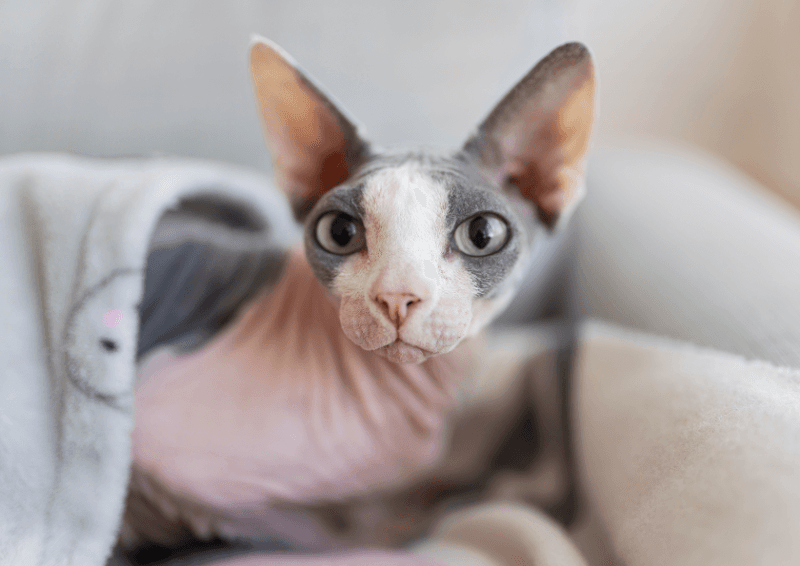
Peterbald
Last Updated:
The Peterbald is an elegant, intelligent, and affectionate cat breed known for its unique hairless appearance, graceful build, and outgoing personality. Highly social and people-oriented, Peterbalds thrive on companionship and form strong bonds with their families.
Height
8 - 12 Inches
Intelligence
High
Lifespan
12 - 15 Years
Weight
3 - 6 Kg
Temperament
About
The Peterbald is a distinctive and elegant cat breed that originated in Russia during the 1990s. Developed through a cross between the Donskoy and Oriental Shorthair, the Peterbald quickly gained attention for its unusual coat variations, slender body, large ears, and affectionate personality. This breed combines the graceful appearance of Oriental-type cats with the unique hairless characteristics inherited from the Donskoy.
Peterbalds are known for being highly social, intelligent, curious, and people-oriented. They enjoy being involved in household activities and often form strong bonds with their owners. Their affectionate nature, combined with their playful and energetic personality, makes them an interesting choice for families looking for a unique companion cat.
Peterbald Cat Appearance
The Peterbald has a slender, elegant, and athletic body with long limbs, a narrow head, prominent cheekbones, and a long tail. Their large ears and almond-shaped eyes give them a distinctive Oriental appearance. Despite their delicate-looking frame, Peterbalds are active and agile cats with good muscle tone.
The breed's facial features are refined and expressive. Their large ears sit prominently on the head, while their almond-shaped eyes can give them an alert and intelligent expression. Their long legs and graceful body make them excellent climbers and jumpers.
Peterbald Coat Types
One of the most unusual characteristics of the Peterbald is its wide range of coat types. Although many people associate the breed with completely hairless cats, not every Peterbald is hairless. Their coat can change as they mature, and individual cats may have different levels of hair coverage.
Peterbald coat types can range from completely hairless or extremely fine skin to soft fuzz and short, brush-like coats. Some cats may have very little visible hair, while others retain a noticeable coat. The exact coat type can influence grooming requirements and the level of skin care needed.
Peterbald Cat Personality and Temperament
Peterbalds are known for their affectionate, intelligent, curious, and social temperament. They generally enjoy human companionship and like being involved in family activities. Many Peterbalds follow their owners around the house, sit beside them, or seek attention throughout the day.
These cats can form strong emotional bonds with their favorite people and often enjoy cuddling and physical affection. They are usually not the best choice for households where the cat will regularly be left alone for long periods because they thrive on companionship and interaction.
Peterbalds are also playful and curious. Their intelligence means they benefit from toys, games, and activities that encourage them to think and explore. Puzzle toys and interactive play can help prevent boredom and provide valuable mental stimulation.
Are Peterbald Cats Good Family Pets?
Yes, Peterbalds can make excellent family pets for households that can provide plenty of interaction and attention. Their friendly and affectionate nature can make them suitable for families with older children and adults who enjoy an interactive companion cat.
Children should always be taught to handle cats gently and respect their boundaries. Peterbalds enjoy affection, but they should still have access to quiet areas where they can rest without being disturbed.
Are Peterbald Cats Good With Other Pets?
Peterbalds are generally social and can adapt well to living with other cats and cat-friendly dogs. Their playful personality may allow them to enjoy having another compatible pet as a companion.
When introducing a Peterbald to another animal, introductions should be gradual and supervised. Providing separate food bowls, litter boxes, resting areas, and hiding spaces can help reduce stress and allow each pet to adjust comfortably.
Peterbald Cat Exercise and Activity Needs
Peterbalds are active and athletic cats that require regular physical activity and mental stimulation. Their long limbs and agile bodies make them natural climbers and jumpers, so providing vertical spaces can be particularly beneficial.
They enjoy interactive toys, wand toys, puzzle feeders, scratching posts, cat trees, and climbing structures. Daily play sessions can help them stay physically fit while also strengthening the bond between the cat and its owner.
Because Peterbalds are intelligent and curious, simply leaving toys around may not always be enough. Rotating toys and introducing new games can help keep their environment interesting.
Peterbald Cat Skin and Grooming Care
Peterbald grooming requirements depend largely on the individual cat's coat type. Hairless Peterbalds require special attention because they do not have a normal coat to absorb and distribute natural skin oils.
Hairless cats may develop oil buildup on the skin, particularly around areas such as the ears, face, and skin folds. Regular gentle cleaning may therefore be necessary. However, excessive bathing can dry or irritate the skin, so the appropriate grooming routine should be based on the individual cat's needs and veterinary advice.
Peterbalds with fuzz or short coats may require less intensive skin care but should still be checked regularly for irritation, excessive oil, dryness, or other skin changes.
Protecting a Hairless Peterbald
Hairless Peterbalds require additional protection from environmental conditions because they have little or no fur to protect their skin. Direct sunlight can increase the risk of sunburn, while cold temperatures can make them uncomfortable.
They are generally best suited to a comfortable indoor environment. During colder weather, providing warm sleeping areas and appropriate cat clothing, when tolerated and recommended, can help maintain comfort. Direct exposure to strong sunlight should also be minimized.
Peterbald Cat Diet and Nutrition
A Peterbald should receive a complete and balanced diet appropriate for its age, size, activity level, and health. High-quality animal protein is important for maintaining healthy muscles and supporting their active lifestyle.
The amount of food required depends on factors such as age, body weight, activity level, and the type of food being provided. Fresh drinking water should always be available.
Because Peterbalds can be active cats, their nutritional needs may be different from those of less-active breeds. However, food portions should still be monitored to maintain a healthy body weight. Consult a veterinarian if you are unsure about the most appropriate diet or feeding quantity.
Peterbald Cat Health
Peterbalds can be healthy and active cats when provided with proper nutrition, preventive healthcare, regular exercise, and veterinary care. However, their hairless or lightly coated skin requires additional attention compared with fully coated breeds.
Potential concerns can include skin irritation, sunburn, excessive oil buildup, dental problems, and sensitivity to cold. Hairless cats may also require more attention to environmental temperature and skin hygiene.
Regular veterinary checkups can help monitor overall health and identify problems early. Any persistent skin irritation, wounds, changes in appetite, weight loss, unusual behavior, or other concerning symptoms should be evaluated by a veterinarian.
Peterbald Cat Vaccination and Preventive Care
Routine preventive healthcare is an important part of keeping a Peterbald healthy. Vaccinations should be given according to a veterinarian-recommended schedule based on the cat's age, lifestyle, vaccination history, and local disease risks.
Preventive care may include vaccinations, rabies vaccination where appropriate, deworming, flea and tick prevention, dental examinations, and routine veterinary checkups. Even indoor cats can benefit from appropriate preventive healthcare.
Peterbald Cat Lifespan
With proper care, a Peterbald can live for approximately 12 to 15 years, although individual lifespan can vary depending on genetics, nutrition, healthcare, lifestyle, and overall living conditions.
Providing a nutritious diet, maintaining a healthy weight, protecting the skin from excessive sun and cold, and scheduling regular veterinary examinations can help support long-term health and wellbeing.
Peterbald Cat Price in India
The Peterbald cat price in India typically ranges from around ₹60,000 to ₹1,50,000. The actual price can vary depending on factors such as breeder reputation, bloodline, coat type, age, location, pedigree, and availability.
Hairless or rare coat types may sometimes command higher prices because of their appearance and limited availability. Prospective pet parents should research breeders carefully and ask about health records, vaccinations, deworming, pedigree information, and the kitten's overall health before making a decision.
Peterbald Cat Monthly Maintenance Cost
The monthly cost of caring for a Peterbald depends on food, litter, healthcare, grooming, toys, and other requirements. Hairless Peterbalds may have additional skin-care needs compared with cats that have a full coat.
Owners should budget for nutritious food, quality litter, routine veterinary care, vaccinations, parasite prevention, grooming supplies, toys, and potential medical expenses. Emergency veterinary treatment can add significantly to the overall cost of ownership.
Is a Peterbald Cat Suitable for Apartment Living?
Yes, Peterbalds can adapt well to apartment living provided they receive enough attention, exercise, and mental stimulation. Their social nature means they generally benefit from spending plenty of time with their families.
A comfortable indoor environment with cat trees, scratching posts, toys, warm resting areas, and safe climbing spaces can help keep them happy. Hairless Peterbalds should be protected from cold drafts and excessive direct sunlight.
Do Peterbald Cats Need Special Care?
Hairless Peterbalds require more specialized care than fully coated cats because their skin is exposed to environmental conditions. Owners need to monitor for oil buildup, dryness, irritation, sun exposure, and temperature sensitivity.
Regular but gentle skin care, a comfortable indoor temperature, protection from excessive sunlight, and routine veterinary checkups can help keep a hairless Peterbald comfortable and healthy.
Are Peterbald Cats Good for First-Time Owners?
Peterbalds can be suitable for first-time cat owners who understand their social, exercise, and skin-care requirements. Their affectionate personality can make them rewarding companions, but hairless individuals require more attention to skin health and environmental temperature than many other cats.
Prospective owners should be prepared to provide regular interaction, grooming or skin care, a safe indoor environment, nutritious food, preventive healthcare, and plenty of mental stimulation.
Tips for Taking Care of a Peterbald Cat
Provide your Peterbald with a balanced diet, fresh water, daily interactive play, and plenty of companionship. Give them access to climbing structures, scratching posts, comfortable sleeping areas, and stimulating toys.
For hairless Peterbalds, regularly monitor the skin for oil buildup, dryness, irritation, or sunburn. Keep them in a comfortable indoor environment and protect them from extreme temperatures. Maintain routine dental care, nail trimming, vaccinations, parasite prevention, and veterinary checkups.
Final Thoughts
The Peterbald is a unique and affectionate cat breed that combines an elegant appearance with intelligence, curiosity, and a strong desire for companionship. Their distinctive coat variations, large ears, long limbs, and almond-shaped eyes make them instantly recognizable.
While their social and playful personality makes them wonderful companions, hairless Peterbalds require additional skin care and protection from sunlight and cold temperatures. With appropriate nutrition, regular grooming, preventive healthcare, environmental protection, and plenty of affection, a Peterbald can become a loving and entertaining member of the family for many years.
Care Requirements
Compatibility
Available Colors
Health Considerations
- Sunburn
- Skin Irritation
- Progressive Retinal Issues (rare)
- Respiratory Sensitivity
Fun Facts
- Peterbalds can be completely hairless, flock-coated, velour-coated, brush-coated, or short-haired.
Frequently Asked Questions
Common questions about the Peterbald breed.
What is a Peterbald cat?
The Peterbald is a distinctive cat breed developed in Russia during the 1990s from Donskoy and Oriental Shorthair bloodlines. It is known for its slender body, large ears, almond-shaped eyes, and affectionate personality.
How much does a Peterbald cat cost in India?
The Peterbald cat price in India typically ranges from ₹60,000 to ₹1,50,000. The price can vary depending on the breeder, bloodline, coat type, location, pedigree, and availability.
What is the lifespan of a Peterbald cat?
A Peterbald cat can typically live for around 12 to 15 years with proper nutrition, preventive healthcare, regular veterinary checkups, and a healthy indoor lifestyle.
Are Peterbald cats good pets?
Yes, Peterbalds can make excellent pets for families and individuals who can provide plenty of companionship and interaction. They are affectionate, intelligent, curious, and social cats.
Are Peterbald cats hairless?
Not all Peterbald cats are completely hairless. They can have different coat types ranging from completely hairless skin and fine fuzz to short or brush-like coats. Their coat can also change as they mature.
Do Peterbald cats require special care?
Hairless Peterbalds require additional skin care because they lack a normal coat. Owners should monitor their skin for oil buildup, dryness, irritation, and sun exposure and keep them comfortable in a warm indoor environment.
Are Peterbald cats good with children?
Peterbalds are generally affectionate and social and can get along well with children when properly socialized. Children should be taught to handle them gently and respect their boundaries.
Do Peterbald cats get along with other pets?
Peterbalds are generally social and can live well with other cats and cat-friendly dogs. Slow introductions and appropriate supervision can help pets become comfortable with one another.
What do Peterbald cats eat?
Peterbald cats should receive a complete and balanced diet appropriate for their age, weight, activity level, and health. High-quality animal protein and adequate hydration are important for maintaining their health.
How do you groom a hairless Peterbald cat?
Hairless Peterbalds may need regular gentle skin cleaning to manage excess oil buildup. Their ears and nails should also be checked regularly, and dental care should be part of their routine. Avoid excessive bathing unless recommended by a veterinarian.
Do Peterbald cats need protection from the sun?
Yes. Hairless Peterbalds have little or no fur to protect their skin from sunlight and may be more susceptible to sunburn. Direct exposure to strong sunlight should be limited, and outdoor exposure should be discussed with a veterinarian.
Are Peterbald cats sensitive to cold?
Hairless Peterbalds can be more sensitive to cold because they have little or no fur for insulation. They are best kept indoors in a comfortable environment with warm resting areas, especially during colder weather.
Are Peterbald cats active?
Yes, Peterbalds are active and athletic cats. They enjoy climbing, jumping, exploring, and interactive games. Cat trees, scratching posts, puzzle toys, and daily play sessions can help keep them physically and mentally stimulated.
Are Peterbald cats affectionate?
Yes, Peterbalds are known for being highly affectionate and people-oriented. They often follow their owners around the home, seek attention, and enjoy cuddling and spending time with their families.
Can Peterbald cats be left alone?
Peterbalds generally prefer companionship and may not enjoy being left alone for long periods. Providing interactive toys and enrichment can help, but they benefit from regular human interaction and attention.
Are Peterbald cats suitable for apartment living?
Yes, Peterbalds can adapt well to apartment living as long as they receive enough attention, exercise, mental stimulation, and comfortable indoor space. Hairless individuals should also be protected from cold drafts and excessive sunlight.
What health problems can Peterbald cats have?
Peterbalds may experience skin irritation, excessive oil buildup, sunburn, sensitivity to cold, dental problems, and other health issues that can affect cats generally. Regular veterinary examinations can help identify problems early.
Do Peterbald cats need a lot of exercise?
Peterbalds are active cats that benefit from daily exercise and interactive play. Providing climbing structures, scratching posts, puzzle toys, and regular play sessions can help meet their physical and mental needs.
Are Peterbald cats easy to train?
Peterbalds are intelligent and curious and can respond well to positive reinforcement. They can learn household routines and simple behaviors through short, consistent training sessions using treats and praise.
How much does it cost to maintain a Peterbald cat in India?
The monthly cost of maintaining a Peterbald depends on food, litter, healthcare, grooming, toys, and skin-care requirements. Hairless cats may have additional grooming and skin-care expenses compared with coated cats.