
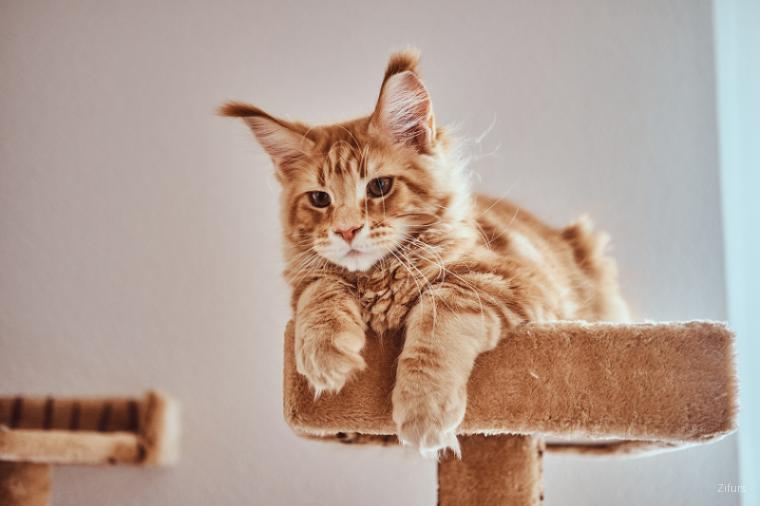
Maine Coon
Last Updated:
The Maine Coon cat breed is one of the largest and most majestic domestic cats, known for its fluffy coat, bushy tail, and gentle personality. Popular in India among cat lovers, Maine Coons are friendly, intelligent, and great for families. Despite their large size, they are affectionate and adapt well to indoor living with proper care and grooming.
Height
10 - 16 Inches
Intelligence
High
Lifespan
10 - 15 years
Weight
5.4 - 10 Kg
Temperament
About
The Maine Coon is one of the largest domestic cat breeds, known for its impressive size, long flowing coat, tufted ears, bushy tail, and friendly personality. Often called a "gentle giant," the Maine Coon is generally affectionate, intelligent, playful, and social while retaining an independent nature.
Maine Coons are known for being gentle, friendly, affectionate, intelligent, playful, adaptable, and people-oriented. They often form strong bonds with their families and enjoy interacting with people without necessarily demanding constant attention.
The breed's long coat requires regular grooming, and its large size means owners need to provide appropriate nutrition, sturdy furniture, suitable litter facilities, and enough space for comfortable movement. Maine Coons can adapt to indoor living when their physical and mental needs are properly met.
Maine Coon Appearance
Maine Coons have a distinctive large and rectangular body, long flowing coat, prominent ruff around the neck, large tufted ears, and a long bushy tail. They are slow to mature and may continue developing for several years.
Common physical characteristics include:
- Large, muscular body
- Long, rectangular body shape
- Large, tufted ears
- Long whiskers
- Large paws with toe tufts
- Long, flowing coat
- Prominent neck ruff
- Long, bushy tail
- Large expressive eyes
Maine Coons are available in a wide range of coat colors and patterns, including solid, tabby, tortoiseshell, smoke, and bi-color varieties.
Maine Coon Temperament
The Maine Coon temperament is generally friendly, gentle, affectionate, intelligent, and playful. They are often social cats that enjoy being around their families while maintaining a relatively easygoing personality.
Many Maine Coons are comfortable around visitors and can adapt well to households with other pets when properly introduced. Individual personality can vary, so early socialization and positive experiences remain important.
Are Maine Coon Cats Good Family Pets?
Yes, Maine Coons can make excellent family pets. Their generally gentle and social nature allows them to adapt well to many households, particularly when they receive regular interaction, play, enrichment, and proper care.
Because of their large size, families should provide sturdy cat furniture, appropriately sized carriers, litter boxes, scratching posts, and comfortable resting areas.
Are Maine Coon Cats Good with Children?
Maine Coons are often patient and friendly with children when properly socialized. Their playful personality can make them enjoyable companions for older children.
Young children should always be supervised around cats and taught to handle them gently. Cats should have access to quiet areas where they can retreat when they want space.
Maine Coon Intelligence and Training
Maine Coons are intelligent cats and can learn routines, names, household boundaries, tricks, and simple commands. Many can also learn to use puzzle feeders, interactive toys, and even walk on a harness when introduced gradually.
Training can include:
- Responding to their name
- Carrier training
- Harness and leash training
- Clicker training
- Using scratching posts
- Interactive puzzle activities
- Cooperative grooming and handling
Positive reinforcement using treats, praise, and play generally works well.
Do Maine Coon Cats Need Exercise?
Yes, Maine Coons are active and playful cats that benefit from regular physical activity and mental stimulation. Their large size and intelligence make interactive play particularly important.
Suitable activities include:
- Interactive wand toys
- Climbing structures
- Cat trees
- Chasing toys
- Puzzle feeders
- Food-dispensing toys
- Supervised harness walks
- Interactive play sessions
Daily play can help maintain healthy weight, muscle tone, and mental wellbeing.
Can Maine Coon Cats Live in Apartments?
Yes, Maine Coon cats can adapt to apartment living when provided with enough vertical space, enrichment, scratching areas, interactive toys, and daily play.
Because they are large cats, owners should choose sturdy cat trees, shelves, beds, carriers, and litter boxes that can comfortably accommodate their size.
Maine Coon Grooming Requirements
Maine Coons have a long, thick coat that requires regular grooming to prevent tangles and mats. Their coat may be easier to manage than some extremely dense long-haired breeds, but consistent brushing is still important.
Basic grooming should include:
- Brushing several times a week
- More frequent brushing if the coat becomes tangled
- Regular nail trimming
- Routine ear checks
- Dental care
- Occasional bathing when necessary
Particular attention should be given to areas behind the ears, around the neck, under the legs, and around the tail where tangles can develop.
Do Maine Coon Cats Shed a Lot?
Maine Coons can shed moderately to heavily, particularly during seasonal coat changes. Regular brushing helps remove loose hair and reduces the formation of mats.
Owners should expect some fur around the home and maintain a consistent grooming routine.
Are Maine Coon Cats Hypoallergenic?
No, Maine Coon cats are not considered hypoallergenic. Like other cats, they produce allergens such as Fel d 1 through saliva and skin secretions.
People with cat allergies should spend time around Maine Coons before deciding to bring one home.
Maine Coon Health
Maine Coons can be healthy companions when responsibly bred and provided with appropriate nutrition and preventive veterinary care. However, the breed is predisposed to certain inherited health conditions.
Potential health concerns include hypertrophic cardiomyopathy (HCM), hip dysplasia, spinal muscular atrophy, and polycystic kidney disease.
Regular veterinary examinations and appropriate genetic and health screening can help identify potential problems and support long-term health.
What Should You Feed a Maine Coon?
A Maine Coon should receive a complete and balanced diet appropriate for its age, size, activity level, and health requirements.
Because Maine Coons are large cats and mature slowly, kittens should receive appropriate kitten nutrition during growth. Adult cats should receive controlled portions to maintain a healthy body condition.
Fresh drinking water should always be available. Some cats also benefit from wet food as part of a balanced diet because it can contribute to overall water intake.
Can Maine Coon Cats Become Overweight?
Yes, Maine Coons can gain excess weight if calorie intake exceeds their energy needs. Regular play, portion control, and monitoring body condition are important.
Maintaining a healthy weight is especially valuable for a large breed because excess weight can place additional stress on joints.
Maine Coon Socialization
Early positive socialization can help Maine Coon kittens become confident and comfortable around people, other pets, handling, grooming, and everyday household activities.
Gradual exposure to different sounds, environments, visitors, carriers, and veterinary handling can make future experiences easier for the cat.
Are Maine Coon Cats Good with Other Pets?
Maine Coons are often adaptable and can live with other cats and cat-friendly dogs when introduced gradually. Their generally social temperament can make them suitable for multi-pet households.
Introductions should be slow and controlled, with each pet provided separate food, water, litter, resting, and hiding areas.
Are Maine Coon Cats Affectionate?
Yes, Maine Coons are generally affectionate and people-oriented. Many enjoy following their owners around the home, sitting nearby, playing, or seeking attention.
However, individual cats vary, and not every Maine Coon will enjoy being picked up or cuddled for long periods.
Do Maine Coon Cats Like Water?
Many Maine Coons are curious about water and may enjoy playing with dripping taps, fountains, or water bowls. Some may even tolerate or enjoy supervised bathing, although individual preferences vary.
Water should never be forced on a cat, and swimming should always be avoided unless specifically required for a controlled veterinary or rehabilitation purpose.
Are Maine Coon Cats Vocal?
Maine Coons can be vocal, but they are often known for soft chirps, trills, and other distinctive sounds rather than constant loud meowing. Individual cats vary in how frequently they vocalize.
Sudden changes in vocalization should be discussed with a veterinarian, particularly if accompanied by changes in appetite, behavior, or activity.
Are Maine Coon Cats Good for First-Time Cat Owners?
Maine Coons can be suitable for first-time cat owners because they are generally friendly, adaptable, and intelligent. However, their large size, long coat, grooming needs, and potential breed-related health concerns require committed care.
New owners should be prepared for regular grooming, veterinary care, enrichment, and appropriate nutrition.
Do Maine Coon Cats Need a Lot of Attention?
Maine Coons are generally social cats that enjoy interaction but do not necessarily require constant attention. They benefit from daily play, companionship, environmental enrichment, and opportunities to explore.
Interactive toys and vertical climbing spaces can help keep them mentally stimulated when their owners are busy.
How Long Do Maine Coon Cats Live?
Maine Coon cats commonly have a lifespan of around 10 to 13 years, although individual cats may live longer with good genetics, responsible breeding, balanced nutrition, preventive veterinary care, and a healthy lifestyle.
Maine Coon Price in India
The Maine Coon price in India can vary considerably depending on pedigree, breeder reputation, bloodline, health screening, coat characteristics, age, location, and availability.
As a general estimate, a Maine Coon kitten in India may cost approximately ₹30,000 to ₹1,00,000 or more.
Imported or exceptionally well-bred cats with documented pedigrees and health screening can cost considerably more.
Prospective owners should check vaccination records, health history, parental health, pedigree documentation, living conditions, and responsible breeding practices rather than choosing a kitten based solely on price.
Maine Coon Monthly Maintenance Cost in India
The estimated Maine Coon monthly maintenance cost in India can range from approximately ₹3,500 to ₹8,000 or more, depending on food, litter, grooming, veterinary care, parasite prevention, toys, and lifestyle.
Regular expenses may include:
- Quality cat food
- Cat litter
- Routine veterinary care
- Vaccinations
- Deworming and parasite prevention
- Grooming supplies
- Dental care
- Toys and enrichment
Can Maine Coon Cats Live in India's Climate?
Maine Coon cats can live in India, but their long and dense coat means owners should pay attention to heat management, particularly during summer.
They should have access to a cool indoor environment, fresh water, shade, good ventilation, and comfortable resting areas. During very hot weather, air conditioning or effective indoor cooling can help maintain a comfortable temperature.
Regular grooming is also important because removing loose undercoat can help keep the coat manageable.
Should a Maine Coon Be Shaved in Summer?
Shaving a Maine Coon is generally not necessary simply because of hot weather. The coat provides protection and helps regulate the cat's environment. Regular brushing and keeping the cat in a cool indoor environment are generally preferable.
If severe matting occurs, professional grooming or veterinary advice may be appropriate.
Are Maine Coon Cats High-Maintenance?
Maine Coons can be considered moderately high-maintenance compared with short-haired cats. Their large size, long coat, regular grooming needs, substantial food requirements, and breed-specific health considerations require consistent care.
However, their friendly temperament and adaptable nature can make the breed rewarding for owners prepared to meet these needs.
Do Maine Coon Cats Need a Big Litter Box?
Yes, Maine Coons benefit from large, spacious litter boxes that allow them to comfortably turn around, dig, and enter and exit without feeling restricted.
Because of their size, standard small litter boxes may be uncomfortable. A large, sturdy litter box with easy access is generally a better choice.
Do Maine Coon Cats Need a Large Cat Tree?
Providing a large and sturdy cat tree can be beneficial for a Maine Coon. Their size and weight mean that climbing structures should have a broad, stable base and platforms large enough for the cat to rest comfortably.
Vertical space also provides useful exercise and environmental enrichment for indoor Maine Coons.
Are Maine Coon Cats Good for Indian Families?
Maine Coon cats can be suitable for Indian families that can provide regular grooming, appropriate nutrition, veterinary care, enrichment, and a comfortable indoor environment.
Families living in hot regions should give particular attention to cooling and heat management because of the breed's long, dense coat.
Final Thoughts
The Maine Coon is a gentle, intelligent, affectionate, and impressive cat breed known for its large size, luxurious coat, bushy tail, and friendly personality. Its social nature makes it a popular choice for families and multi-pet households.
For prospective owners in India, it is important to consider both the Maine Coon price in India and ongoing expenses for food, litter, grooming, veterinary care, parasite prevention, and enrichment.
With regular grooming, balanced nutrition, daily play, appropriate indoor enrichment, preventive veterinary care, and good heat management, a Maine Coon can be a loving and rewarding companion for many years.
Care Requirements
Compatibility
Available Colors
Health Considerations
- Hypertrophic Cardiomyopathy
- Hip Dysplasia
- Spinal Muscular Atrophy
- Polycystic Kidney Disease
Fun Facts
- Mrs. Norris, the cat in the Harry Potter films, was a Maine Coon.
- In 2004, the first-ever commercially cloned pet was a Maine Coon named Little Nicky.
Frequently Asked Questions
Common questions about the Maine Coon breed.
What is a Maine Coon?
The Maine Coon is one of the largest domestic cat breeds, known for its long coat, large tufted ears, bushy tail, and gentle, friendly personality. It is often described as a gentle giant.
How much does a Maine Coon cost in India?
The Maine Coon price in India varies depending on pedigree, breeder reputation, bloodline, health screening, age, location, and availability. A Maine Coon kitten may typically cost around ₹30,000 to ₹1,00,000 or more, while imported or exceptionally well-bred cats may cost considerably more.
Are Maine Coon cats good family pets?
Yes, Maine Coon cats are generally friendly, gentle, social, and adaptable, making them excellent family companions. They can often live comfortably with children, dogs, and other cats when properly introduced.
Are Maine Coon cats good with children?
Maine Coon cats are generally patient and friendly with children. Young children should still be supervised and taught to handle cats gently and respect their space.
Are Maine Coon cats good with dogs?
Yes, Maine Coons are generally adaptable and can get along well with cat-friendly dogs when introduced gradually. Each animal should have its own food, water, resting, and retreat areas.
Are Maine Coon cats good with other cats?
Maine Coons are generally social cats and can live well with other cats when introductions are gradual and positive. Individual temperament should always be considered.
Are Maine Coon cats affectionate?
Yes, Maine Coons are generally affectionate and people-oriented. They often enjoy following their owners around the home and staying close to family members without necessarily demanding constant attention.
Are Maine Coon cats intelligent?
Yes, Maine Coons are intelligent and curious cats. Many can learn tricks, respond to their names, use puzzle toys, play fetch, and even learn to walk on a harness with patient positive training.
Are Maine Coon cats easy to train?
Maine Coons are generally intelligent and responsive to positive reinforcement. They can learn household routines, carrier training, harness walking, tricks, and cooperative grooming.
Do Maine Coon cats need exercise?
Yes, Maine Coons benefit from daily physical activity and mental stimulation. Interactive play, climbing structures, puzzle feeders, chasing toys, and supervised exploration can help keep them active.
Can Maine Coon cats live in apartments?
Yes, Maine Coons can live in apartments when provided with sufficient vertical space, interactive play, scratching posts, enrichment, and a suitably large litter box. Their large size means furniture and climbing structures should be sturdy.
Do Maine Coon cats shed a lot?
Maine Coons can shed moderately to heavily, particularly during seasonal shedding. Regular brushing helps remove loose hair, reduce tangles, and keep the coat healthy.
How often should a Maine Coon be groomed?
Maine Coons should be groomed regularly to prevent tangles and mats. Brushing two to three times a week is a useful routine for many cats, although some coats may require more frequent grooming.
Are Maine Coon cats hypoallergenic?
No, Maine Coon cats are not considered hypoallergenic. Like other cats, they produce allergens such as Fel d 1. Their long coat can also carry dander around the home.
Do Maine Coon cats need to be bathed?
Maine Coon cats generally do not need frequent bathing. Occasional bathing may be useful when the coat becomes particularly dirty or oily, but regular brushing is more important for routine coat care.
Do Maine Coon cats like water?
Many Maine Coons are unusually interested in water and may enjoy playing with dripping taps or water fountains. Some may even tolerate bathing, although individual preferences vary.
Are Maine Coon cats vocal?
Maine Coons can be vocal, but they are often known for soft chirps, trills, and chattering sounds rather than constant loud meowing. Individual cats vary in how vocal they are.
What should I feed a Maine Coon?
A Maine Coon should receive a complete and balanced diet appropriate for its age, size, activity level, and health. High-quality protein and appropriate portion control are important, particularly because the breed can be prone to excess weight.
Can Maine Coon cats become overweight?
Yes, Maine Coons can gain excess weight, especially when food is freely available and activity is limited. Measured portions, regular interactive play, and monitoring body condition can help maintain a healthy weight.
What health problems do Maine Coon cats have?
Maine Coons can be predisposed to health conditions including hypertrophic cardiomyopathy (HCM), hip dysplasia, spinal muscular atrophy, and certain other inherited disorders. Responsible breeding and appropriate health screening can help reduce risk.
What is hypertrophic cardiomyopathy in Maine Coon cats?
Hypertrophic cardiomyopathy, or HCM, is a heart condition involving abnormal thickening of the heart muscle. It is an important inherited health concern in Maine Coons, and responsible breeders may use genetic testing and cardiac screening.
Are Maine Coon cats prone to hip dysplasia?
Yes, hip dysplasia can occur in Maine Coon cats. Their large size may contribute to joint stress, so maintaining a healthy body weight and obtaining appropriate health information from responsible breeders are important.
What is spinal muscular atrophy in Maine Coon cats?
Spinal muscular atrophy is an inherited neurological disorder that can cause muscle weakness and reduced muscle tone. Genetic testing can help identify cats carrying the mutation associated with the condition.
Do Maine Coon cats need genetic testing?
Genetic testing can be useful when selecting Maine Coon breeding cats, particularly for inherited conditions such as the known HCM mutation and spinal muscular atrophy. Prospective owners should ask responsible breeders about relevant health testing.
How long do Maine Coon cats live?
Maine Coon cats commonly live around 10 to 15 years, although individual lifespan varies. Genetics, nutrition, body condition, preventive veterinary care, and lifestyle can all influence longevity.
Are Maine Coon cats good for first-time cat owners?
Maine Coons can be suitable for first-time cat owners because they are generally friendly, adaptable, and intelligent. However, their large size, long coat, grooming requirements, and breed-specific health considerations require consistent care.
Do Maine Coon cats need a lot of attention?
Maine Coons are social and enjoy spending time with their families, but they are generally not overly demanding. They often prefer to stay near their owners and participate in household activities rather than constantly demanding attention.
Can Maine Coon cats be left alone?
Maine Coons can tolerate some time alone, but they benefit from regular companionship and enrichment. Long periods of isolation without play, interaction, or environmental stimulation can lead to boredom and unwanted behavior.
Do Maine Coon cats need a large litter box?
Yes, Maine Coon cats benefit from extra-large litter boxes that provide enough room to turn around, dig, and enter and exit comfortably. Standard small litter boxes may be restrictive for such a large breed.
Do Maine Coon cats need a large cat tree?
A sturdy, large cat tree is highly useful for a Maine Coon. Because of their size and weight, climbing structures should have a stable base and platforms large enough for the cat to rest comfortably.
Are Maine Coon cats good indoor cats?
Yes, Maine Coons can thrive indoors when provided with climbing opportunities, scratching posts, interactive toys, daily play, and other forms of environmental enrichment.
Can Maine Coon cats live in India's climate?
Maine Coon cats can live in India, but their long and dense coat means heat management is important, particularly during summer. They should have access to a cool indoor environment, fresh water, ventilation, and shade.
Do Maine Coon cats need air conditioning in India?
In regions with very hot summers, reliable indoor cooling can help keep Maine Coon cats comfortable and reduce heat-stress risk. The exact requirement depends on local temperature, humidity, ventilation, and the individual cat.
Should a Maine Coon be shaved in summer?
Maine Coon cats generally should not be shaved simply because of hot weather. Their coat provides protection, and regular brushing combined with a cool indoor environment is usually preferable. Severe matting may require professional grooming.
Are Maine Coon cats high-maintenance?
Maine Coons can be moderately high-maintenance compared with short-haired cats because of their long coat, large size, grooming needs, food requirements, and breed-specific health considerations.
Are Maine Coon cats good with families?
Yes, Maine Coons are generally friendly, gentle, and adaptable, making them suitable for many families. They can often live with children, dogs, and other cats when properly socialized and introduced.
Why are Maine Coon cats so large?
Maine Coons are a naturally large breed that developed in a cold climate. Their substantial bone structure, muscular body, long coat, and slow maturation contribute to their impressive adult size.
When is a Maine Coon fully grown?
Maine Coons mature slowly and may not reach their full physical size until around three to five years of age. Their prolonged growth period is one reason they can continue looking kitten-like for several years.
What colors do Maine Coon cats come in?
Maine Coon cats occur in a wide variety of colors and patterns, including brown, red, silver, black, white, blue, tabby, tortoiseshell, smoke, and bi-color varieties. Pointed patterns are not accepted under common breed standards.
Are Maine Coon cats good with senior citizens?
A Maine Coon can be a good companion for some senior owners because of its generally gentle and easygoing nature. However, its large size, grooming needs, and veterinary expenses should be considered before adoption.
What is the monthly maintenance cost of a Maine Coon in India?
The estimated Maine Coon monthly maintenance cost in India can range from approximately ₹3,500 to ₹8,000 or more, depending on food, litter, grooming, veterinary care, parasite prevention, toys, and lifestyle.
Are Maine Coon cats loyal?
Yes, Maine Coons often form strong bonds with their families. They are typically people-oriented and may follow their owners from room to room while remaining relatively independent.