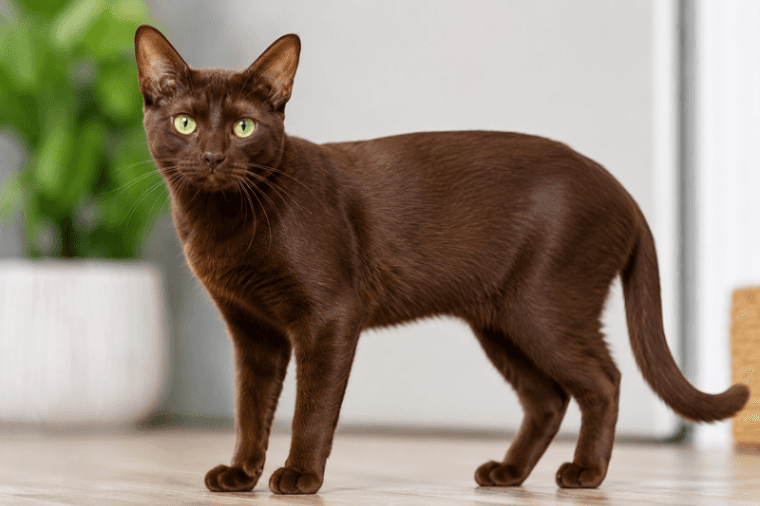
Havana Brown
Last Updated:
The Havana Brown is an elegant, intelligent, and affectionate cat breed known for its rich chocolate-brown coat and striking green eyes. Curious and people-oriented, this rare breed forms strong bonds with its family and enjoys interactive play and companionship.
Height
8 - 11 Inches
Intelligence
High
Lifespan
13 - 16 Years
Weight
3 - 5.5 Kg
Temperament
About
The Havana Brown is a medium-sized cat breed known for its rich chocolate-brown coat, expressive green eyes, distinctive muzzle, and affectionate personality. Despite its name, the breed was developed in England and is known for its elegant appearance and people-oriented nature.
Havana Brown cats are generally affectionate, intelligent, curious, playful, social, gentle, and devoted. They often form strong bonds with their owners and enjoy being involved in everyday household activities.
The breed has a short, smooth coat that is relatively easy to maintain. Its solid warm-brown color, brown whiskers, and bright green eyes are among its most distinctive features.
Havana Brown Appearance
Havana Browns have an elegant yet muscular body with a distinctive wedge-shaped head and prominent muzzle. Their appearance combines a refined structure with a sturdy build.
Common physical characteristics include:
- Medium-sized muscular body
- Long, elegant build
- Wedge-shaped head
- Large, expressive green eyes
- Large, rounded ears
- Prominent muzzle
- Long legs
- Oval paws
- Medium-length tail
- Short, glossy chocolate-brown coat
One of the breed's most distinctive features is its solid brown coloration. The coat should have a warm, rich chocolate tone, while the whiskers are also brown rather than white.
Havana Brown Temperament
The Havana Brown temperament is generally affectionate, intelligent, curious, social, playful, and gentle. These cats often enjoy human companionship and may follow their owners around the home.
Havana Browns are interactive cats that typically enjoy play, exploration, and participating in family activities. They can be particularly rewarding for owners who want a close relationship with their cat.
Are Havana Brown Cats Good Family Cats?
Yes, Havana Brown cats can make excellent family companions. Their affectionate and social personality allows them to form strong bonds with household members.
They generally do best in homes where they receive regular interaction, play, companionship, and mental stimulation.
Are Havana Brown Cats Good with Children?
Havana Brown cats can get along well with children when properly socialized and treated respectfully. Their playful and affectionate personality can make them engaging family companions.
Children should be taught to handle cats gently and respect their boundaries, particularly when the cat is eating, sleeping, or seeking a quiet space.
Havana Brown Intelligence and Training
Havana Brown cats are intelligent and curious and can learn household routines, interactive games, and simple tricks. They generally respond well to positive reinforcement.
Training can include:
- Responding to their name
- Clicker training
- Simple tricks
- Harness training
- Fetch-style games
- Puzzle feeders
Short training sessions using treats, praise, and play can help keep them mentally stimulated. Harsh punishment should be avoided.
Havana Brown Exercise Requirements
Havana Brown cats are active and curious and benefit from regular physical activity and mental stimulation. Daily interactive play can help keep them fit and prevent boredom.
Suitable activities include:
- Interactive wand toys
- Chasing games
- Cat trees
- Scratching posts
- Puzzle feeders
- Fetch-style games
- Interactive toys
Providing climbing structures and vertical spaces can give Havana Browns additional opportunities to exercise and explore.
Can Havana Brown Cats Live in Apartments?
Yes, Havana Brown cats can adapt well to apartment living when their physical and mental stimulation needs are met. They should have access to scratching posts, climbing structures, interactive toys, and daily play.
Windows and balconies should be securely screened to prevent accidental falls or escapes.
Havana Brown Grooming Requirements
Havana Brown cats have a short, smooth coat that is relatively easy to maintain. Their grooming requirements are generally low compared with longhaired breeds.
Basic grooming should include:
- Weekly brushing
- Regular nail trimming
- Routine ear checks
- Regular dental care
- Bathing only when necessary
Regular brushing helps remove loose hair and maintain the coat's natural shine.
Do Havana Brown Cats Shed a Lot?
Havana Brown cats generally have low to moderate shedding because of their short coat. Regular brushing can help remove loose hair and keep the coat smooth and glossy.
Are Havana Brown Cats Hypoallergenic?
No, Havana Brown cats are not considered hypoallergenic. Like other cats, they produce allergens such as Fel d 1, and people with cat allergies may still react to them.
Havana Brown Health
Havana Brown cats are generally considered healthy, but like all breeds, they can develop inherited or common feline health conditions.
Potential concerns include dental disease, obesity, respiratory problems, and other age-related feline conditions.
Regular veterinary examinations, vaccinations, parasite prevention, dental care, appropriate nutrition, and healthy weight management are important for maintaining good health.
Are Havana Brown Cats Prone to Dental Problems?
Like other cats, Havana Browns can develop plaque, tartar, gingivitis, and periodontal disease. Regular tooth brushing and veterinary dental examinations can help maintain good oral health.
Are Havana Brown Cats Prone to Obesity?
Havana Brown cats can gain excess weight if calorie intake consistently exceeds their energy needs. Portion control, regular play, and monitoring body condition can help maintain a healthy weight.
What Should You Feed a Havana Brown Cat?
A Havana Brown should receive a complete and balanced diet appropriate for its age, activity level, size, and health.
High-quality wet food, dry food, or an appropriate combination can provide suitable nutrition when properly formulated and portioned.
Fresh, clean drinking water should always be available.
Are Havana Brown Cats Good with Other Cats?
Havana Brown cats can generally live well with other cats when properly socialized and introduced. Their social nature can make them suitable companions for other friendly and compatible cats.
Introductions should be gradual, with separate food, water, litter, and resting areas available for each cat.
Are Havana Brown Cats Good with Dogs?
Havana Brown cats can live successfully with cat-friendly dogs when properly introduced and socialized. Their confident and interactive personality can help them adapt to multi-pet households.
The cat should always have access to elevated spaces and safe areas where it can retreat.
Are Havana Brown Cats Affectionate?
Yes, Havana Brown cats are generally very affectionate and people-oriented. They often enjoy staying close to their owners and may follow them around the home.
Are Havana Brown Cats Lap Cats?
Many Havana Brown cats enjoy sitting close to their owners or on their laps. Their affectionate personality often makes them comfortable with physical companionship, although individual preferences vary.
Are Havana Brown Cats Vocal?
Havana Brown cats can be communicative and may use soft vocalizations to interact with their owners. Their level of vocalization varies between individual cats.
Are Havana Brown Cats Aggressive?
Havana Brown cats are generally friendly, affectionate, and confident rather than inherently aggressive. Individual behavior depends on genetics, socialization, handling, environment, and experiences.
Early socialization and positive handling can help develop a confident and well-adjusted cat.
Are Havana Brown Cats Good for First-Time Cat Owners?
Havana Brown cats can be suitable for first-time owners who want an affectionate, intelligent, and interactive companion. Owners should be prepared to provide regular attention, play, mental stimulation, and preventive veterinary care.
Do Havana Brown Cats Need a Lot of Attention?
Yes, Havana Brown cats generally enjoy human companionship and benefit from regular interaction. They often prefer being involved in household activities rather than being left alone for long periods.
Interactive toys, puzzle feeders, climbing structures, and daily play sessions can help keep them engaged.
Can Havana Brown Cats Be Left Alone?
Havana Brown cats can spend reasonable periods alone when provided with a safe and enriched environment. However, they are social cats and generally prefer regular human interaction and companionship.
Long periods of isolation without stimulation should be avoided.
How Long Do Havana Brown Cats Live?
Havana Brown cats commonly live around 10 to 15 years or more with appropriate care. Individual lifespan varies depending on genetics, nutrition, preventive veterinary care, lifestyle, and overall health.
How Big Do Havana Brown Cats Get?
Havana Brown cats are medium-sized with a muscular yet elegant build. Adult males are generally larger than females, although individual size varies depending on genetics and overall health.
What Color Are Havana Brown Cats?
Havana Brown cats are known for their distinctive solid warm chocolate-brown coat. Their whiskers are also brown, and their eyes are typically shades of green.
What Is the Havana Brown Coat Like?
The Havana Brown has a short, smooth, close-lying coat with a glossy appearance. The coat's rich chocolate-brown color is one of the breed's defining characteristics.
Why Are Havana Brown Cats Called Havana Brown?
The breed's name refers to its distinctive rich brown coloration. Despite the name, the modern Havana Brown breed was developed in England rather than Havana, Cuba.
Can Havana Brown Cats Live in India's Climate?
Havana Brown cats can live in India's climate with appropriate care. During hot and humid weather, they should have access to a cool indoor environment, fresh water, shade, ventilation, and comfortable resting areas.
Do Havana Brown Cats Need Air Conditioning in India?
Air conditioning can be helpful during India's hottest summer periods, particularly in areas with extreme heat and humidity. Fresh water, ventilation, shade, and cool resting spaces are also important.
Are Havana Brown Cats High-Maintenance?
Havana Brown cats have relatively low grooming requirements because of their short coat. However, they are social and intelligent cats that need regular attention, interactive play, mental stimulation, and companionship.
Are Havana Brown Cats Good for Active Families?
Yes, Havana Brown cats can be excellent companions for active families. They often enjoy interactive play, exploring, learning tricks, and participating in household activities.
Are Havana Brown Cats Good for Indian Families?
Havana Brown cats can be suitable for Indian families that can provide companionship, regular interactive play, appropriate nutrition, preventive veterinary care, indoor enrichment, and protection from extreme heat.
Havana Brown Price in India
The Havana Brown price in India can vary depending on pedigree, breeder reputation, bloodline, health screening, age, location, and availability.
Because Havana Brown cats are relatively uncommon in India, availability can be limited and prices may vary considerably.
Prospective owners should consider vaccination records, health history, parental health, living conditions, responsible breeding practices, and the kitten's overall health rather than choosing a kitten based solely on price.
Havana Brown Monthly Maintenance Cost in India
The estimated Havana Brown monthly maintenance cost in India can vary depending on food, litter, veterinary care, parasite prevention, dental care, toys, grooming, and lifestyle.
Regular expenses may include:
- Quality cat food
- Cat litter
- Routine veterinary care
- Vaccinations
- Deworming
- Parasite prevention
- Dental care
- Grooming supplies
- Toys and enrichment
Final Thoughts
The Havana Brown is an affectionate, intelligent, social, and elegant cat breed best known for its rich chocolate-brown coat and expressive green eyes. Its people-oriented personality makes it a rewarding companion for owners who enjoy an interactive relationship with their pets.
For prospective owners in India, it is important to consider the Havana Brown price in India as well as ongoing expenses for quality nutrition, litter, veterinary care, parasite prevention, dental care, toys, and enrichment.
With responsible breeding, appropriate nutrition, regular veterinary care, positive socialization, daily interaction, and a comfortable indoor environment, a Havana Brown can be a loving and engaging family companion for many years.
Care Requirements
Compatibility
Available Colors
Health Considerations
- Upper Respiratory Infections
- Hypertrophic Cardiomyopathy (HCM)
- Periodontal Disease
Fun Facts
- The Havana Brown is one of the few cat breeds recognized in only one solid coat color—rich chocolate brown.
- Havana Browns are known for using their paws to gently touch people or investigate objects.
Frequently Asked Questions
Common questions about the Havana Brown breed.
What is a Havana Brown cat?
The Havana Brown is a medium-sized domestic cat breed known for its rich chocolate-brown coat, brilliant green eyes, distinctive muzzle, and affectionate, people-oriented personality.
How much does a Havana Brown cost in India?
The Havana Brown price in India varies depending on pedigree, breeder reputation, bloodline, health screening, age, location, and availability. Because Havana Browns are relatively rare, finding one in India can be challenging.
Are Havana Brown cats good family pets?
Yes, Havana Brown cats can make excellent family companions. They are affectionate, intelligent, playful, curious, and enjoy being involved in household activities.
Are Havana Brown cats good with children?
Yes, Havana Brown cats can get along well with children when properly socialized and treated gently. Their playful and affectionate nature can make them good family companions.
Are Havana Brown cats good with other cats?
Yes, Havana Brown cats can generally get along well with other cats when properly introduced. Their social personality can make them suitable for multi-cat households.
Are Havana Brown cats good with dogs?
Yes, Havana Brown cats can live well with cat-friendly dogs when properly socialized and introduced. They often enjoy the companionship of other pets.
Are Havana Brown cats affectionate?
Yes, Havana Brown cats are highly affectionate and people-oriented. They often form strong bonds with their owners and enjoy staying close to them.
Are Havana Brown cats lap cats?
Many Havana Brown cats enjoy sitting on laps and staying close to their owners. However, individual cats may vary in how much physical affection they prefer.
Are Havana Brown cats intelligent?
Yes, Havana Brown cats are intelligent, curious, and inquisitive. They enjoy exploring their surroundings and can learn tricks, games, and household routines.
Are Havana Brown cats easy to train?
Havana Brown cats can respond well to positive reinforcement training. They can learn simple tricks, fetch, puzzle games, and harness training with patience and consistency.
How much exercise does a Havana Brown cat need?
Havana Brown cats have moderate activity needs and benefit from daily interactive play. Wand toys, puzzle feeders, climbing structures, and fetch can provide useful physical and mental stimulation.
Can Havana Brown cats live in apartments?
Yes, Havana Brown cats can adapt well to apartment living when provided with regular play, scratching posts, climbing opportunities, interactive toys, and companionship.
Do Havana Brown cats need outdoor access?
No, Havana Brown cats can live happily indoors when provided with enough enrichment. If outdoor activity is desired, supervised harness walks or a secure catio are safer options.
Do Havana Brown cats shed a lot?
Havana Brown cats generally shed relatively little because they have a short, smooth coat. Weekly brushing can help remove loose hair and maintain the coat's natural shine.
How often should a Havana Brown cat be groomed?
Havana Brown cats have low grooming requirements. Weekly brushing or combing is generally sufficient, along with regular nail trimming, ear checks, and dental care.
Do Havana Brown cats need professional grooming?
No, Havana Brown cats generally do not require regular professional grooming. Their short, smooth coat is easy to maintain at home.
Are Havana Brown cats hypoallergenic?
No, Havana Brown cats are not considered hypoallergenic. Like other cats, they produce allergens such as Fel d 1, and people with cat allergies may still react to them.
Are Havana Brown cats healthy?
Havana Brown cats are generally considered a relatively healthy breed. Regular veterinary examinations, vaccinations, parasite prevention, dental care, and appropriate nutrition are important for maintaining good health.
Are Havana Brown cats prone to dental problems?
Havana Brown cats can develop dental problems such as plaque, tartar, gingivitis, and periodontal disease. Regular tooth brushing and veterinary dental examinations can help maintain good oral health.
Are Havana Brown cats prone to obesity?
Havana Brown cats can gain excess weight if calorie intake exceeds their energy needs. Proper portion control, regular play, and monitoring body condition can help maintain a healthy weight.
What should I feed a Havana Brown cat?
A Havana Brown should receive a complete and balanced diet appropriate for its age, activity level, size, and health. Wet food, dry food, or an appropriate combination can be suitable when properly formulated and portioned.
Do Havana Brown cats need a lot of water?
Fresh, clean water should always be available. Multiple water sources or a cat water fountain can encourage good hydration, particularly for cats that consume mostly dry food.
Are Havana Brown cats vocal?
Havana Brown cats can be communicative but are generally not excessively vocal. They may use soft meows, chirps, or trills to interact with their owners.
Are Havana Brown cats aggressive?
Havana Brown cats are generally gentle, affectionate, and social rather than inherently aggressive. Individual behavior depends on genetics, socialization, handling, environment, and experiences.
Are Havana Brown cats good for first-time cat owners?
Havana Brown cats can be suitable for first-time owners who want an affectionate, intelligent, and interactive companion. Owners should be prepared to provide regular attention, play, companionship, and preventive veterinary care.
Do Havana Brown cats need a lot of attention?
Yes, Havana Brown cats generally enjoy plenty of human interaction. They often want to participate in household activities and can become bored if they receive too little attention or stimulation.
Can Havana Brown cats be left alone?
Havana Brown cats can spend reasonable periods alone when provided with a safe and enriched environment, but they generally prefer companionship and regular interaction. Long periods of isolation should be avoided.
How long do Havana Brown cats live?
Havana Brown cats commonly have a life expectancy of around 8 to 13 years or more, although individual lifespan varies depending on genetics, nutrition, preventive veterinary care, lifestyle, and overall health.
How big do Havana Brown cats get?
Havana Brown cats are medium-sized. Males generally weigh around 8 to 10 pounds, while females typically weigh around 6 to 8 pounds.
What color are Havana Brown cats?
Havana Brown cats are known for their rich, warm chocolate or mahogany-brown coat. The coat should have an even solid color, with brown whiskers that complement the coat.
What color eyes do Havana Brown cats have?
Havana Brown cats have brilliant green eyes. The eyes are typically oval-shaped, expressive, and set against the rich brown coat.
What is the Havana Brown coat like?
The Havana Brown has a short to medium-length, smooth, silky, and glossy coat. It has little undercoat and generally does not shed heavily.
Why are Havana Brown cats called Havana Brown?
The name Havana Brown refers to the breed's distinctive rich brown coloration. The modern Havana Brown was developed in England rather than Cuba.
Do Havana Brown cats have brown whiskers?
Yes, brown whiskers are a distinctive characteristic of the Havana Brown. The whiskers should complement the cat's chocolate-brown coat.
Can Havana Brown cats learn tricks?
Yes, Havana Brown cats are intelligent and can learn tricks, fetch, puzzle games, and other activities using positive reinforcement.
Can Havana Brown cats walk on a leash?
Yes, many Havana Brown cats can learn to walk on a harness and leash. Training should be gradual and positive, starting indoors before introducing the cat to outdoor environments.
Can Havana Brown cats live in India's climate?
Havana Brown cats can live in India with appropriate care. During hot and humid weather, they should have access to a cool indoor environment, fresh water, shade, ventilation, and comfortable resting areas.
Do Havana Brown cats need air conditioning in India?
Air conditioning can be helpful during India's hottest summer periods, particularly in areas with extreme heat and humidity. Fresh water, ventilation, shade, and cool resting spaces are also important.
Are Havana Brown cats high-maintenance?
Havana Brown cats have relatively low grooming requirements because of their short coat. However, they are social and intelligent cats that need regular attention, play, companionship, and mental stimulation.
Are Havana Brown cats good for active families?
Yes, Havana Brown cats can be excellent companions for families that enjoy interacting with their pets. They enjoy play, exploration, training, and participating in household activities.
Are Havana Brown cats good for Indian families?
Havana Brown cats can be suitable for Indian families that can provide companionship, regular play, appropriate nutrition, preventive veterinary care, indoor enrichment, and protection from extreme heat.
What is the monthly maintenance cost of a Havana Brown in India?
The monthly maintenance cost of a Havana Brown in India varies depending on food, litter, veterinary care, parasite prevention, dental care, toys, and lifestyle. Owners should also budget separately for vaccinations and unexpected veterinary expenses.
What kind of owner is best for a Havana Brown?
A Havana Brown is best suited to an owner or family looking for an affectionate, intelligent, social, and interactive cat and who can provide regular companionship, play, quality nutrition, and preventive veterinary care.