Chartreux
Last Updated:
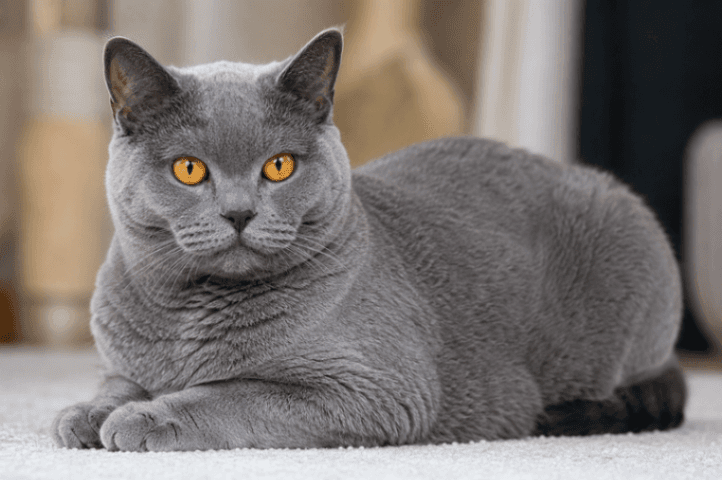
The Chartreux is a quiet, intelligent, and affectionate cat breed known for its plush blue-gray coat, copper or gold eyes, and gentle personality. Originating in France, this loyal and easygoing breed is prized for its calm temperament and exceptional hunting abilities.
Height
9 - 12 Inches
Intelligence
High
Lifespan
12 - 15 Years
Weight
4 - 7 Kg
Temperament
About
The Chartreux is a distinctive French cat breed known for its dense blue-gray coat, copper to gold-colored eyes, muscular body, and calm, affectionate personality. Despite its sturdy appearance, the Chartreux is generally gentle, intelligent, playful, and strongly bonded with its family.
Chartreux cats are generally affectionate, intelligent, quiet, adaptable, playful, loyal, and easy-going. They often form close relationships with their owners while maintaining an independent side. Their calm temperament can make them suitable for a variety of households.
The breed has a dense, water-resistant double coat that gives the Chartreux its characteristic plush appearance. The coat is usually blue-gray and can range from light ash to deeper slate shades.
Chartreux Appearance
Chartreux cats have a strong, muscular body with a broad chest and relatively short, sturdy legs. Their rounded face, full cheeks, and expressive eyes give them a distinctive appearance.
Common physical characteristics include:
- Medium-to-large muscular body
- Broad chest
- Strong shoulders
- Rounded head
- Full cheeks
- Medium-sized ears
- Expressive copper, gold, or orange eyes
- Strong legs
- Medium-length tail
- Dense blue-gray double coat
Male Chartreux cats are generally larger and more heavily built than females. Their slow physical development means they can take several years to reach full maturity.
Chartreux Temperament
The Chartreux temperament is generally calm, affectionate, intelligent, gentle, playful, and adaptable. They often develop strong bonds with their owners without demanding constant attention.
Chartreux cats are sometimes described as quiet and observant. They may follow their owners around the home and enjoy being nearby without always demanding to be held.
Are Chartreux Cats Good Family Cats?
Yes, Chartreux cats can make excellent family companions. Their calm and adaptable personality allows them to fit into many different household environments.
They generally do well in homes where they receive affection, companionship, interactive play, and appropriate mental stimulation.
Are Chartreux Cats Good with Children?
Chartreux cats can get along well with children when properly socialized and treated respectfully. Their patient and gentle nature can make them good family companions.
Children should be taught to handle cats gently and respect their boundaries, particularly when the cat is eating, sleeping, or seeking a quiet space.
Chartreux Intelligence and Training
Chartreux cats are intelligent and observant and can learn household routines, interactive games, and simple tricks. They often respond well to positive reinforcement.
Training can include:
- Responding to their name
- Clicker training
- Simple tricks
- Harness training
- Fetch-style games
- Puzzle feeders
Short training sessions using treats, praise, and play can provide useful mental stimulation.
Chartreux Exercise Requirements
Chartreux cats have moderate activity needs. They enjoy interactive play, climbing, chasing toys, and exploring, while also spending plenty of time relaxing.
Suitable activities include:
- Interactive wand toys
- Chasing games
- Cat trees
- Scratching posts
- Puzzle feeders
- Fetch-style games
- Interactive toys
Regular play helps maintain muscle tone and prevents boredom and excess weight gain.
Can Chartreux Cats Live in Apartments?
Yes, Chartreux cats can adapt well to apartment living. Their relatively calm nature makes them suitable for indoor homes, provided they receive regular exercise and mental stimulation.
They should have access to scratching posts, comfortable resting areas, climbing structures, and interactive toys.
Chartreux Grooming Requirements
The Chartreux has a dense double coat that requires regular grooming. Their coat can become thicker during colder periods and may shed more heavily during seasonal changes.
Basic grooming should include:
- Weekly brushing
- More frequent brushing during heavy shedding
- Regular nail trimming
- Routine ear checks
- Regular dental care
- Bathing only when necessary
Regular brushing helps remove loose hair and maintain the dense coat's condition.
Do Chartreux Cats Shed a Lot?
Chartreux cats can shed moderately, with shedding often increasing during seasonal coat changes. Regular brushing can help manage loose hair and reduce fur around the home.
Are Chartreux Cats Hypoallergenic?
No, Chartreux cats are not considered hypoallergenic. Their dense coat does not eliminate cat allergens, and people with cat allergies may still react to them.
Chartreux Health
Chartreux cats are generally considered a healthy and robust breed. However, like all cats, they can develop inherited or common feline health conditions.
Potential concerns include polycystic kidney disease, patellar luxation, urinary tract problems, dental disease, and obesity.
Regular veterinary examinations, vaccinations, parasite prevention, dental care, appropriate nutrition, and healthy weight management are important for maintaining good health.
Are Chartreux Cats Prone to Polycystic Kidney Disease?
Polycystic kidney disease, or PKD, involves the development of cysts in the kidneys and can affect cats. Responsible breeders may use health screening and genetic testing where appropriate to reduce inherited health risks.
Are Chartreux Cats Prone to Urinary Problems?
Like other cats, Chartreux cats can develop urinary tract conditions. Adequate hydration, appropriate nutrition, maintaining a healthy weight, and regular veterinary care can support urinary health.
Difficulty urinating, frequent attempts to urinate, blood in the urine, or vocalization while urinating requires prompt veterinary attention.
Are Chartreux Cats Prone to Obesity?
Chartreux cats can gain excess weight if calorie intake consistently exceeds their energy needs. Portion control, regular play, and monitoring body condition can help maintain a healthy weight.
Are Chartreux Cats Prone to Dental Problems?
Like other cats, Chartreux cats can develop plaque, tartar, gingivitis, and periodontal disease. Regular tooth brushing and veterinary dental examinations can help maintain good oral health.
What Should You Feed a Chartreux Cat?
A Chartreux should receive a complete and balanced diet appropriate for its age, activity level, size, and health.
High-quality wet food, dry food, or an appropriate combination can provide suitable nutrition when properly formulated and portioned.
Fresh, clean drinking water should always be available.
Are Chartreux Cats Good with Other Cats?
Yes, Chartreux cats can generally live well with other cats when properly socialized and introduced. Their calm and adaptable personality can help them adjust to multi-cat households.
Introductions should be gradual, with separate food, water, litter, and resting areas for each cat.
Are Chartreux Cats Good with Dogs?
Chartreux cats can live successfully with cat-friendly dogs when properly introduced and socialized. Their confident but calm nature can help them adapt to multi-pet households.
The cat should always have access to elevated spaces and safe areas where it can retreat.
Are Chartreux Cats Affectionate?
Yes, Chartreux cats are generally affectionate and loyal to their families. They often enjoy staying near their owners and may follow them around the home without constantly demanding attention.
Are Chartreux Cats Lap Cats?
Some Chartreux cats enjoy sitting on laps, while others prefer relaxing beside their owners. Their affectionate nature often means they enjoy staying close even when they are not being held.
Are Chartreux Cats Vocal?
Chartreux cats are generally known for being relatively quiet. They may communicate through soft meows, chirps, and other sounds, but they are not typically considered highly vocal cats.
Are Chartreux Cats Aggressive?
Chartreux cats are generally calm, gentle, and friendly rather than inherently aggressive. Individual behavior depends on genetics, socialization, handling, environment, and experiences.
Early socialization and positive handling can help develop a confident and well-adjusted cat.
Are Chartreux Cats Good for First-Time Cat Owners?
Yes, Chartreux cats can be suitable for first-time cat owners who want a calm, affectionate, intelligent, and relatively easy-going companion.
Owners should still be prepared to provide regular grooming, exercise, companionship, appropriate nutrition, and preventive veterinary care.
Do Chartreux Cats Need a Lot of Attention?
Chartreux cats generally enjoy human companionship but are not usually considered overly demanding. They often prefer staying near their owners and participating in household activities while also being comfortable relaxing independently.
Can Chartreux Cats Be Left Alone?
Chartreux cats can spend reasonable periods alone when provided with a safe and enriched environment. However, they still benefit from regular interaction, play, and companionship.
Long periods of isolation without stimulation should be avoided.
How Long Do Chartreux Cats Live?
Chartreux cats commonly have a life expectancy of around 12 to 15 years or more with appropriate care. Individual lifespan varies depending on genetics, nutrition, preventive veterinary care, lifestyle, and overall health.
How Big Do Chartreux Cats Get?
Chartreux cats are medium-to-large cats with a strong and muscular build. Adult males are generally larger and heavier than females, with some males reaching around 10 to 16 pounds.
What Colors Do Chartreux Cats Come In?
Chartreux cats are recognized for their blue-gray coat, which can range from light ash to deeper slate blue. The coat should have an even appearance, and the nose leather and paw pads are generally blue-gray as well.
What Is the Chartreux Coat Like?
The Chartreux has a dense, slightly woolly double coat with a soft, plush texture. The coat is water-resistant and can become thicker during colder seasons.
Why Is the Chartreux Coat Blue?
The Chartreux's blue-gray coat is a defining breed characteristic. The coloration is caused by genetic dilution of black pigment, producing shades ranging from pale blue-gray to deeper slate.
Can Chartreux Cats Live in India's Climate?
Chartreux cats can live in India's climate with appropriate care. Because they have a dense double coat, they may need additional comfort during hot and humid weather.
They should have access to a cool indoor environment, fresh water, shade, good ventilation, and comfortable resting areas.
Do Chartreux Cats Need Air Conditioning in India?
Air conditioning can be helpful during India's hottest summer periods, particularly in regions with extreme heat and humidity. Fresh water, ventilation, shade, and cool resting spaces are also important.
Are Chartreux Cats High-Maintenance?
Chartreux cats have moderate grooming requirements because of their dense double coat. Regular brushing is particularly important during seasonal shedding. Their calm temperament generally makes routine care manageable.
Are Chartreux Cats Good for Active Families?
Yes, Chartreux cats can be good companions for active families. They enjoy interactive play and exploration but also have a calm side that allows them to relax with their family.
Are Chartreux Cats Good for Indian Families?
Chartreux cats can be suitable for Indian families that can provide companionship, regular grooming, appropriate nutrition, preventive veterinary care, indoor enrichment, and protection from India's extreme summer heat.
Chartreux Price in India
The Chartreux price in India can vary depending on pedigree, breeder reputation, bloodline, health screening, age, location, and availability.
Because Chartreux cats are relatively uncommon in India, availability can be limited and prices may vary considerably.
Prospective owners should consider vaccination records, health history, parental health, living conditions, responsible breeding practices, and the kitten's overall health rather than choosing a kitten based solely on price.
Chartreux Monthly Maintenance Cost in India
The estimated Chartreux monthly maintenance cost in India can vary depending on food, litter, veterinary care, parasite prevention, dental care, grooming, toys, and lifestyle.
Regular expenses may include:
- Quality cat food
- Cat litter
- Routine veterinary care
- Vaccinations
- Deworming
- Parasite prevention
- Grooming supplies
- Dental care
- Toys and enrichment
Final Thoughts
The Chartreux is a calm, affectionate, intelligent, and adaptable cat breed recognized for its plush blue-gray coat, muscular build, and expressive eyes. Its quiet and loyal personality makes it a rewarding companion for families and individuals alike.
For prospective owners in India, it is important to consider the Chartreux price in India as well as ongoing expenses for quality nutrition, litter, grooming, veterinary care, parasite prevention, dental care, toys, and enrichment.
With responsible breeding, appropriate nutrition, regular veterinary care, routine grooming, positive socialization, and protection from extreme heat, a Chartreux can be a loving and devoted family companion for many years.
Care Requirements
Compatibility
Available Colors
Health Considerations
- Patellar Luxation
- Polycystic Kidney Disease (Rare)
- Hypertrophic Cardiomyopathy (HCM)
Fun Facts
- The Chartreux is one of France's oldest and most treasured cat breeds.
- The Chartreux is often called the "smiling cat of France" thanks to its naturally rounded muzzle and gentle expression, which make it look like it's always smiling.
Frequently Asked Questions
Common questions about the Chartreux breed.
What is a Chartreux cat?
The Chartreux is a French cat breed known for its sturdy muscular build, dense blue-gray woolly coat, copper to gold eyes, calm temperament, and affectionate personality.
How much does a Chartreux cat cost in India?
The Chartreux price in India varies depending on pedigree, breeder reputation, bloodline, health screening, age, location, and availability. Because the breed is relatively rare in India, prices can vary considerably.
Are Chartreux cats good family pets?
Yes, Chartreux cats can make excellent family pets. They are generally calm, affectionate, intelligent, adaptable, and gentle with their families.
Are Chartreux cats good with children?
Yes, Chartreux cats can be good with children when properly socialized and treated respectfully. Their calm and tolerant nature can make them suitable family companions.
Are Chartreux cats good with other cats?
Yes, Chartreux cats can generally live well with other cats when properly introduced. Their adaptable and easy-going personality can help them adjust to multi-cat households.
Are Chartreux cats good with dogs?
Yes, Chartreux cats can get along with cat-friendly dogs when properly socialized and introduced. They are generally adaptable and tolerant of other animals.
Are Chartreux cats affectionate?
Yes, Chartreux cats are affectionate and loyal to their families. They often enjoy staying close to their owners without being overly demanding.
Are Chartreux cats lap cats?
Some Chartreux cats enjoy sitting on laps, while others prefer relaxing beside their owners. They generally enjoy being close to their family even when they are not being held.
Are Chartreux cats intelligent?
Yes, Chartreux cats are intelligent and observant. They can learn routines, respond to their names, retrieve toys, and enjoy puzzle toys and interactive games.
Are Chartreux cats easy to train?
Chartreux cats generally respond well to positive reinforcement. Many can learn simple tricks, fetch, clicker training, and harness walking with patience and consistency.
How much exercise does a Chartreux cat need?
Chartreux cats have moderate activity needs. They enjoy climbing, chasing toys, interactive play, and puzzle games, while also spending plenty of time relaxing.
Can Chartreux cats live in apartments?
Yes, Chartreux cats can adapt well to apartment living. They should have access to scratching posts, climbing structures, interactive toys, and regular opportunities for play.
Do Chartreux cats need outdoor access?
No, Chartreux cats can live happily indoors when provided with sufficient enrichment. If outdoor access is provided, a secure enclosure or supervised harness walking is safer than allowing free roaming.
Do Chartreux cats shed a lot?
Chartreux cats are seasonal shedders. Their dense undercoat can shed more heavily during spring and fall, so more frequent combing may be helpful during these periods.
How often should a Chartreux cat be groomed?
Chartreux cats benefit from regular combing to remove dead hair and prevent mats. Grooming may need to be increased during seasonal shedding periods.
Do Chartreux cats need professional grooming?
Chartreux cats generally do not require regular professional grooming. Their coat can usually be maintained at home with a suitable wide-toothed comb, along with routine nail, ear, and dental care.
Are Chartreux cats hypoallergenic?
No, Chartreux cats are not considered hypoallergenic. Their dense coat does not eliminate cat allergens, and people with cat allergies may still react to them.
Are Chartreux cats healthy?
Chartreux cats are generally considered a healthy and robust breed. Routine veterinary examinations, vaccinations, parasite prevention, dental care, and appropriate nutrition are important for maintaining good health.
Are Chartreux cats prone to patellar luxation?
Patellar luxation, in which the kneecap moves out of its normal position, has been reported in Chartreux cats. Responsible breeders may screen cats for this condition before breeding.
Are Chartreux cats prone to heart problems?
Hypertrophic cardiomyopathy, or HCM, has been reported in some Chartreux cats. Breeders may screen breeding cats for HCM, while regular veterinary examinations can help monitor overall heart health.
Are Chartreux cats prone to obesity?
Yes, weight gain can be a concern in some mature Chartreux cats. Measured portions, a balanced diet, regular play, and monitoring body condition can help maintain a healthy weight.
Are Chartreux cats prone to dental problems?
Like other cats, Chartreux cats can develop plaque, tartar, gingivitis, and periodontal disease. Regular tooth brushing and veterinary dental examinations can help maintain good oral health.
What should I feed a Chartreux cat?
A Chartreux should receive a complete and balanced diet appropriate for its age, activity level, size, and health. Portion control is particularly important for mature cats that are prone to weight gain.
Do Chartreux cats need a lot of water?
Fresh, clean water should always be available. Multiple water sources or a cat water fountain can encourage good hydration, particularly for cats that consume mostly dry food.
Are Chartreux cats vocal?
Chartreux cats are generally quiet and have a soft voice. Some communicate through gentle meows, murmurs, chirps, and body language rather than frequent loud vocalization.
Are Chartreux cats aggressive?
Chartreux cats are generally calm, gentle, and non-aggressive. Individual behavior depends on genetics, socialization, handling, environment, and experiences.
Are Chartreux cats good for first-time cat owners?
Yes, Chartreux cats can be suitable for first-time owners who want a calm, affectionate, intelligent, and adaptable companion. Regular grooming and preventive veterinary care are still important.
Do Chartreux cats need a lot of attention?
Chartreux cats enjoy human companionship but are generally not overly demanding. They often prefer staying near their owners and participating in household routines while remaining comfortable with independent time.
Can Chartreux cats be left alone?
Yes, Chartreux cats can generally tolerate being left alone for reasonable periods when provided with a safe and enriched environment. Their calm nature can make them more adaptable to alone time than some highly dependent breeds.
How long do Chartreux cats live?
Chartreux cats commonly live around 12 to 15 years or more with appropriate care. Some may live considerably longer depending on genetics, nutrition, preventive veterinary care, and lifestyle.
How big do Chartreux cats get?
Chartreux cats are medium-to-large and strongly built. Males are generally much larger than females, with mature males commonly weighing around 12 to 16 pounds.
What color are Chartreux cats?
Chartreux cats are recognized in blue-gray shades ranging from ash to slate. The coat should have a clear, uniform blue-gray appearance.
What color eyes do Chartreux cats have?
Chartreux cats have rounded eyes ranging from gold to copper, with brilliant orange or copper shades being particularly desirable.
What is the Chartreux coat like?
The Chartreux has a dense, medium-short, woolly double coat. The outer coat is somewhat water-resistant, while the dense undercoat provides insulation.
Why is the Chartreux coat blue?
The Chartreux's characteristic blue-gray coat is produced by genetic dilution of black pigmentation. The breed is recognized specifically for its blue coloration.
Are Chartreux cats slow to mature?
Yes, Chartreux cats mature slowly. Males can take several years to reach full maturity, with some taking around three to five years to reach their mature size and appearance.
Can Chartreux cats learn tricks?
Yes, Chartreux cats are intelligent and can learn tricks, fetch, puzzle games, and clicker-training exercises using positive reinforcement.
Can Chartreux cats walk on a leash?
Yes, some Chartreux cats can learn to walk on a harness and leash. Training should be gradual and positive, beginning indoors before introducing the cat to outdoor environments.
Can Chartreux cats live in India's climate?
Chartreux cats can live in India with appropriate care. Because they have a dense double coat, they should have access to a cool indoor environment, fresh water, shade, ventilation, and protection from extreme summer heat.
Do Chartreux cats need air conditioning in India?
Air conditioning can be helpful during India's hottest summer periods, especially in areas with high heat and humidity. Fresh water, shade, ventilation, and cool resting spaces are also important.
Are Chartreux cats high-maintenance?
Chartreux cats have moderate grooming needs because of their dense woolly coat, especially during seasonal shedding. Their calm and adaptable temperament generally makes routine care manageable.
Are Chartreux cats good for active families?
Yes, Chartreux cats can be good companions for active families. They enjoy interactive play and climbing but are also calm enough to relax with the family.
Are Chartreux cats good for Indian families?
Chartreux cats can be suitable for Indian families that can provide companionship, regular grooming, appropriate nutrition, preventive veterinary care, indoor enrichment, and protection from extreme heat.
What is the monthly maintenance cost of a Chartreux in India?
The monthly maintenance cost of a Chartreux in India varies depending on food, litter, grooming, veterinary care, parasite prevention, dental care, toys, and lifestyle. Owners should also budget separately for vaccinations and unexpected veterinary expenses.
What kind of owner is best for a Chartreux?
A Chartreux is best suited to an owner or family looking for a calm, affectionate, intelligent, adaptable, and relatively quiet cat and who can provide companionship, regular grooming, quality nutrition, enrichment, and preventive veterinary care.