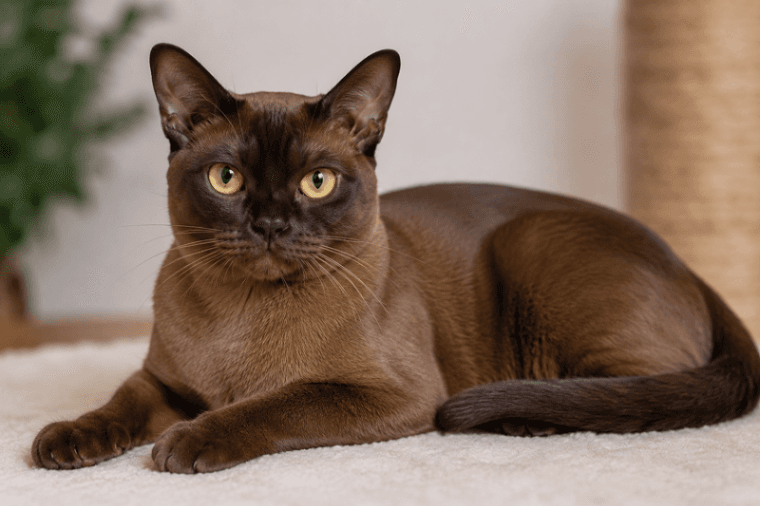
Burmese
Last Updated:
The Burmese is an affectionate, intelligent, and playful cat breed known for its silky coat, expressive golden eyes, and people-loving personality. Often described as "dog-like," Burmese cats thrive on human companionship and make wonderful family pets.
Height
8 - 10 Inches
Intelligence
High
Lifespan
14 - 18 Years
Weight
3.5 - 6 Kg
Temperament
About
The Burmese is a charming, affectionate, and highly intelligent cat breed known for its sleek appearance, expressive eyes, playful personality, and strong attachment to its human family. The modern Burmese breed traces its history to a single female cat named Wong Mau, who was brought from Myanmar, formerly known as Burma, to the United States during the 1930s. Her unique appearance and personality became the foundation for the development of the modern Burmese breed.
Over the years, Burmese cats have become popular companion animals because of their combination of intelligence, affection, curiosity, and playful behavior. They are often described as highly people-oriented cats that enjoy participating in everyday household activities rather than simply observing from a distance. Their social personality makes them particularly well suited to families that have plenty of time to interact with their pets.
Although Burmese cats have an elegant and refined appearance, they are surprisingly muscular and substantial for their size. They are also known for retaining their playful, kitten-like personality well into adulthood, which makes them entertaining and engaging companions for many years.
Burmese Cat Appearance
Burmese cats are generally medium-sized with a compact, muscular body. Despite their relatively moderate size, they often feel heavier than expected when picked up because of their dense musculature and solid body structure.
They have a rounded head, broad facial features, large expressive eyes, and a short muzzle. Their eyes are typically shades of yellow or gold and provide the breed with its characteristic warm and attentive expression.
The body is athletic and well proportioned, with strong legs and a relatively elegant posture. Their overall appearance combines compact strength with a smooth and graceful silhouette.
Burmese Cat Coat and Colors
The Burmese has a short, fine, glossy, satin-like coat that lies closely against the body. Its smooth texture gives the breed a polished appearance and makes grooming relatively simple compared with long-haired cat breeds.
Burmese cats can be found in several recognized colors depending on the breed standard, including sable or brown, champagne, blue, and platinum in some varieties. Their coat generally has a rich, even appearance and becomes particularly glossy when the cat is healthy and well cared for.
Because their coat is short and close-lying, Burmese cats usually do not require extensive grooming. Occasional brushing can help remove loose hair and distribute natural oils across the skin and coat.
Burmese Cat Personality and Temperament
Burmese cats are famous for their affectionate, outgoing, social, intelligent, and playful personalities. They tend to form strong bonds with their owners and often want to be involved in whatever their family is doing.
It is common for Burmese cats to follow their owners from room to room, sit nearby while they work, or seek attention when they want interaction. They are not typically cats that prefer to spend most of their time alone.
The breed is also highly curious and intelligent. Burmese cats enjoy investigating new objects, learning routines, playing interactive games, and exploring their surroundings. Their intelligence can make them relatively easy to engage with through puzzle toys and positive reinforcement training.
Are Burmese Cats Affectionate?
Yes, Burmese cats are generally extremely affectionate and people-oriented. Many enjoy sitting on laps, cuddling, sleeping beside their owners, and following family members around the house.
Their strong attachment to people means they often thrive in homes where they receive plenty of companionship. They may actively seek attention through vocalizations, physical contact, or simply staying close to their favorite people.
However, every cat has an individual personality. Some Burmese cats may be more independent than others, so owners should always respect their cat's preferences and body language.
Are Burmese Cats Good Family Pets?
Yes, Burmese cats can make excellent family pets. Their social, affectionate, and playful personality allows them to adapt well to households with adults and children.
They generally enjoy interactive play and can form close relationships with family members. Children should still be taught to handle cats gently and respectfully, and the cat should always have access to a quiet area where it can retreat when it wants to rest.
Are Burmese Cats Good With Other Pets?
Burmese cats are generally sociable and can get along well with other cats and cat-friendly dogs. Their playful personality can make them particularly comfortable in households where they have another compatible pet for companionship.
Introductions should always be gradual and supervised. Providing separate food and water bowls, litter boxes, resting areas, and hiding spaces can help reduce stress and allow each animal to adjust at its own pace.
Burmese Cat Exercise and Activity Needs
Burmese cats are active and energetic and benefit from regular physical exercise and mental stimulation. They enjoy climbing, jumping, chasing toys, exploring, and interactive games with their owners.
Providing cat trees, scratching posts, puzzle feeders, interactive wand toys, and climbing structures can help satisfy their natural curiosity and keep them physically active.
Because Burmese cats are intelligent, simply providing toys may not always be enough. Interactive games that require them to chase, solve problems, or work for treats can provide valuable mental stimulation.
Daily play sessions can also help maintain a healthy weight and prevent boredom. Rotating toys regularly can keep their environment interesting and engaging.
Burmese Cat Grooming
One of the advantages of owning a Burmese cat is its low-maintenance coat. Their short, fine fur generally does not require extensive grooming.
Weekly or occasional brushing can help remove loose hair, distribute natural oils, and keep the coat smooth and glossy. During periods of increased shedding, brushing may be done more frequently.
In addition to coat care, owners should regularly check the ears, trim the nails when necessary, and maintain good dental hygiene. Introducing grooming routines when the cat is young can help make handling easier throughout its life.
Burmese Cat Diet and Nutrition
A complete and balanced diet is essential for maintaining the Burmese cat's muscular body, energy levels, coat condition, and overall health. Their food should provide appropriate levels of high-quality protein, healthy fats, vitamins, minerals, and other essential nutrients.
Because Burmese cats are generally active, they need sufficient nutrition to support their energy levels. However, portion sizes should still be appropriate for the cat's age, weight, activity level, and health to prevent excessive weight gain.
Fresh drinking water should always be available. Wet food can also contribute to daily fluid intake. If you are unsure about the right diet or feeding quantity, consult a veterinarian for personalized nutritional advice.
Burmese Cat Health
Burmese cats can be healthy and active companions when provided with proper nutrition, preventive healthcare, exercise, and regular veterinary examinations. However, like other purebred cats, they can have a predisposition to certain inherited or breed-associated conditions.
Potential health concerns can include dental disease, obesity, diabetes mellitus, respiratory problems, and certain inherited conditions. The prevalence and severity of these conditions can vary between individual cats and breeding lines.
Responsible breeding and appropriate health screening can help reduce the risk of inherited problems. Regular veterinary examinations are also important for detecting potential health issues early.
Owners should monitor changes in appetite, weight, activity, breathing, urination, digestion, and behavior. Any persistent or unusual changes should be discussed with a veterinarian.
Burmese Cat Vaccination and Preventive Care
Routine preventive healthcare is an important part of keeping a Burmese cat healthy. Vaccinations should follow a veterinarian-recommended schedule based on the cat's age, lifestyle, vaccination history, and local disease risks.
Preventive care may include vaccinations, rabies vaccination where appropriate, deworming, flea and tick prevention, dental care, nail trimming, and routine veterinary checkups.
Even indoor Burmese cats can benefit from appropriate preventive healthcare. Regular examinations can help monitor weight, dental health, heart and respiratory function, and other aspects of their wellbeing.
Burmese Cat Lifespan
With proper nutrition, preventive healthcare, regular exercise, and a healthy lifestyle, Burmese cats can commonly live for around 12 to 16 years or longer. Individual lifespan can vary depending on genetics, diet, healthcare, lifestyle, and overall wellbeing.
Maintaining a healthy body weight, providing regular mental and physical stimulation, and scheduling routine veterinary examinations can all contribute to a longer and healthier life.
Can Burmese Cats Be Left Alone?
Burmese cats generally do not enjoy being left alone for long periods. They are highly social animals that often prefer regular interaction and companionship from their owners.
If you regularly spend long hours away from home, providing interactive toys, puzzle feeders, climbing structures, and other forms of enrichment can help reduce boredom. A compatible feline companion may also provide additional social interaction in suitable households.
However, enrichment should not completely replace human companionship. Burmese cats generally thrive when they have regular opportunities to interact with their families.
Are Burmese Cats Suitable for Apartment Living?
Yes, Burmese cats can adapt very well to apartment living when their physical and mental needs are met. Their medium size makes them suitable for indoor environments, but their energetic personality means they need opportunities to climb, play, explore, and interact.
A cat tree, scratching posts, interactive toys, puzzle feeders, and comfortable resting areas can help create a stimulating indoor environment. Regular play sessions are particularly important for preventing boredom.
Are Burmese Cats Easy to Train?
Burmese cats are highly intelligent and can respond very well to positive reinforcement training. Many enjoy learning tricks, playing fetch, and solving interactive puzzles.
Short training sessions using treats, praise, or favorite toys can provide both mental stimulation and positive interaction. Their intelligence means they may quickly learn household routines and can often be taught simple behaviors with consistency.
Punishment should be avoided because it can create fear and negatively affect the bond between the cat and its owner.
Do Burmese Cats Like to Play Fetch?
Many Burmese cats enjoy games that involve chasing and retrieving toys. Their intelligence, curiosity, and playful
personality can make activities such as fetch particularly engaging.
Not every Burmese will naturally retrieve toys, but the behavior can often be encouraged through positive reinforcement. Small lightweight toys, balls, or soft objects can be used for interactive games.
Burmese Cat Price in India
The Burmese cat price in India typically ranges from around ₹15,000 to ₹35,000. The actual price can vary depending on breeder reputation, pedigree, lineage, coat color, age, location, and availability.
Because availability can vary between cities, prospective pet parents should research breeders carefully before purchasing. Ask for vaccination records, deworming history, health information, pedigree documentation where applicable, and details about the kitten's parents.
Burmese Cat Monthly Maintenance Cost in India
The estimated monthly maintenance cost of a Burmese cat in India can range from approximately ₹2,500 to ₹6,000, depending on food, litter, healthcare, grooming, toys, and other requirements.
Regular expenses may include nutritious cat food, litter, toys, preventive healthcare, vaccinations, parasite prevention, grooming supplies, and routine veterinary consultations. Unexpected illness or emergency veterinary treatment can increase the overall cost, so maintaining an emergency healthcare budget is recommended.
Tips for Taking Care of a Burmese Cat
Provide your Burmese cat with a balanced diet, fresh drinking water, daily interactive play, and plenty of companionship. Cat trees, scratching posts, puzzle feeders, and interactive toys can help keep them physically and mentally stimulated.
Their short coat is easy to maintain, but regular brushing can help keep it smooth and glossy. Maintain good dental hygiene, trim the nails when necessary, and check the ears regularly.
Keep vaccinations and parasite prevention up to date and schedule routine veterinary examinations. Because Burmese cats are highly social, make sure they receive enough human interaction and enrichment throughout the day.
Monitor for changes in appetite, weight, activity, breathing, litter-box habits, or behavior. If you notice anything unusual or persistent, consult a veterinarian for appropriate evaluation.
Final Thoughts
The Burmese is an affectionate, intelligent, and highly social cat breed that combines a sleek appearance with an exceptionally engaging personality. Its compact muscular body, glossy satin-like coat, expressive golden eyes, and rounded head give it a distinctive and elegant appearance.
What truly sets the Burmese apart, however, is its relationship with people. These cats often want to be involved in everyday family life and can form incredibly strong bonds with their owners. Their playful, kitten-like behavior can continue well into adulthood, making them entertaining companions for many years.
With proper nutrition, regular exercise, simple grooming, preventive healthcare, mental stimulation, and plenty of companionship, a Burmese cat can become a loving, playful, and loyal member of the family.
Care Requirements
Compatibility
Available Colors
Health Considerations
- Diabetes Mellitus
- Hypokalemia (Low Potassium)
- Craniofacial Defects (Rare)
- Hypertrophic Cardiomyopathy (HCM)
- Dental Disease
- Obesity
Fun Facts
- Burmese cats are often called "Velcro cats" because they love staying close to their owners.
Frequently Asked Questions
Common questions about the Burmese breed.
What is a Burmese cat?
The Burmese is an affectionate and intelligent cat breed that originated from a cat named Wong Mau, who was brought from Myanmar to the United States in the 1930s. The breed is known for its compact muscular body, glossy coat, expressive eyes, and social personality.
How much does a Burmese cat cost in India?
The Burmese cat price in India typically ranges from ₹15,000 to ₹35,000. The actual price can vary depending on breeder reputation, lineage, pedigree, coat color, location, age, and availability.
What is the lifespan of a Burmese cat?
Burmese cats can commonly live for around 12 to 16 years or longer with proper nutrition, preventive healthcare, regular veterinary checkups, exercise, and a healthy lifestyle.
Are Burmese cats good pets?
Yes, Burmese cats can make excellent pets. They are generally affectionate, intelligent, playful, social, and strongly attached to their families.
Are Burmese cats affectionate?
Yes, Burmese cats are known for being highly affectionate and people-oriented. They often enjoy cuddling, sitting on laps, following their owners around, and participating in family activities.
Are Burmese cats good with children?
Burmese cats are generally social and playful and can get along well with children when properly socialized. Children should be taught to handle cats gently and respect their boundaries.
Do Burmese cats get along with other pets?
Yes, Burmese cats can generally live well with other cats and cat-friendly dogs. Gradual introductions and appropriate supervision can help pets become comfortable with one another.
Are Burmese cats active?
Yes, Burmese cats are active and playful. They enjoy climbing, jumping, chasing toys, exploring, and interactive games, so regular physical and mental stimulation is important.
Can Burmese cats be left alone?
Burmese cats generally prefer companionship and may become bored or lonely if left alone for long periods. Interactive toys, puzzle feeders, climbing structures, and regular human interaction can help meet their social and mental needs.
Are Burmese cats suitable for apartment living?
Yes, Burmese cats can adapt well to apartment living when provided with enough exercise, interactive play, climbing opportunities, mental stimulation, and companionship.
How often should a Burmese cat be groomed?
Burmese cats have a short, fine coat that is easy to maintain. Weekly or occasional brushing can help remove loose hair, distribute natural oils, and keep their coat smooth and glossy.
Do Burmese cats shed a lot?
Burmese cats generally have manageable shedding and low grooming requirements. Regular brushing can help remove loose hair and maintain their short, glossy coat.
What colors do Burmese cats come in?
Burmese cats are commonly recognized in colors such as sable or brown, champagne, blue, and platinum, depending on the breed standard and registry.
What do Burmese cats eat?
Burmese cats should receive a complete and balanced diet appropriate for their age, weight, activity level, and health. High-quality protein, appropriate portions, and access to fresh drinking water are important.
Are Burmese cats easy to train?
Burmese cats are highly intelligent and can respond well to positive reinforcement training. They can learn tricks, household routines, simple behaviors, and interactive games such as fetch.
Do Burmese cats like to play fetch?
Many Burmese cats enjoy interactive games such as fetch because of their playful and intelligent nature. Individual preferences vary, but fetch can be introduced using small toys and positive reinforcement.
What health problems can Burmese cats have?
Burmese cats can be generally healthy, but some may be predisposed to conditions such as dental disease, obesity, diabetes mellitus, respiratory problems, and certain inherited disorders. Regular veterinary checkups can help identify health concerns early.
Do Burmese cats need a lot of attention?
Yes, Burmese cats are highly social and generally enjoy regular human interaction. They thrive in homes where they receive companionship, affection, playtime, and mental stimulation.
How much does it cost to maintain a Burmese cat in India?
The estimated monthly maintenance cost of a Burmese cat in India can range from around ₹2,500 to ₹6,000, depending on food, litter, healthcare, grooming, toys, and other requirements. Unexpected veterinary treatment may cost extra.
How can I keep my Burmese cat healthy?
Provide a balanced diet, fresh water, daily exercise and play, mental stimulation, regular grooming, dental care, vaccinations, parasite prevention, and routine veterinary checkups. Maintaining a healthy weight and monitoring changes in appetite, behavior, or activity can also support long-term health.