
Bengal Cat
Last Updated:
The Bengal cat breed is a highly active, intelligent, and exotic-looking cat known for its leopard-like spotted coat. Popular in India among premium pet owners, Bengal cats are energetic, playful, and require mental stimulation. They are ideal for experienced owners who can provide attention, space, and interactive play.
Height
8 - 16 Inches
Intelligence
High
Lifespan
12 - 16 years
Weight
3.6 - 8.2 Kg
Temperament
About
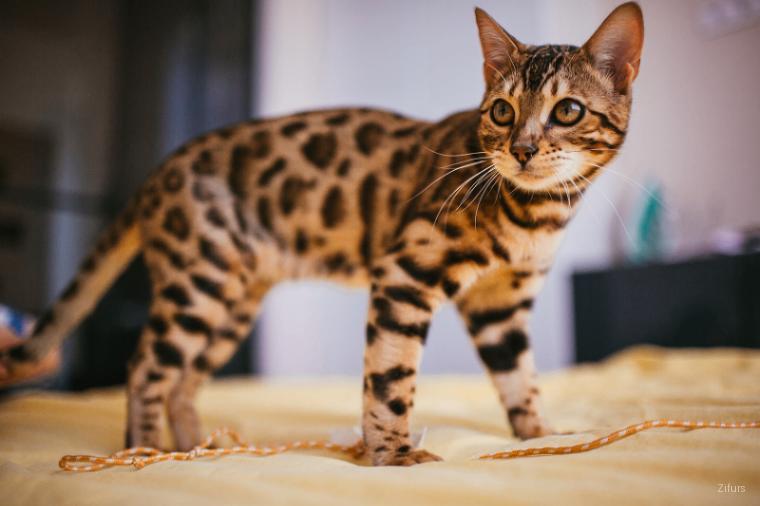
The Bengal Cat is an athletic and striking domestic cat breed known for its distinctive spotted or marbled coat, muscular body, expressive eyes, and energetic personality. Developed from domestic cats and Asian leopard cat ancestry, Bengals are known for their wild-looking appearance combined with the temperament of a companion cat.
Bengal Cats are known for being intelligent, active, curious, playful, confident, social, and highly energetic. They enjoy exploring their surroundings and often require more physical and mental stimulation than calmer cat breeds. Their intelligence also means they can quickly learn routines, tricks, and interactive games.
Bengals have a short, fine coat that is relatively easy to groom. However, their high activity level means owners need to provide plenty of exercise, climbing opportunities, interactive toys, and enrichment. They can adapt to apartment living, but only when their physical and mental needs are properly met.
Bengal Cat Appearance
The Bengal is known for its athletic build and wild-looking coat. Its coat can feature distinct spots, rosettes, or marbled patterns that give the breed a distinctive appearance.
Common physical characteristics of a Bengal Cat include:
- Medium to large-sized body
- Muscular and athletic build
- Long body and strong hind legs
- Medium-sized ears
- Large or oval-shaped eyes
- Long, muscular tail
- Short and soft coat
- Spotted, rosetted, or marbled markings
Bengals are available in several coat colors and patterns, with brown, silver, and snow varieties among the commonly recognized types.
Bengal Cat Temperament
The Bengal Cat temperament is generally energetic, intelligent, curious, confident, playful, and social. These cats enjoy exploring their surroundings and often want to participate in household activities.
Unlike very laid-back breeds, Bengals usually require regular interaction and stimulation. Their intelligence and energy can be rewarding for owners who enjoy an active and interactive pet.
Are Bengal Cats Good Family Pets?
Yes, Bengal Cats can make excellent family companions for households that can meet their high activity and enrichment needs. They are playful, intelligent, and often form strong bonds with their owners.
They are best suited to families who can provide regular play, interactive activities, climbing spaces, and companionship.
Are Bengal Cats Good with Children?
Bengal Cats can get along well with older children who understand how to interact with cats respectfully. Their playful and energetic nature can make them entertaining companions.
Children should be taught to handle cats gently and respect their boundaries. Young children should be supervised during interactions.
Bengal Cat Intelligence and Training
Bengals are highly intelligent cats and are often capable of learning tricks, routines, fetch, leash walking, and other interactive behaviors. Positive reinforcement works particularly well with this breed.
Mental stimulation can include:
- Puzzle feeders
- Interactive toys
- Clicker training
- Fetch
- Food-based games
- Trick training
- Leash training
Short and engaging training sessions can help channel their intelligence and reduce boredom.
Bengal Cat Exercise Requirements
Bengals have high exercise needs and require regular daily physical activity. They enjoy climbing, jumping, chasing, running, and exploring their environment.
Suitable activities include:
- Interactive wand toys
- Cat trees
- Climbing shelves
- Chasing games
- Puzzle toys
- Interactive feeders
- Fetch
- Supervised leash walks
Providing plenty of vertical space is particularly useful because Bengals naturally enjoy climbing and observing their surroundings from elevated positions.
Can Bengal Cats Live in Apartments?
Yes, Bengals can live in apartments, but their high energy and intelligence require a stimulating environment. A small home without adequate enrichment may lead to boredom and unwanted behaviors.
Apartment owners should provide cat trees, climbing shelves, scratching posts, interactive toys, puzzle feeders, and multiple daily play sessions.
Bengal Cat Grooming Requirements
Bengals have a short, fine coat that is relatively easy to maintain. They generally do not require extensive grooming compared with long-haired breeds.
Basic grooming should include:
- Weekly brushing or occasional combing
- Regular nail trimming
- Ear checks and cleaning when necessary
- Dental care
- Routine veterinary examinations
Regular brushing can help remove loose hair and keep the coat looking healthy and glossy.
Do Bengal Cats Shed a Lot?
Bengal Cats generally have relatively low to moderate shedding because of their short coat. Individual shedding can vary, and seasonal changes may increase the amount of loose hair.
Regular brushing can help remove loose fur and keep shedding manageable.
Are Bengal Cats Hypoallergenic?
No cat breed is completely hypoallergenic, and Bengal Cats should not be considered allergy-free. Some people may find individual Bengals easier to tolerate, but allergic reactions vary from person to person.
Anyone with cat allergies should spend time around a Bengal before deciding to bring one home.
Bengal Cat Health
Bengal Cats require regular veterinary examinations, vaccinations, parasite prevention, dental care, balanced nutrition, and appropriate weight management.
Some inherited health concerns have been reported in the breed, including hypertrophic cardiomyopathy (HCM), progressive retinal atrophy (PRA), and pyruvate kinase deficiency. Responsible breeders can use appropriate genetic and health screening to reduce the risk of inherited conditions.
Regular veterinary check-ups are important for monitoring the cat's heart, eyes, dental health, weight, and overall wellbeing.
What Should You Feed a Bengal Cat?
A Bengal Cat should receive a complete and balanced diet appropriate for its age, size, activity level, and individual health requirements.
Because Bengals are highly active, their nutritional needs should support healthy muscle development and energy levels. Portion sizes should still be monitored to maintain an appropriate body condition.
Fresh drinking water should always be available.
Bengal Cat Socialization
Early socialization can help Bengal kittens become comfortable around different people, household sounds, handling, grooming, and appropriately introduced pets.
Positive experiences during kittenhood can help them develop into confident and adaptable adult cats.
Are Bengal Cats Good with Other Pets?
Bengals can generally live with other cats and cat-friendly dogs when properly socialized and introduced gradually. Their playful and energetic nature can make them suitable for active multi-pet households.
Introductions should be gradual and supervised, with each pet having access to separate food, water, litter, and resting areas.
Are Bengal Cats Affectionate?
Bengals can be very affectionate with their families and often enjoy interactive companionship. They may follow their owners around the home, participate in games, or seek attention when they want to interact.
However, many Bengals prefer active interaction rather than spending long periods sitting quietly on a lap.
Are Bengal Cats Vocal?
Bengals can be quite vocal and communicative. They may use meows, chirps, trills, and other sounds to interact with their owners.
Their vocalization level varies between individuals, but their social and energetic nature can make them more communicative than some quieter breeds.
Are Bengal Cats Good for First-Time Cat Owners?
Bengals can be challenging for first-time cat owners because of their high energy, intelligence, curiosity, and need for daily enrichment.
They can be rewarding companions for first-time owners who are prepared to provide substantial interaction, exercise, training, climbing opportunities, and mental stimulation.
Do Bengal Cats Need a Lot of Attention?
Yes, Bengals generally require significant daily interaction. Their intelligence and high energy mean they can become bored when left alone for long periods without adequate enrichment.
Interactive play, puzzle feeders, training, climbing structures, and companionship can help keep them mentally and physically satisfied.
How Long Do Bengal Cats Live?
Bengal Cats can commonly live around 12 to 16 years or longer with appropriate nutrition, preventive veterinary care, responsible breeding, and a healthy indoor lifestyle. Individual lifespan varies depending on genetics, healthcare, diet, and overall wellbeing.
Bengal Cat Price in India
The Bengal Cat price in India can vary significantly depending on pedigree, generation, breeder reputation, lineage, coat quality, pattern, color, health screening, location, age, and availability.
As a general estimate, a Bengal kitten in India may cost approximately ₹30,000 to ₹1,50,000 or more.
Premium pedigreed Bengals with exceptional rosettes, desirable coloration, documented lineage, or imported bloodlines may cost considerably more.
Prospective owners should consider health records, vaccination history, parental health, kitten socialization, living conditions, and responsible breeding practices rather than choosing a kitten based solely on appearance or price.
Bengal Cat Monthly Maintenance Cost in India
The estimated Bengal Cat monthly maintenance cost in India can range from approximately ₹4,000 to ₹8,000 or more, depending on food, litter, healthcare, preventive treatments, toys, enrichment, and lifestyle.
Regular expenses may include:
- Quality cat food
- Cat litter
- Routine veterinary care
- Vaccinations
- Parasite prevention
- Dental care
- Grooming supplies
- Toys and enrichment
- Climbing and scratching equipment
Can Bengal Cats Live in India's Climate?
Bengal Cats can generally adapt to India's climate when kept in a comfortable indoor environment. During hot weather, they should have access to fresh water, shade, good ventilation, and a cool resting area.
During extreme heat, strenuous exercise should preferably take place during cooler parts of the day, and an air-conditioned or effectively cooled indoor environment can provide additional comfort.
Are Bengal Cats High-Maintenance?
Bengals have relatively low grooming requirements because of their short coat, but they can be considered higher-maintenance in terms of exercise and mental stimulation.
They require regular interactive play, climbing opportunities, training, enrichment, companionship, and a stimulating environment to remain happy and well behaved.
Do Bengal Cats Like Water?
Many Bengal Cats show an unusual interest in water. Some enjoy playing with running water, investigating taps, or even entering shallow water. However, individual preferences vary and not every Bengal will enjoy water.
Fresh drinking water should always be available, and water play should always be safe and supervised.
Do Bengal Cats Like to Climb?
Yes, Bengals are excellent climbers and often enjoy high places. Providing sturdy cat trees, shelves, window perches, and other secure vertical spaces can help satisfy their natural climbing instincts.
Vertical enrichment is especially important for Bengals living in apartments.
Can Bengal Cats Be Trained to Walk on a Leash?
Some Bengal Cats can learn to walk on a harness and leash with gradual, positive training. Their curiosity and intelligence can make them receptive to supervised outdoor exploration.
Harness training should be introduced slowly indoors first, and the cat should never be forced or allowed to roam outdoors unsupervised.
Final Thoughts
The Bengal Cat is an intelligent, athletic, energetic, and visually striking breed known for its spotted or marbled coat and highly interactive personality. Its wild appearance combined with a domestic temperament makes it an appealing companion for owners who enjoy active pets.
For prospective owners in India, it is important to consider both the Bengal Cat price in India and ongoing costs for food, litter, healthcare, enrichment, toys, and climbing equipment before bringing one home.
With a balanced diet, regular veterinary care, daily exercise, mental stimulation, interactive play, and a safe indoor environment, the Bengal can be a highly rewarding companion for an active household.
Care Requirements
Compatibility
Available Colors
Health Considerations
- Hypertrophic Cardiomyopathy
- Progressive Retinal Atrophy
- Pyruvate Kinase
- Bengal Polyneuropathy
- Gastrointestinal Issues
- Hip Dysplasia
- Patellar Luxation
- Feline Infectious Peritonitis
Fun Facts
- Bengals are nicknamed the “Rolls-Royce” of cats due to their high demand, rarity in shelters, and price, with one allegedly selling for $50,000 in London.
Frequently Asked Questions
Common questions about the Bengal Cat breed.
What is a Bengal Cat?
The Bengal is a medium to large domestic cat breed known for its athletic build, wild-looking spotted or marbled coat, intelligence, curiosity, and energetic personality. Modern Bengals are bred as domestic cats and are known for being affectionate and people-oriented.
How much does a Bengal Cat cost in India?
The Bengal Cat price in India can vary depending on pedigree, breeder reputation, lineage, coat pattern, color, health screening, location, age, and availability. A Bengal kitten may typically cost around ₹30,000 to ₹1,50,000 or more.
Are Bengal Cats good family pets?
Yes, Bengal Cats can make excellent family pets for households that can provide plenty of exercise, interaction, and mental stimulation. They are generally confident, curious, affectionate, and playful.
Are Bengal Cats good with children?
Bengal Cats can get along well with children when properly socialized and treated respectfully. Their energetic and playful nature can make them engaging companions, although younger children should be supervised during interactions.
Are Bengal Cats good with other pets?
Yes, Bengals can generally live with other cats and cat-friendly dogs when introduced gradually and properly. Their social and playful nature can make them suitable for active multi-pet households.
Are Bengal Cats affectionate?
Yes, Bengal Cats can be very affectionate and devoted to their owners. Many enjoy following their family members around the home and participating in household activities, although they often prefer active interaction over prolonged cuddling.
Are Bengal Cats lap cats?
Some Bengal Cats enjoy sitting on laps and cuddling, but many prefer active play, exploration, and interaction. Individual personalities vary, and a Bengal may seek cuddles when it wants to rest.
Are Bengal Cats intelligent?
Yes, Bengals are highly intelligent and curious cats. They can learn tricks, routines, fetch, harness walking, and other behaviors through positive reinforcement and clicker training.
Are Bengal Cats easy to train?
Bengals are considered highly trainable cats. Their intelligence and food motivation can make them responsive to positive reinforcement, clicker training, and interactive exercises.
How much exercise does a Bengal Cat need?
Bengals have high exercise needs and benefit from daily interactive play. Climbing, chasing, jumping, puzzle toys, cat wheels, and hunting-style games can help meet their physical and mental stimulation needs.
Can Bengal Cats live in apartments?
Yes, Bengal Cats can live in apartments if their high activity and enrichment needs are met. Owners should provide sturdy cat trees, climbing shelves, scratching posts, interactive toys, puzzle feeders, and regular play sessions.
Do Bengal Cats like to climb?
Yes, Bengal Cats are natural climbers and often enjoy high places. Providing secure cat trees, shelves, window perches, and other vertical spaces can help satisfy their natural climbing instincts.
Do Bengal Cats like water?
Many Bengal Cats are fascinated by water and may enjoy playing in sinks, watching running water, or investigating showers and bathtubs. However, not every Bengal will enjoy water, so individual preferences should be respected.
Can Bengal Cats be trained to walk on a leash?
Yes, some Bengal Cats can learn to walk on a harness and leash. Their intelligence and curiosity can make them receptive to gradual positive training. Harness training should begin indoors and progress slowly.
Do Bengal Cats shed a lot?
Bengals generally have a short, fine coat with relatively manageable shedding. Regular brushing can help remove loose hair and keep the coat in good condition.
How often should a Bengal Cat be groomed?
Bengal Cats generally have low grooming requirements. Weekly brushing is usually sufficient to remove loose hair and maintain the coat. Regular nail trimming, dental care, and ear checks should also be included in their routine.
Are Bengal Cats hypoallergenic?
No, Bengal Cats are not considered hypoallergenic. Like other cats, they produce allergens through substances such as dander, saliva, and skin secretions. People with allergies should spend time around a Bengal before adopting one.
Are Bengal Cats vocal?
Bengal Cats can be quite vocal and communicative, although vocalization varies between individuals. They may use meows, chirps, trills, and other sounds to communicate with their owners.
What should I feed a Bengal Cat?
A Bengal Cat should receive a complete and balanced diet appropriate for its age, size, activity level, and health requirements. Portion control is important, particularly after sterilization, to help maintain a healthy body condition.
What is the monthly maintenance cost of a Bengal Cat in India?
The estimated Bengal Cat monthly maintenance cost in India can range from approximately ₹4,000 to ₹8,000 or more. Expenses may include food, litter, veterinary care, vaccinations, parasite prevention, dental care, toys, and enrichment.
How long do Bengal Cats live?
Bengal Cats can commonly live around 12 to 16 years or longer with appropriate nutrition, preventive veterinary care, responsible breeding, and a healthy lifestyle. Individual lifespan varies depending on genetics, healthcare, diet, and environment.
Are Bengal Cats suitable for first-time cat owners?
Bengal Cats can be challenging for first-time cat owners because of their high energy, intelligence, curiosity, and need for daily enrichment. They can be rewarding companions for owners who are prepared to provide substantial interaction and exercise.
Do Bengal Cats need a lot of attention?
Yes, Bengal Cats generally need considerable daily interaction. They are social and highly intelligent and can become bored when left alone for long periods without sufficient physical and mental stimulation.
Are Bengal Cats active?
Yes, Bengal Cats are highly active and athletic. They enjoy climbing, jumping, chasing, exploring, and interactive play and often maintain a playful attitude well into adulthood.
What colors do Bengal Cats come in?
Bengals can occur in several recognized color and pattern combinations, including brown tabby, silver tabby, snow varieties, seal lynx point, seal mink, seal sepia, and charcoal patterns.
What patterns do Bengal Cats have?
The two best-known Bengal patterns are spotted or rosetted and marbled. Spotted Bengals have distinct spots or rosettes, while marbled Bengals have flowing swirls and horizontal or diagonal patterns.
What are rosettes on a Bengal Cat?
Rosettes are distinctive multi-toned markings that resemble the spots seen on wild cats such as leopards and jaguars. The Bengal is particularly recognized for its dramatic rosetted coat pattern.
What is glitter on a Bengal Cat?
Glitter refers to a shimmering or iridescent appearance in some Bengal coats. It can make individual hairs appear to sparkle when they catch the light.
Do Bengal Cats have health problems?
Bengal Cats are generally healthy, but responsible breeders should screen for inherited conditions that can occur in the breed. Important health considerations include hypertrophic cardiomyopathy, progressive retinal atrophy, and pyruvate kinase deficiency.
What is HCM in Bengal Cats?
Hypertrophic cardiomyopathy, or HCM, is a heart condition involving thickening of the heart muscle. It is an important health consideration in Bengals, and responsible breeders may use cardiac screening such as echocardiography to monitor breeding cats.
What is progressive retinal atrophy in Bengal Cats?
Progressive retinal atrophy, or PRA, is an inherited eye disorder that can cause progressive loss of vision. Genetic testing can help identify affected or carrier cats in breeding programs.
What is pyruvate kinase deficiency in Bengal Cats?
Pyruvate kinase deficiency is an inherited blood disorder that affects red blood cell survival and can lead to anemia. Genetic testing can help breeders identify cats carrying the relevant mutation.
Are Bengal Cats high-maintenance?
Bengals have relatively low grooming requirements because of their short coat, but they can be considered high-maintenance in terms of exercise, enrichment, and companionship. They need regular physical activity and mental stimulation.
Can Bengal Cats be left alone?
Bengal Cats generally do best with regular companionship and interaction. They may become bored or develop unwanted behaviors if routinely left alone for long periods without sufficient enrichment, toys, and opportunities for activity.
Are Bengal Cats good indoor cats?
Yes, Bengal Cats can thrive indoors when provided with enough physical and mental enrichment. Vertical climbing areas, scratching posts, interactive toys, puzzle feeders, and daily play are especially important.
Can Bengal Cats live in India's climate?
Bengal Cats can adapt to India's climate when kept in a comfortable environment. During hot weather, they should have access to fresh water, shade, good ventilation, and a cool indoor resting area. Extreme heat should be avoided.
Do Bengal Cats need a special diet?
Bengal Cats do not require a breed-specific diet, but they should receive a complete and balanced diet with appropriate protein and nutrients. The amount should be adjusted according to age, activity level, body condition, and health.
Are Bengal Cats good hunters?
Bengals have strong play and hunting instincts and often enjoy stalking, chasing, pouncing, and investigating moving objects. Hunting-style interactive toys and puzzle feeders can provide a safe outlet for these natural behaviors.
Why is my Bengal Cat so energetic?
High energy is a normal characteristic of the Bengal breed. Bengals are athletic, intelligent, curious cats that naturally enjoy climbing, exploring, chasing, and investigating. Regular exercise and enrichment are important for managing their energy.
Are Bengal Cats good for active families?
Yes, Bengal Cats can be particularly suitable for active families who enjoy interactive pets. Their energetic and playful personality makes them rewarding companions for households that can provide plenty of daily engagement.