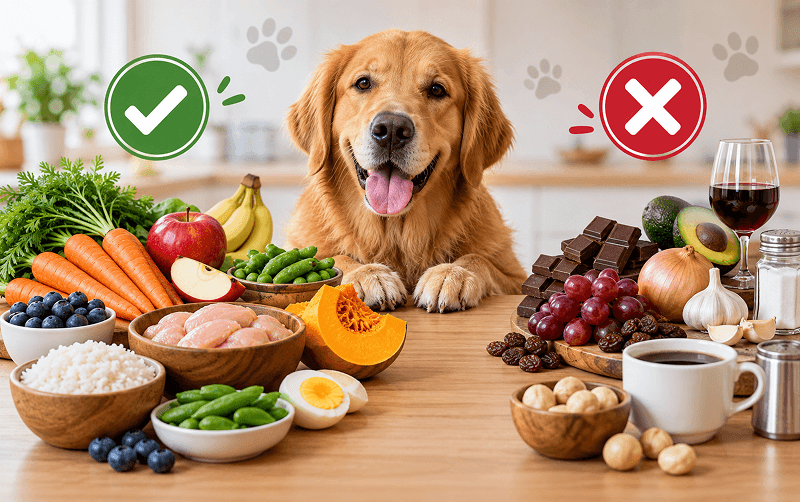
Dog Food Guide: What Can Dogs Eat and What to Avoid?
As pet parents, we often want to share a little bit of our food with our dogs. Those puppy eyes can make it difficult to say no! But while some human foods are perfectly safe for dogs, others can cause serious health problems and may even be toxic.
So, what can dogs eat and what foods should dogs avoid?
In this guide, we’ll cover safe human foods for dogs, fruits and vegetables they can eat, foods that should only be given occasionally, and toxic foods that should never be given to your dog.
Important: Your dog's nutritional needs depend on their age, breed, size, health condition and activity level. Human foods should generally be given as occasional treats and should not replace a complete, balanced dog diet.
What Human Foods Can Dogs Eat?
Several commonly available foods can be given to dogs in moderation. When introducing a new food, start with a small quantity and watch for signs of digestive upset or an allergic reaction.
Some dog-friendly foods include:
- Cooked chicken
- Cooked eggs
- Plain rice
- Carrots
- Pumpkin
- Green beans
- Apples without seeds
- Bananas
- Blueberries
- Watermelon without seeds
- Sweet potatoes
- Plain oats
- Plain, unsweetened yogurt, if tolerated
Always serve these foods plain and properly prepared. Avoid adding salt, spices, butter, sauces, sugar or other ingredients that may be harmful to dogs.
Fruits Dogs Can Eat
Fruits can be a refreshing occasional treat for dogs and can provide nutrients such as vitamins, minerals and fibre. However, fruits contain natural sugars, so portion size matters.
1. Apples
Dogs can eat apples when the seeds, core and stem are removed. Apples provide fibre and vitamins and can make a crunchy treat.
How to serve: Wash, remove the core and seeds, and cut into small pieces.
2. Bananas
Bananas are generally safe for dogs in small quantities. They contain potassium and other nutrients but are relatively high in natural sugar.
How to serve: Give a few small pieces as an occasional treat.
3. Blueberries
Blueberries are small and convenient treats for many dogs. They contain antioxidants and can be given fresh or frozen.
4. Watermelon
Watermelon can be a hydrating treat, especially during hot weather.
Important: Remove the seeds and rind before giving it to your dog.
5. Strawberries
Strawberries can be given in moderation after washing and removing the leafy stem. Because they contain sugar, they should remain an occasional treat.
Vegetables Dogs Can Eat
Vegetables can be useful low-calorie treats for many dogs.
Carrots
Carrots are a popular dog-friendly snack. They can be served raw in appropriately sized pieces or lightly cooked.
Pumpkin
Plain cooked pumpkin can provide fibre and may be helpful for some dogs with mild digestive issues. However, persistent vomiting, diarrhoea or other symptoms should be evaluated by a veterinarian.
Sweet Potato
Cooked sweet potato can be given in small portions. It should be served plain, without butter, sugar, salt or spices.
Green Beans
Plain cooked or fresh green beans can be an occasional snack for dogs.
Cucumber
Cucumber contains a high percentage of water and can be offered in small pieces as an occasional treat.
Protein-Rich Foods Dogs Can Eat
Dogs need protein as part of a balanced diet, and certain plain cooked animal proteins can be used as treats or food toppers.
Cooked Chicken
Plain, cooked chicken can be suitable for many dogs.
Remove all bones and avoid seasoning, sauces and excessive fat.
Cooked Eggs
Fully cooked eggs can provide protein and other nutrients. Avoid giving raw eggs as a routine food.
Cooked Fish
Some cooked fish can be given to dogs, provided it is thoroughly cooked and completely free of bones.
Avoid heavily seasoned, fried or processed fish.
Can Dogs Eat Rice?
Yes, plain, fully cooked rice is generally safe for dogs when given in appropriate portions.
Rice is sometimes included in bland meals recommended by veterinarians for dogs with certain temporary digestive problems. However, if your dog has ongoing vomiting, diarrhoea, loss of appetite or lethargy, don't rely on home food alone—consult a veterinarian.
Always serve rice without:
- Spices
- Onion
- Garlic
- Excess oil
- Butter
- Sauces
Can Dogs Eat Milk and Dairy Products?
This depends on the individual dog.
Some dogs can tolerate small quantities of certain dairy products, while others may develop gas, loose stools or diarrhoea because they have difficulty digesting lactose.
Plain, unsweetened yogurt may be tolerated by some dogs, but dairy should not be considered an essential part of a dog's diet.
Avoid dairy products containing:
- Xylitol
- Excess sugar
- Chocolate
- Artificial sweeteners
- Large amounts of fat
Foods Dogs Should NOT Eat
While some human foods are safe, several common foods can be dangerous for dogs.
Here are some of the most important foods to keep away from your pet.
1. Chocolate
Chocolate contains theobromine and caffeine, substances that dogs are unable to process as efficiently as humans.
The risk depends on the type and amount of chocolate consumed and the dog's size.
Dark chocolate and cocoa products can be particularly dangerous.
If your dog eats chocolate, contact a veterinarian promptly rather than waiting for symptoms.
2. Grapes and Raisins
Grapes and raisins can cause serious kidney problems in dogs.
Because the amount that can cause toxicity is unpredictable, it is safest to avoid giving grapes or raisins to dogs altogether.
If your dog has eaten grapes or raisins, contact a veterinarian immediately.
3. Onion and Garlic
Onions, garlic and related foods can damage red blood cells in dogs and may lead to anaemia.
They can be harmful in raw, cooked, dried or powdered forms.
Be particularly careful with:
- Onion powder
- Garlic powder
- Gravies
- Curries
- Sauces
- Seasoned meat
Many prepared human foods contain these ingredients.
4. Xylitol
Xylitol is an artificial sweetener that can be extremely dangerous to dogs.
It may be found in products such as:
- Sugar-free chewing gum
- Sugar-free candies
- Some baked goods
- Certain peanut butters
- Some dental products
- Some medications and supplements
Xylitol poisoning can cause dangerously low blood sugar and potentially serious liver problems.
Always check the ingredient list before giving packaged food to your dog.
5. Alcohol
Dogs should never be given alcohol.
Even relatively small amounts can cause serious health problems, including vomiting, difficulty breathing, weakness, neurological problems and potentially life-threatening complications.
Keep alcoholic drinks and foods containing alcohol away from your pet.
6. Coffee, Tea and Caffeine
Caffeine can be toxic to dogs.
Keep your pet away from:
- Coffee
- Tea
- Energy drinks
- Caffeinated soft drinks
- Coffee beans
- Caffeine-containing supplements
Never intentionally give caffeinated drinks to your dog.
7. Macadamia Nuts
Macadamia nuts can cause poisoning in dogs and may lead to symptoms such as weakness, vomiting, tremors and difficulty walking.
Avoid giving macadamia nuts or foods containing them to your dog.
8. Raw or Undercooked Meat and Eggs
Raw animal products can carry harmful bacteria and may pose additional risks depending on how they are prepared and handled.
If you want to feed a raw diet, discuss it with your veterinarian or a qualified veterinary nutrition professional to make sure the diet is nutritionally complete and appropriately managed.
9. Cooked Bones
Cooked bones can splinter and cause injuries or blockages in the digestive tract.
Never give your dog cooked chicken bones, cooked meat bones or other brittle cooked bones.
10. Excessively Salty or Spicy Foods
Foods containing large amounts of salt, chilli, spices, sauces or seasoning are not appropriate treats for dogs.
Indian household foods can be particularly problematic because many dishes contain onion, garlic, chilli, salt, oil and spices.
It's better to give your dog plain, appropriately prepared food rather than leftovers from your plate.
Foods Dogs Can Eat vs Foods They Should Avoid
Safe in ModerationAvoidApples without seedsGrapesBananasRaisinsBlueberriesChocolateWatermelon without seeds/rindOnionCarrotsGarlicPumpkinXylitolGreen beansAlcoholPlain cooked chickenCaffeineFully cooked eggsMacadamia nutsPlain riceCooked bonesCooked sweet potatoHeavily seasoned food
How Much Human Food Can You Give Your Dog?
Even safe foods should not make up most of your dog's diet.
Treats and additional foods should generally remain a small part of a dog's daily calorie intake. Your dog's main diet should be nutritionally complete and appropriate for their age, size, lifestyle and health requirements.
For example, a small piece of carrot may be appropriate for one dog but not necessarily for another if the dog has a specific medical condition or dietary restriction.
Before introducing new foods regularly, consider:
- Your dog's age
- Breed and size
- Weight
- Activity level
- Existing medical conditions
- Food allergies or sensitivities
- Current diet
What About Puppies?
Puppies have different nutritional requirements from adult dogs because they are growing rapidly.
A puppy should receive a complete and balanced diet formulated for its growth stage rather than relying on homemade food or table scraps.
While small quantities of certain dog-safe foods may be used as treats, they should not replace a properly balanced puppy diet.
Puppies can also have sensitive digestive systems, so introduce new foods gradually.
What If My Dog Eats Something Toxic?
If you think your dog has eaten a potentially toxic food, don't wait for symptoms to appear.
Take these steps:
1. Identify what your dog ate.
Try to determine the food, ingredients and approximate quantity.
2. Keep the packaging if available.
The ingredient list can help your veterinarian determine the potential risk.
3. Contact a veterinarian immediately.
Tell them your dog's approximate weight, what was eaten, how much was consumed and when it happened.
4. Don't induce vomiting unless specifically instructed by a veterinarian.
Some toxic substances can cause additional injury if vomiting is induced incorrectly.
Seek urgent veterinary attention if your dog shows:
- Repeated vomiting
- Severe diarrhoea
- Tremors
- Seizures
- Weakness
- Difficulty breathing
- Collapse
- Extreme lethargy
- Loss of coordination
When in doubt, it's always safer to contact a veterinary professional.
Healthy Treat Ideas for Dogs
If you're looking for alternatives to processed human snacks, consider small portions of:
- Carrot
- Cucumber
- Apple without seeds
- Blueberries
- Banana
- Pumpkin
- Plain cooked chicken
- Fully cooked egg
- Plain cooked sweet potato
Remember that even healthy treats should be given in moderation.
A Simple Rule for Pet Parents
Before giving your dog something from your plate, ask:
Is it plain?
Is it free from onion and garlic?
Is it free from chocolate and xylitol?
Does it contain bones or harmful ingredients?
Is the portion appropriate for my dog's size?
If you're unsure about an ingredient, don't give it until you've checked with your veterinarian.
Final Thoughts
Knowing what foods dogs can eat and what foods dogs cannot eat is an important part of responsible pet parenting.
Many everyday foods such as carrots, pumpkin, apples without seeds, blueberries, plain cooked chicken and rice can be suitable occasional treats. However, foods such as chocolate, grapes, raisins, onions, garlic, xylitol, alcohol and caffeine can be dangerous.
The most important thing to remember is that safe does not always mean unlimited. Treats and human foods should complement—not replace—a complete and balanced diet.
Every dog is different, and a food that works well for one dog may not be suitable for another. If your pet has allergies, digestive problems, obesity, diabetes, kidney disease or another health condition, speak with your veterinarian before making significant dietary changes.
At Zifurs, we believe better pet care starts with better information. From regular veterinary consultations to grooming and preventive care, making the right choices early can help your pet stay healthier and happier.
Frequently Asked Questions
What human foods are safe for dogs?
Some human foods that are generally safe for dogs in moderation include plain cooked chicken, cooked eggs, carrots, pumpkin, green beans, apples without seeds, bananas, blueberries, watermelon without seeds, and plain cooked rice.
What foods are toxic to dogs?
Chocolate, grapes, raisins, onions, garlic, xylitol, alcohol, caffeine, and macadamia nuts can be harmful or toxic to dogs and should be avoided.
Can dogs eat rice?
Yes, dogs can generally eat plain, fully cooked rice in moderation. It should be served without spices, onion, garlic, sauces, or excessive oil.
Can dogs eat bananas?
Yes, most dogs can eat small amounts of banana as an occasional treat. Because bananas contain natural sugar, they should be given in moderation.
Can dogs eat apples?
Yes, dogs can generally eat apple flesh in moderation. Always remove the seeds, core, and stem before giving apple to your dog.
Can dogs eat grapes?
No. Grapes and raisins should be avoided because they can cause serious kidney problems in dogs.
Can dogs eat chocolate?
No. Chocolate can be toxic to dogs because it contains theobromine and caffeine. If your dog eats chocolate, contact a veterinarian promptly.
Can dogs eat onions and garlic?
No. Onions, garlic, and related ingredients can damage a dog's red blood cells and should not be intentionally fed to dogs.
Can puppies eat human food?
Puppies should primarily eat a complete and balanced diet formulated for their growth stage. Some dog-safe foods can be given as occasional treats, but human food should not replace their regular puppy diet.
What should I do if my dog eats something toxic?
Contact a veterinarian or emergency veterinary service immediately. Tell them what your dog ate, the approximate quantity, your dog's weight, and when it happened. Do not induce vomiting unless instructed by a veterinary professional.

Zifurs Editorial Team
The Zifurs Editorial Team is a group of passionate pet lovers, researchers, and writers dedicated to creating reliable and engaging content for pet parents. With a strong focus on animal care, health, and lifestyle, the team ensures that every article is well-researched, easy to understand, and practical for everyday use.